


To begin this week, I’d like to observe that it is generally a fallacy to claim that an historic house is “too far gone to save.”
In my opinion, this suggestion is made simply to allow the owner to tear it down and clear the way to build something new. And that “new” build is far too often soulless and inappropriate.
But, then there are those who respect our built heritage, who embrace the generations that have come before and understand how traditional buildings add to our community.
Allow me to highlight a couple of examples — one an old house and the other new.
Not so long ago, if you were to drive out towards York Road on Concession 6, just past Line 6 on the left side, you would have seen a sad and dilapidated old farmhouse clad in insulbrick siding.
All the window openings on the first floor were covered with plywood and many second floor windows simply missing or broken. The eaves were crumbling and the shingles missing in large areas exposing the interior to water incursion.
Built circa 1890, this old soldier had apparently been abandoned to the elements — destined to collapse.
However, then the current owners stepped in and saved it from an ignoble death.
Today, the home sports new cream-coloured board and batten siding, set off by striking green metal roof with new windows and doors completing the picture.
These folks have returned to the community a piece of our shared rural history as the old farmhouse, given lease on life, can once more take pride of place on the farm.
Well done.
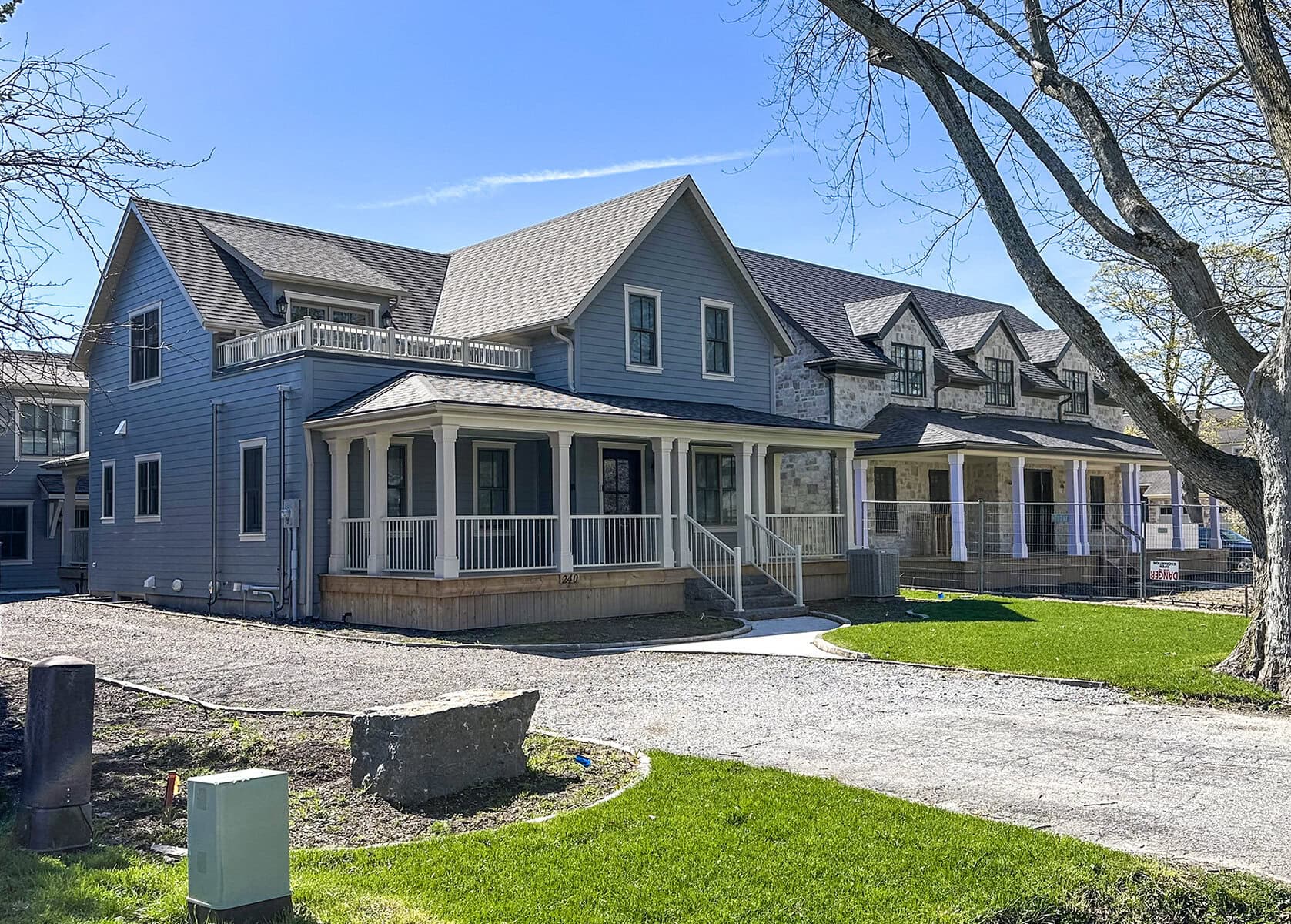
Now, let’s head down into Old Town. At the corner of Nassau and Johnson stand two new built houses designed by Mark Holmes of Brock Builders.
This columnist has often articulated that good design must be anchored in contextual considerations — the property itself, followed by the streetscape, the architecture of the neighbourhood and general community must inform the design process. These two houses fully represent that precept.
Although individually distinct in terms of form, cladding, fenestration, elements and details, the two houses speak to one another through a very clever use of the architectural principle of repetition applied to the design of the porches to create rhythm, unity, and visual harmony within the Nassau streetscape.
Moreover, within that streetscape, the height, massing and presentation is compatible with the existing homes — neither subordinate nor “hey look at me” dominant.
Applied in a broader sense, both or either of these houses could contextually find a comfortable home within all the boundaries of Old Town and in many of NOTL’s defined “settlement” areas.
Again, I must applaud the Holmes designs on these two infill builds as what could and should be considered a standard criteria for infill redevelopment within the boundaries of Niagara-on-the-Lake.
And here I must say that Glendale, as the gateway to NOTL, deserves a substantial injection of design character that recalls our shared history.
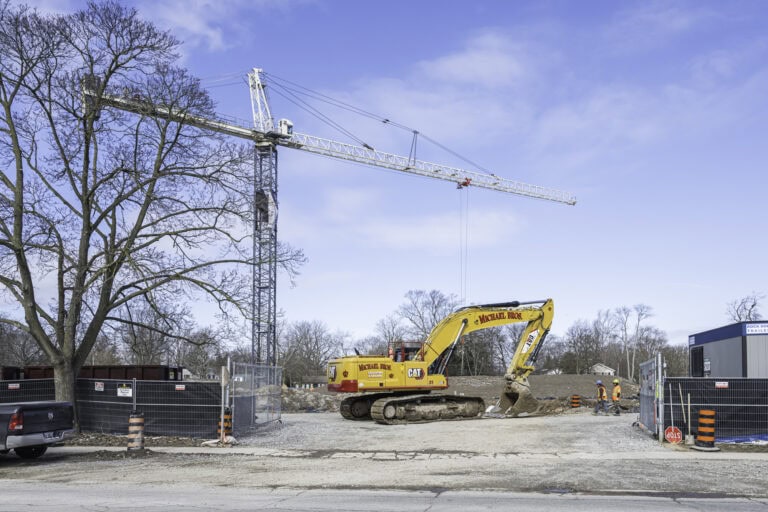
Moving on, I feel compelled to comment on my fellow columnist Garth Turner’s commentary in the April 22 edition of The Lake Report, entitled “Massacre on Mississagua,” wherein he identified that 41 mature trees would be sacrificed to a newly widened road.
Although only those who have had a very long history in our town would not recall, as a youngster, I clearly remember the village of St. Davids prior to the widening of the roads.
One was welcomed into the village by mature trees that vaulted over the roads and created a green tunnel that said, “You have arrived.”
The trees directly contributed to the village’s sense of place as being more than simply a crossroads but rather a community with long and deep roots into history.
And, when those trees were cut down, the character of St. Davids lost something that was irreplaceable: its anchor as a complete village.
Now, planners and the town council have apparently consigned — as another nod to tourists on rental bikes — the entry into Old Town to the same fate.
Really?
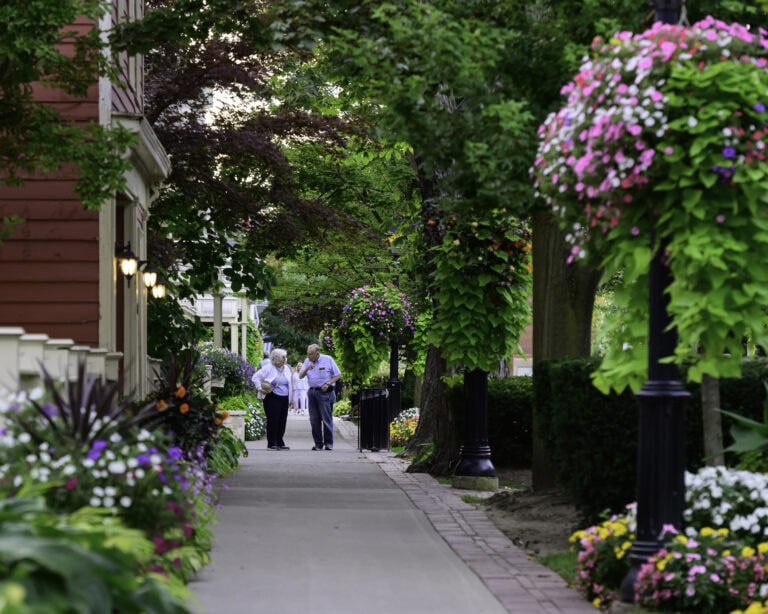
Perhaps they have missed the fact that the attractiveness of Old Town is as an historic village and tree canopies, only delivered by mature trees, are an integral part of that historical character.
And, as any marginally educated individual may be aware (just Google it to confirm), even replanting “mature trees” — which, incidentally, are not really mature — will take more than two decades to in part re-establish the lost canopy presence.
Kill the trees and kill another of the vital elements that make our town a unique experience.
Of course, for those in favour of Las Vegas North, what does that matter?
Brian Marshall is a NOTL realtor, author and expert consultant on architectural design, restoration and heritage.