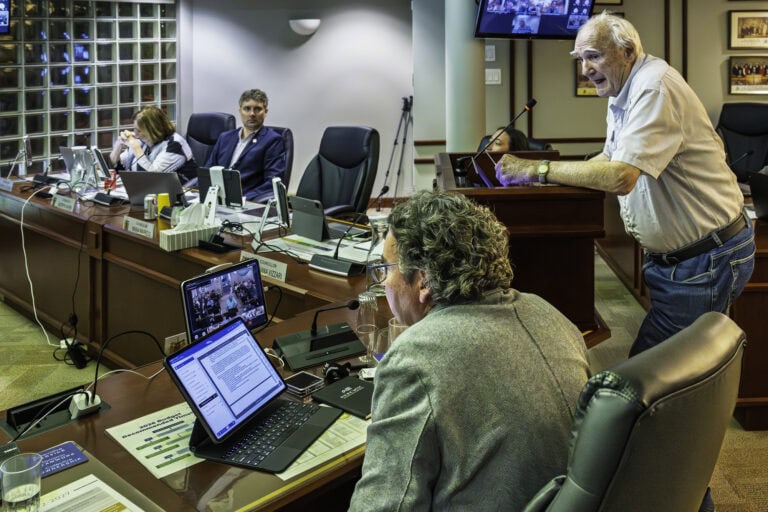

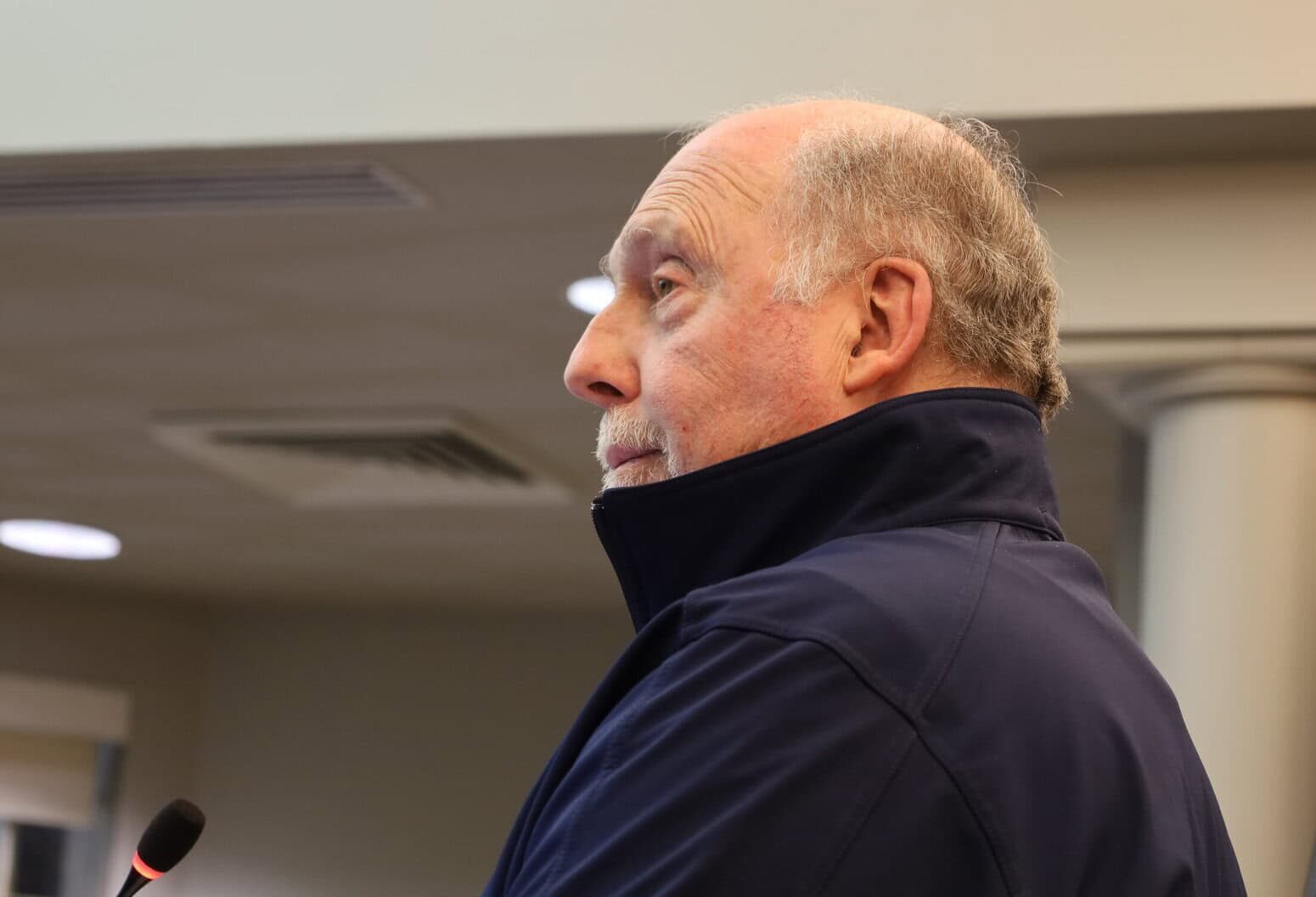


Niagara Region Chair Bob Gale was met with a surge of critical feedback from elected representatives Thursday night on his push to reform the regional government and potentially merge Niagara’s cities and towns.
Regional council voted to direct Gale to stop any further action connected to his amalgamation efforts. It also voted to begin in earnest a governance review of Niagara to look at improving service efficiency.
Niagara-on-the-Lake Regional Coun. Andrea Kaiser was among several councillors who spoke against amalgamation during the special committee meeting, with the bulk of her argument being that merging Niagara’s cities and towns won’t slow the impact of rising police costs, which she says are what’s driving the region’s budget hikes.
Several councillors at the meeting said the region needs more time to consider the implications of amalgamating Niagara and closely examine the issues with Niagara Region’s governance before making a decision.
In Gale’s letter to Niagara’s mayors in which he puts forth the idea of amalgamation, received Feb. 19, he gave the mayors until Tuesday, March 3 to submit their feedback to him. He said he will forward initial recommendations to the Ministry of Municipal Affairs and Housing no later than the first week of March.
Premier Doug Ford said on Wednesday that it would be up to Niagara’s mayors and Gale to decide on whether or not to proceed with amalgamation.
“Amalgamation needs willing parties,” said Pelham Mayor Marvin Junkin. “This current process doesn’t allow for that.”
Kaiser was among the regional representatives calling for deeper consideration on the matter, calling the current timeframe “an affront to our local representation.”
“I believe change must be grounded in evidence, fiscal responsibility and respect for local identity,” she said.
The governance review regional council voted to initiate will involve, according to the passed motion, “data, a business case with financial analysis and public consultation.”
Lord Mayor Gary Zalepa told The Lake Report that while regional council’s latest motion does change the timeline for submitting feedback to Gale, it’s still working to hand something in that will be presented to Municipal Affairs Minister Rob Flack.
NOTL council plans to submit formal feedback to to Gale and the province opposing amalgamation and advocating for the protection of the town’s municipal indepdence. Zalepa said council created a working group that’s handling the matter, which has had two meetings so far.
Gale told NOTL council on Tuesday that his review is being driven solely by him and his office because of regional tax increases in recent years and a $2.7-billion shortfall in infrastructure projects.
In his letter to Flack from Feb. 19, he highlights that the regional tax levy has gone up by almost 25 per cent in a single council term.
Kaiser, however, told regional council on Thursday that it needs to recognize “a significant portion” of region levy hikes have been tied to policing obligations under Ontario’s Community Safety and Policing Act of 2019.
“These costs are provincially mandated. We don’t have a choice in this matter,” she said. “And they will not disappear through amalgamation.”
Returning to the statistics from Gale’s letter to the minister, Kaiser said 4.4 per cent of the 6.3 per cent tax hike from last year was related to policing costs.
As for the almost 25 per cent regional tax hike over the last four years, 14.1 per cent of this, she said, was from policing costs.
She argued the region could’ve “taken some leadership” by decreasing discretionary costs to allow it to invest in infrastructure and capital projects.
“If our cost pressures are structural (and) policing infrastructure provincially downloaded, quite simply, amalgamation does not solve the root issue. It simply changes who manages it,” she said.
Amalgamation, Kaiser added, would centralize decision-making, affecting the democratic representation NOTL’s councillors offer the people who live there.
“Our residents elect representatives who understand the nuances of each community. In Niagara-on-the-Lake, it is our heritage district, our agriculture land base and our tourism economy,” she said.