


Niagara-on-the-Lake just took a page straight out of the Trump playbook: attack and discredit the press.
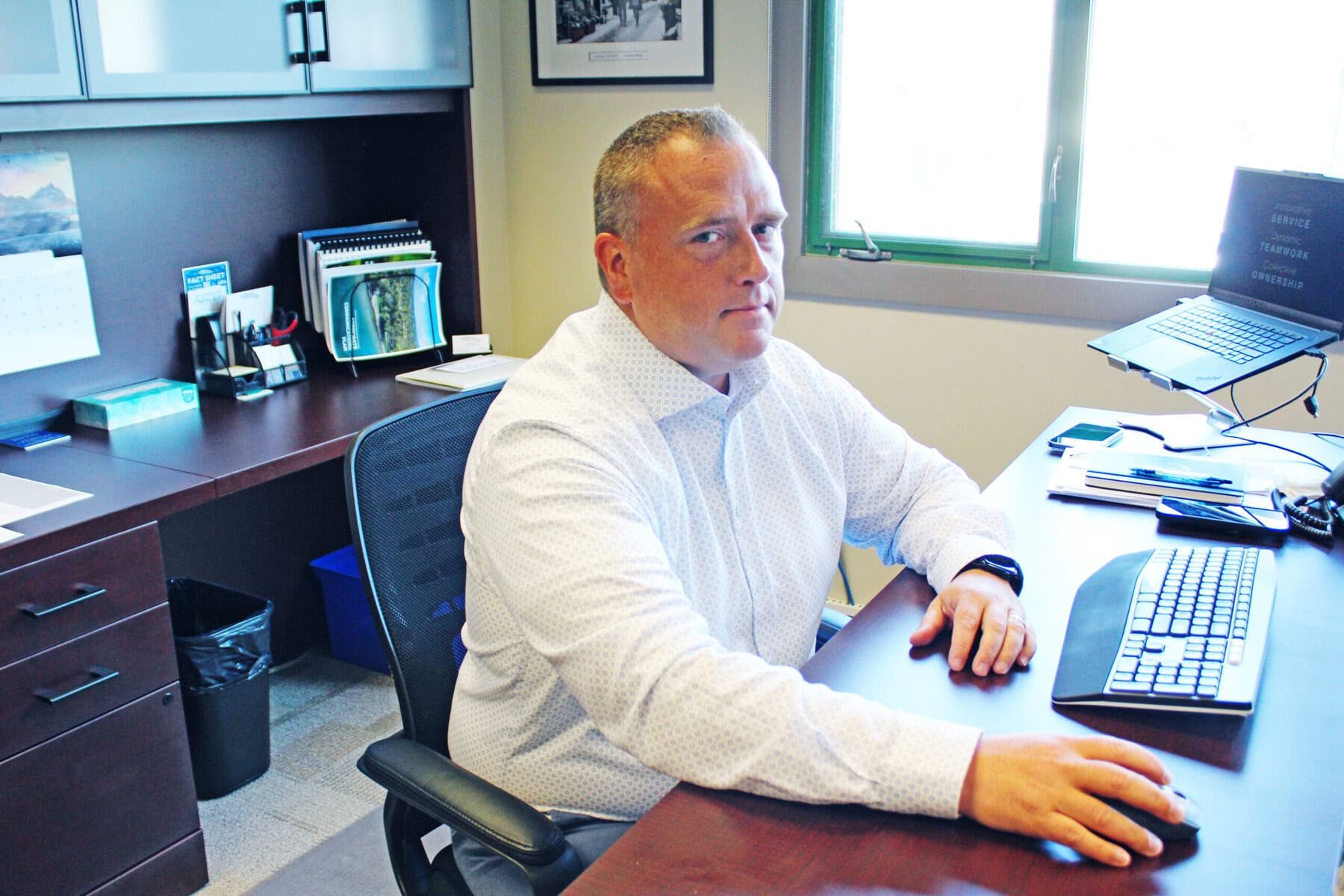
Last Thursday, the town’s chief administrator, Nick Ruller, released a statement, which we’ve published in full, that attempts to delegitimize scrutiny, question the media’s motives and try to control the narrative. It is a direct shot at this paper — the only print media outlet in NOTL — and, in particular, its opinion columnists.
As the only Niagara-on-the-Lake mainstream media organization willing to criticize those in power, we’re equally prepared to take criticism. In fact, we encourage it. It helps us be better.
But the problem with Ruller’s actions is they are baseless, misleading and reveal a fundamental misunderstanding of the role of a free press.
Essentially the statement is a warning to anyone who scrutinizes the municipality. While Ruller claims to support media, if we strip away the bureaucratic fluff, the message is simple: if you’re critical, uncomfortable or interpretive, the town reserves the right to ignore you.
That is not openness. That is control. And everyone should recognize it as a huge problem.
As long as newspapers have been around, editorials and columns have existed to judge performance, question competence and challenge power. A government that wants to pick and choose which questions it answers — and from whom — is a government that wants to manage the conversation, not answer to the public.
It is reminiscent of the way Trump spokesperson Karoline Leavitt behaves.
Don’t get us wrong. In the past we have wholeheartedly supported and been complimentary of Ruller — in editorials and opinion pieces reflecting on his job as fire chief, a councillor and an administrator. But on this issue, we wholeheartedly disagree with his stance and encourage him to reconsider.
Among his troubling claims is that senior town staff are not “public figures” and hence should not be named or criticized in the pages of The Lake Report. That is legally and ethically unsound. Senior municipal officials are not private citizens in the ordinary sense when acting in their official roles.
Naming officials and senior staff in coverage of public administration is not reckless. It is normal, lawful and essential to accountability journalism. This is how journalism works. Pretending otherwise is either ignorant or purposefully obtuse.
Such sentiments also inaccurately portray fair criticism of staff’s recommendations and decisions as personal attacks on those staff members.
The reality is that in real-world journalism, accountability comes through commentary, analysis, columns, editorials and investigative interpretation. Accountability involves naming people, describing decisions, critiquing competence, judgment or outcomes, and highlighting contradictions or failures. By framing “commentary” as something nefarious, the town is effectively saying: “Accountability is fine, as long as it’s polite, narrow and controlled.”
That’s not how democratic scrutiny works, and, sadly, our mayor and council have left a huge number of decisions to the unelected employees. If the media does not bring them into the sunlight, nobody will. With that said, we as an organization have always tried to criticize actions and ideas, not people. So while we understand this false narrative plays to heart strings, the reality is we are not personally attacking anyone. We attack decision-making that is bad for our town — and by nature that is fairly subjective.
Then comes the emotional shield: “staff safety,” “well-being,” “morale,” a “psychologically safe workplace.” These terms are all emotionally compelling, but criticism of people exercising public power is not abuse. Discomfort is not harm. Reputational sensitivity is not a workplace injury.
No one supports harassment or threats, but a “psychologically safe workplace” cannot mean a workplace insulated from public questioning about how public business is conducted. The fact that town staff were not elected does not and should not shield them from accountability. Public criticism of officials in their professional roles is a core democratic function.
The town’s statement attempts to blur that line on purpose, and the result is, in effect, a message that should worry all residents: “If public criticism makes staff uncomfortable, the town will simply stop engaging.”
Ruller complains about “incomplete information” or “misleading narratives” being reported. If we’ve published factual errors, show us. If mistakes have been made, we want to know. We correct them quickly.
But the town hasn’t flagged a single one on this subject. We have asked. Disliking the way a decision is criticized or analyzed is not the same as publishing an error in fact.
If mistakes have happened, the fault could lie with the town’s penchant for secrecy and message control, something that increased even before Ruller’s tenure.
The reality is: We ask questions. We report what we’re given. The real issue is the administration’s preoccupation with gatekeeping and that obsession has increased markedly over the past two years.
Don’t believe it? Look no further than how columnist Garth Turner was forced to view the Shaw Festival traffic plan: inside town hall, under supervision, like a suspect, barred from copying or recording a public document. This from an administration that never stops congratulating itself for being “transparent.”
That’s not “misleading.” Those are facts the town is uncomfortable being called out about.
In talks with Ruller about access to information and the town’s gatekeeping of public documents, we pointed out that these documents could easily be retrieved with via a freedom of information request (a laborious, time-consuming process), and we questioned why the town would go to such dramatic lengths to prevent people, and the media, from accessing them. He flippantly suggested that maybe all of our inquiries should be done through FOI requests. Yes, really.
The “waste of tax dollars” line is also worth commenting on. The problem is that this frames media scrutiny as wasteful, information requests as a burden and accountability as a cost concern. That’s deeply problematic. In a democracy, answering questions is not a waste. It’s the cost of governing with transparency. If the town finds that cost inconvenient, the problem is not the questions.
Perhaps most alarming of all: the town is positioning itself as the judge of which questions are “legitimate,” which inquiries are “verifiable,” and what “meaningfully advances” accountability (will that judge just be an administrator? Our mayor? Are we allowed to know their name?).
This is not only disingenuous, it is a blatant conflict of interest. You cannot be both the subject of scrutiny and the arbiter of what scrutiny is allowed. In other words, the town is saying that if the questions are too sharp, too critical or too uncomfortable, the town will label them “opinion” and stop answering. That is textbook local-level press suppression. ie. Trump-ism.
Telling residents to use internal forms or talk only to elected officials is little help. Those are controlled channels. They are not independent. They are exactly what a free press exists to bypass. That’s why people look to journalism instead of accepting everything government news releases say without any critical thought. (And, unfortunately, today many small-town news outlets here in Niagara uncritically publish such documents as legitimate news, with no scrutiny or critical analysis.)
The town claims access to information won’t change as a result of this attempt to increase its gatekeeping. That’s disingenuous. Access isn’t just about documents — which the town often won’t even provide — it’s about whether those in power will face tough, persistent, public questioning. And provide timely answers. A government that only engages on its own terms isn’t transparent. It’s managing its image and implies it has something to fear.
Ruller’s statement isn’t about accuracy, civility or safety. It’s about controlling the narrative and disengaging from real oversight. A confident institution answers criticism with facts and evidence. It doesn’t threaten to disengage. It doesn’t pretend public officials are private citizens. And it doesn’t complain that democracy is too expensive.
And then there’s our lordly mayor, late to the party of salvaging his public image, taking to Facebook to sneer at “print media” and echo the same line of attack.
He writes that “print media” outlets are failing in their democratic role, blames “business model challenges” and suggests that opinion is “replacing” journalism — as if commentary is some kind of corruption rather than a core function of a free press. He assures readers that “all opinions are valid,” while simultaneously telling them to treat opinion as something lesser, something to be discounted.
That’s not a defence of facts. It’s a way to delegitimize criticism without answering it.
It’s also rich, coming from a mayor whose administration is actively making it harder to access public information and now threatening to disengage from questions it doesn’t like. If you want fewer “opinions,” start by answering questions. Start by releasing documents. Start by respecting scrutiny instead of trying to manage it.
The town needs to decide what it actually believes in: real accountability, or a carefully curated version where only the “right” questions get answered. You can’t claim to support a free press while openly and brazenly building a system to ignore it.
We’ll be here regardless, asking the questions, publishing the answers we’re given, and pointing out when they aren’t good enough. And during the election campaign this fall, we’ll make sure voters remember exactly who tried to teach this town that accountability is optional.