



Some folks in Old Town have been steamed to discover what “heritage” means. More costs. Fatter premiums required by thirsty insurers.
Of course, insurance is all ethereal and suspicious until, say, a tree falls on your house.
Remember that big windstorm last month?
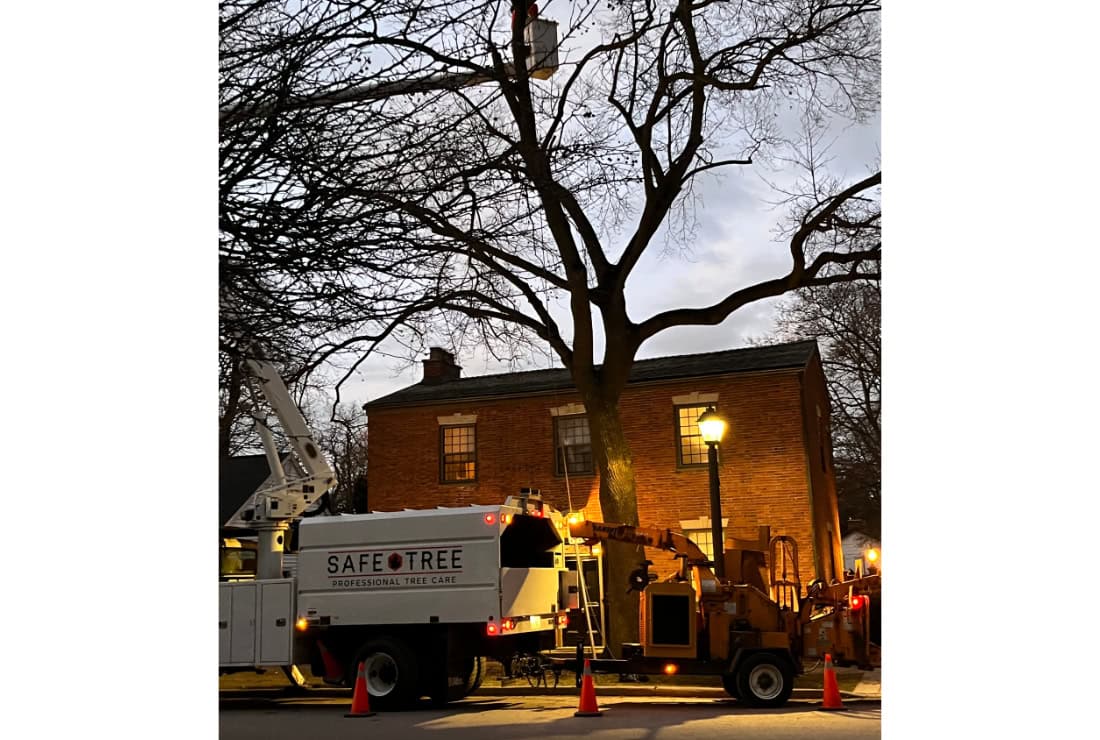
I do. That’s when the maple towering over our ancient pile of bricks decided it was time to throw a main limb on top of it.
The town’s work crew showed up pronto to chainsaw the chunks blocking the sidewalk and road. Tree service guys came later to stabilize the maple and clean up the parts of it that crashed onto a cedar roof we installed two years ago.
Yup, five holes. Crushed shingle guts all over the place. “You need to replace the whole slope,” Wayne the roofer later reported. “Ten grand.”
Lucky we have home insurance, I thought. Finally a justification for the $8,648 (plus HST, of course) I’d just paid as the annual toll.
“Well, I wouldn’t claim it,” said the broker who arranged the policy. “That will forever alter the claims-free record you have which has brought better coverage and lower costs,” (he seriously said that). In other words, claim $10,000 now and pay more every year thereafter. Forever.
The insurance guy also mentioned how appraisals and even the decision to insure a property — or take a pass — are now handled by an AI bot. And those things do not like heritage. Not one little bit. Even without treeageddon.
There are almost 200 properties in NOTL on the official heritage list. A year ago, residents started in earnest to ask why this designation led to higher insurance costs and often restricted coverage or outright rejection.
Town staff talked to the industry and reported: “Insurance premiums should not go up because of a heritage designation. Some companies do not insure buildings over a certain age, but designation itself does not place additional requirements on the insurer and should not affect premiums.”
The advice was trite. Shop around.
But it turns out “heritage” is, in fact, a hated word in the insurance biz, and that only a tiny sliver of companies (called “markets” by brokers) will even consider extending coverage — no matter how much cash you throw at them.
“Definitely, there’s a lack of understanding in our insurance industry of heritage properties,” says Don Davis, a veteran broker with extensive experience in the area. “As soon as you say the word ‘heritage,’ literally the underwriters stop in their tracks and usually pass on the file.”
For those few firms who can get past the designation, the higher replacement costs for a geriatric structure means bigger premiums. And more hassles.
“I had a friend purchase a commercial heritage building and I literally begged a market to accept his file,” Davis adds. “The only way I could get his file accepted was due to his strength of supporting policies. The client was forced to order his own inspection and appraisal on the file. His out-of-pocket cost was $3,500.”
Ontario does not regulate property insurance, the way it does the coverage for your car. So, if an insurer shuns the risk of a place built before 1940, with a stone foundation, with older plumbing or electrical systems, close to water, with a roof older than your teenager or (like mine) was built 207 years ago, bummer. Their choice.
Moreover, any policy issued will be conditional on a passing inspection. It probably won’t have GRC (guaranteed replacement coverage). And it’s only good for a year.
“You won’t pay more just because the building is heritage,” says Davis. “But the higher cost of insurance will occur; as the replacement value on the home will invariably be higher. Which has the appearance of higher rates.”
Or, you can wait for the Shaw to buy your place and tear it down.
Garth Turner is a NOTL resident, journalist, author, wealth manager and former federal MP and minister. garth@garth.ca