


WALKING WITH GIANTS
**** (out of five)
Artists’ Village, a Shaw Festival presentation on puppets with Prof. Lawrence Switzky.
We have been living and walking with giants for a very long time.
In the context of puppets in our lifetimes, we can rattle off scores of Disney characters, radio and TV shows, films, Macy’s Thanksgiving Day parades and theatre performances in one form or another all over the world.
Think of Pinocchio, Charlie McCarthy, Howdy Doody, Lamb Chop, Kermit the Frog, Miss Piggy, other beloved Muppets of Jim Henson, Elmo, Big Bird and Yoda. Most recently, we have marveled at the spectacular stage productions of “War Horse” and “The Lion King.”
Our fascination probably began with fingers creating shadow images on cave walls lit by flickering oil lamps. The oldest puppet, dated circa 28,000 years ago, is a seven-inch carved ivory figure with tiny holes for moving the limbs found in Brno, Czech Republic.
String-pulled figures from Egypt are more 4,000 years old. Ancient Greece and Rome had moveable toys and active rod puppets and string puppets.
Current technology is taking puppetry in astonishing new directions. Global travel is taking audiences to exotic locations with diverse puppet traditions long held sacred and maintained by generations of puppet masters and musicians.
In “Puppetry: A Reader in Theatre Practice,” Penny Francis states, “Puppetry can be directly traced to the atavistic universal belief in the spirit life hidden within and embodied by natural phenomena things and materials. This belief forms the core of the animist religion and is intrinsic to the understanding of the puppet’s origins.”
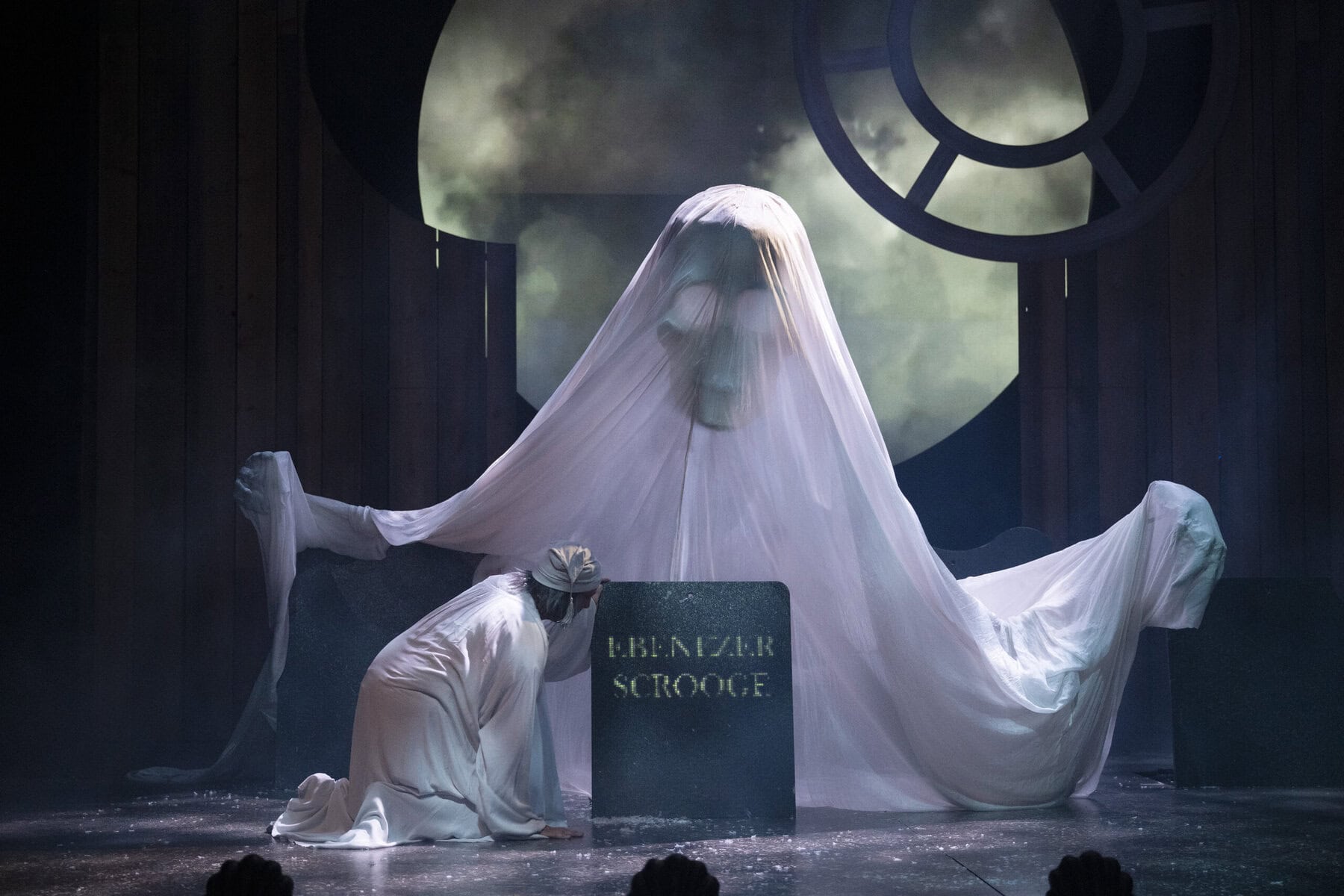
That spirit within took time to recognize when gazing at a high swath of white fabric at this summer’s “Walking with Giants” event, part of the Shaw Festival’s series of special presentations this season.
Once the veteran actor and puppeteer, Graeme Somerville, stepped beneath the silk and began manipulating the rods, the terrifying, swooping, giant ghost of “A Christmas Carol” was effectively swirling before us.
The five basic types of puppets are finger, hand, rod, marionette strings and shadow. Finger puppets are small, simple and great for small children. Hand puppets, such as Pulcinella or Punch and Judy, use the hand inside a glove or a sock. The popular Budaixi tradition of Taiwan has high-energy shows where intricate sack-shaped costumes allow for martial arts high kicks, while special effects create thunder and explosions.
Rod puppets are controlled from below or side using wooden or wire sticks. The extraordinary Thang Long Water Puppet Theatre in Hanoi, Vietnam dates from 11th century villages of the Red River Delta of northern Vietnam when, after the rice harvest, fields were flooded to stage entertaining water shows.
Today, eight puppeteers, standing in waist deep water behind a bamboo screen, manipulate fig wood rods to tell the ancient morality stories of rural village life. Puppets fish, chase ducks, observe royal processions and watch dragons fighting. Musicians play traditional instruments and singers shout words of warning or encouragement adding to the drama.
Marionettes are manipulated from above using strings or wires. The wood-carved Kathputli from Rajasthan, India may be richly dressed and painted but their travelling shows address social concerns of poverty and education. The Opera dei Pupi of Sicily preserves the oral tradition of romantic chivalrous tales of the Middle Ages with Christian and Saracen warrior puppets dressed in real armour.
The flat leather shadow puppets of wayang kulit are an ancient form of storytelling that originated over a thousand years ago at the royal courts of Java and Bali and spread throughout Indonesia. The puppets move in front of a screen lit from behind where the dalang (master puppeteer) uses thin sticks attached to the puppets to manipulate the arms.
The characters include the jokester who can criticize delicate issues as well as the heroic characters from myths and Indian epics. The dalangs memorize a huge repertory of ancient narratives and poetic songs.
One of the most influential traditions of puppetry today is the bunraku of Japan. Three black-clad puppeteers appear on stage with life-size puppets. They closely hold and maneuver the puppets by using their own hands and a puppet neck control bar.
Prof. Lawrence Switzky, University of Toronto, mentioned these puppet traditions but focused more on the expanding role and impact of puppetry in modern theatre and performance art.
The Handspring Puppet Company of South Africa has been exploring the boundaries of puppetry and contemporary performance since 1981 in its collaborations with world-renowned companies in 30 countries and dealing with politically and socially sensitive themes. It also helps stage an annual outdoor puppet parade using giant and community-made puppets in Barrydale, South Africa.
Handspring’s founders, Basil Jones and Adrian Kohler, brought larger-than-life animal heroes to our world in the form of nine life-size horses for the renowned play “War Horse” in 2006. Great care was taken that the horse appear to be alive, that it breathed in and breathed out, thereby creating empathy with the audience. The horse was created to move, to be ridden and to be “a purveyor of life after death.”
In 1997, the acclaimed director and writer Julie Taymor brought to the stage her adaptation of the film “The Lion King.” It was a huge risk. The audience knew the film. How could she create on stage things only possible on film? She had lived in Indonesia and Japan, been immersed in wayang kulit, bunraku and Akira Kurosawa films, studied mime and directed plays and films using puppets and masks, but how would she create a wildebeest stampede?
She did it by “breaking the wall,” — staging a “double event” of the simultaneous animal heads on the actors, recognizable as human, carrying their masked animal selves racing down the theatre aisles. It was theatrical illusion. Film has to be believable. Theatre does not. It was thrilling. Disbelief was suspended.
For Taymor, to tell a story well means finding and celebrating the common thread that we all share as human beings, of how we exist with nature and each other. It is not borrowing or appropriation of the stories or puppets of others. It is finding inspiration and sharing those techniques that belong to everybody, be they form or expression.
The Bread and Puppet Theater in Glover, Vt. has the largest collection of big puppets and masks in the world. An old hay barn has been transformed into a museum for veteran papier-mâché puppets.
The collection grows annually as it is built to the demands of human rights, poverty, warmongers and what to celebrate in this changing world. It is a theatre of all means of action not dialogue.
As the traditional mantra of preservation doesn’t apply here, one is advised to visit sooner rather than later. Open daily and fresh baked bread is available.
Penny-Lynn Cookson is an arts and culture historian, writer and lecturer living in Niagara-on-the-Lake.