



Keith McNenly
Special to The Lake Report
“The strong do what they can and the weak suffer what they must” remains one of the clearest descriptions of how power behaves when insufficiently restrained — from ancient Athens Thucydides gave us this simple truth, one of the oldest and most enduring descriptions of bullying.
That habit of mind is not confined to schoolyards or historic empires. It appears whenever those with greater power begin to assume that strength itself justifies action. Authoritarians seize nations. Nations may clothe it in finer language — security, order, national interest — but beneath the polished words lies the same old instinct: we are strong enough to impose our will, so why should we not?
The consequences of that thinking are profound.
As bullying becomes a governing principle at home, it reshapes politics abroad. A country that grows comfortable with coercion internally becomes less tolerant of restraint externally. Democracy is frustrating by design. It exists in part to force power to justify itself, to listen, to compromise and to proceed with caution. It is one of the few systems humans have devised that can place a brake on the bully’s instinct.
That is why authoritarianism and external intimidation so often travel together. A government that prefers command to persuasion at home becomes impatient with persuasion abroad as well.
The most dangerous consequence is that the bully’s mindset repeatedly leads to war, even when war is not the original intention.
History offers no shortage of examples. The fascist regimes of the 20th century were not merely coercive at home; they were aggressive abroad, because the same contempt for limits operated in both places. Nazi Germany did not only terrorize Europe; it destroyed democracy within Germany first, then carried that lawless will outward.
The Soviet Union followed a different ideology but a similar pattern. Its domination of its neighbours was inseparable from repression at home, and when it used force to hold its empire together, it only postponed the reckoning.
Great powers, assuming their military superiority, economic leverage or intimidation would settle matters quickly, instead provoke deeper resistance. Vietnam and Iraq stand as later examples of the same error.
That happens because bullying rests on a chronic miscalculation. It assumes the weaker party will submit. Sometimes that happens, but often it does not. Nations may bend for a time, eventually to fight back as submission becomes intolerable.
Russia’s invasion of Ukraine is a devastating modern example. Moscow assumed that Ukraine could be overawed, destabilized and subdued. Instead, Ukrainians fought, and what may have been imagined as a quick demonstration of power became a grinding war with enormous human, economic and geopolitical consequences. The initial calculation of strength did not prevent conflict. It produced a much larger one.
We see a similar danger in the confrontation with Iran. Even while watching Russia’s miscalculation in Ukraine play out, Trump imagined that a strike, or a threat could remain limited and controlled. But war has a way of escaping the plans of those who begin it.
Iran may be weaker than the United States militarily, just as Ukraine was weaker than Russia on paper, but weaker states do not simply collapse because stronger ones demand it.
Separatist movements risk weakening and distracting Canada at a time when national unity is essential to self-governance. They may also invite the current American administration to imagine that Canada could be divided, pressured, and ultimately taken.
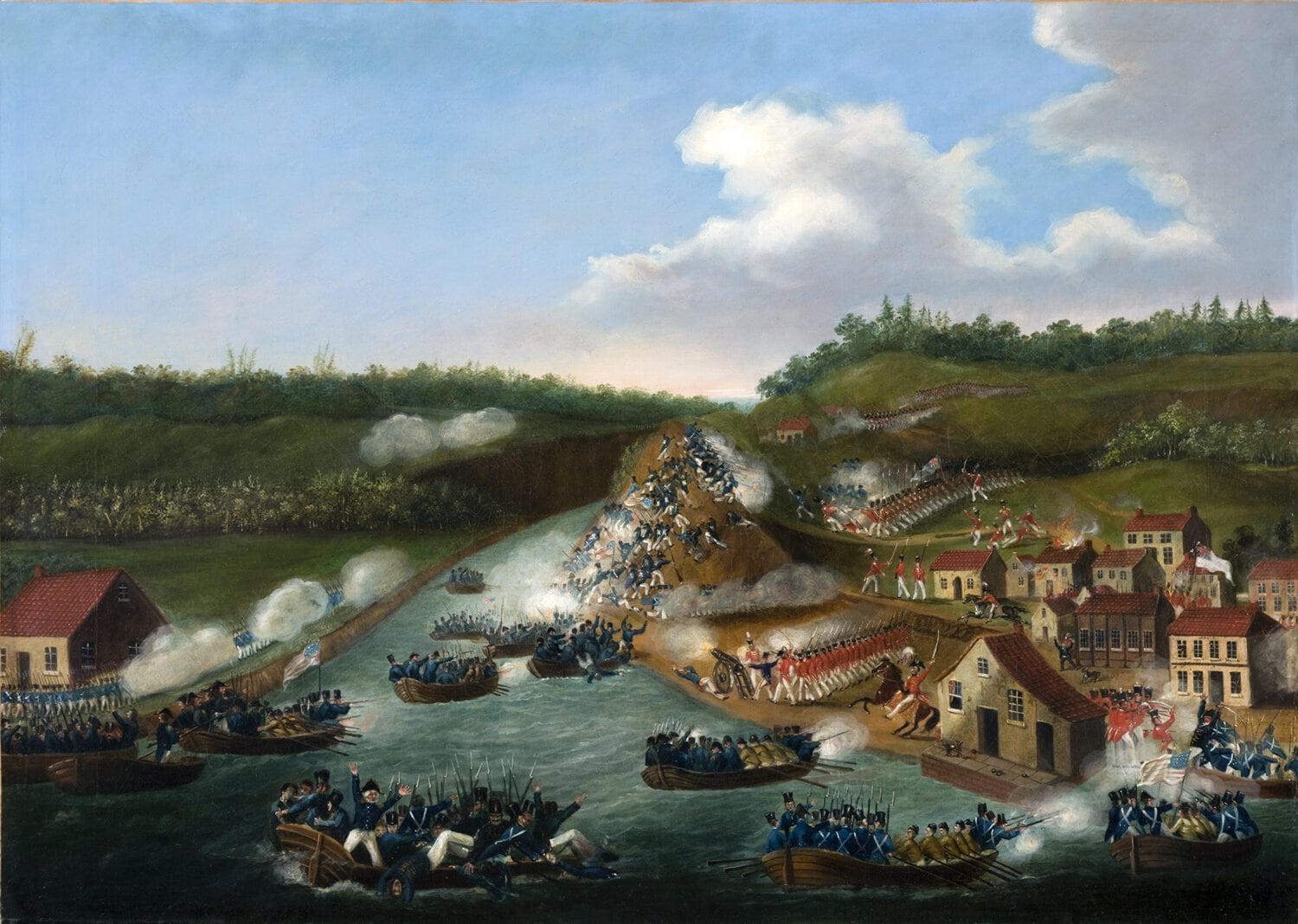
Yet across every province, most Canadians are resisting Trump’s attacks on our economy and demonstrating a determination to defend our sovereignty — continuing a tradition that stretches from Loyalists fleeing the American Revolution to local defenders in the War of 1812.
This is one of the great paradoxes of power. The more convinced a state becomes that it can compel outcomes, the more likely it is to underestimate the will of others. It forgets that those on the receiving end have agency too, and that even weaker actors can absorb punishment, adapt and fight back.
That may be the final simple truth: power unrestrained eventually miscalculates and in the end the strong suffer too.
So perhaps the Thucydidean truth is itself incomplete. The strong do what they can, and the weak suffer what they must — but not forever. In time, the victimized resist, the costs spread, the strong overreach, and the consequences return home.
Nature teaches a similar lesson: power’s grip erodes with time. Empires age, grow complacent, weaken, and like an old stag in the meadow, eventually lock horns with younger rivals. In the end, they too must yield.
Niagara-on-the-Lake resident Keith McNenly was the chief administrator of the Town of Mono for 41 years.