


Kathryn Podrebarac
Special to The Lake Report
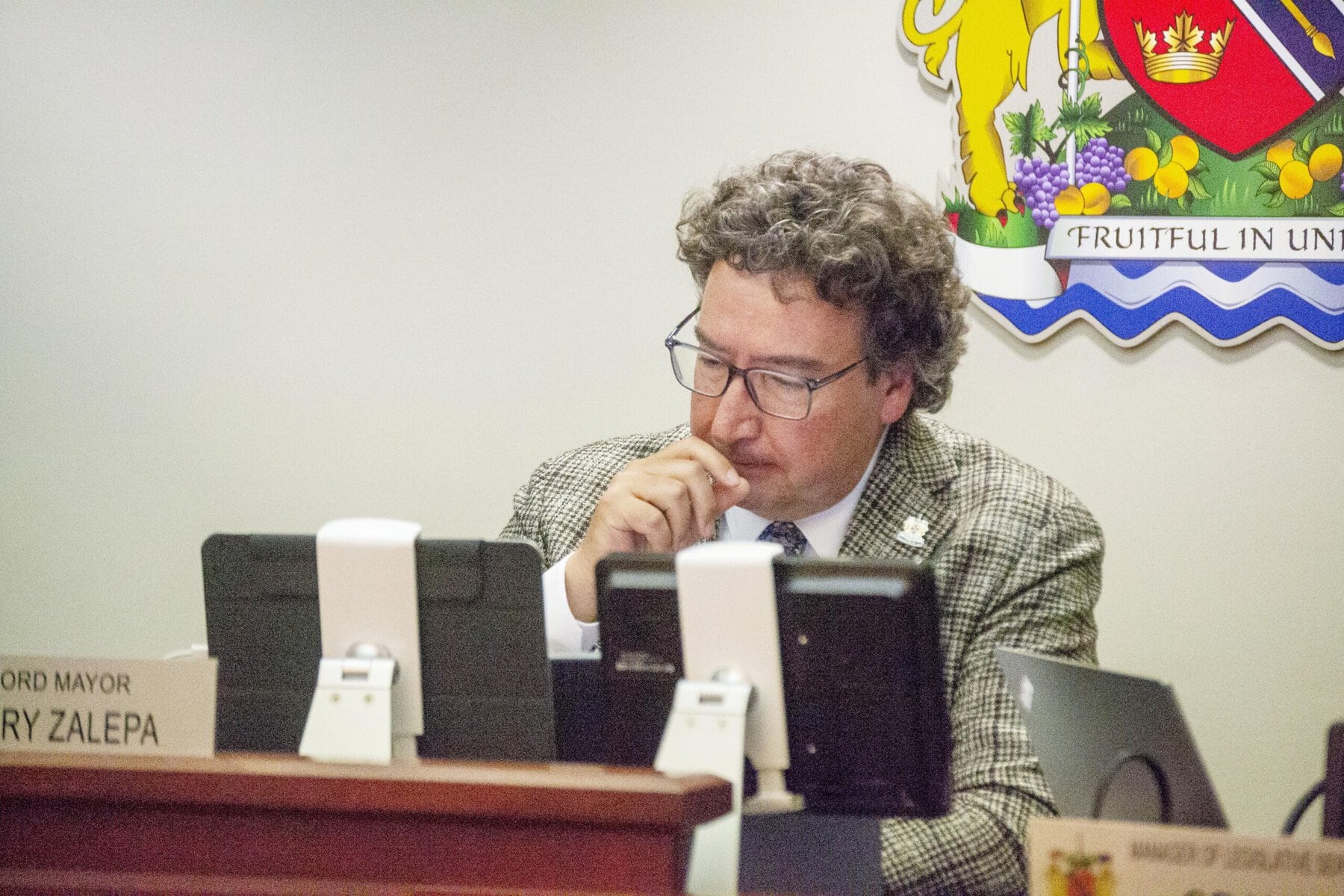
In February 2025, at an open house in Old Town, a resident asked Lord Mayor Gary Zalepa what residents can do when a councillor fails to declare a conflict of interest.
His answer: “If anybody feels that it is improperly declared you have full recourse through a complaint to the integrity commissioner which the town has.”
I took him at his word. I live near the Rand Estate and filed the complaint described here. This is what happened.
The town’s code of conduct says members “shall avoid conflicts of interest.” If they are uncertain, they can ask the town’s integrity commissioner for advice, at the town’s expense. If they have a conflict, they are supposed to declare it at the meeting and step aside.
The lord mayor lives close to the Rand Estate, about 200 feet (61 metres) according to him. In December 2022, he asked the town’s then integrity commissioner whether that created a conflict. He was advised: “It would be prudent for you to declare a conflict of interest and withdraw.”
He followed that advice. In April 2023, before hundreds of residents at the Community Centre, he declared a conflict “due to the proximity of my primary residence to the subject properties,” and left the meeting. He declared twice more after that.
“It would be irresponsible not to follow their advice,” he told The NOTL Local in January 2024. To act against it “would jeopardize the town.”
In October 2024, after the Ontario Land Tribunal’s decision on the Rand Estate development, the lord mayor also sought advice from the new commissioner.
That advice, not previously reported, was clear: if his property is within 120 metres of the subject properties (the notice area under the Planning Act), he should declare a conflict and step aside. His December 2023 and January 2024 declarations had already said he “lives within the notification area.”
That is the town’s norm. Town records show that in the seven years before June 2 this year, members of council declared a conflict 26 times because their home or property was in the notice area or in proximity.
On June 2, new Rand Estate applications came before council’s planning committee. His home had not moved. He did not declare a conflict or step aside.
Afterward, I asked him in writing to declare a conflict and step aside. He declined. On July 8, I filed a complaint saying he was in a conflict because he lives within the 120 metre notice area.
On Aug. 10, the new commissioner sent me its decision.
It found: “The lord mayor did not follow our advice as it applied to the June 2026 meeting,” and that “by remaining in the committee meeting on June 2, 2026, he was in a conflict of interest.”
According to the commissioner, the lord mayor believed his earlier conflict arose from a proposed access onto Charlotte Street, since dropped. The commissioner’s account of its own advice said nothing about access.
The commissioner went on to find that his “decision to participate resulted in a contravention that was based on an error in judgment made in good faith.” Next time, he should declare a conflict and step aside, it said.
The outcome? “We will be concluding this matter without further action and will be closing our file.”
The next day, I wrote to the commissioner quoting the town’s protocol. It requires it to report its finding of a code contravention to council, who alone decides if a penalty should follow. Time was short: provincial law bars commissioners from reporting to council between nomination day and election day. Nomination day was 10 days away.
On Aug. 18, it replied: “The matter is at an end.” Because, in its view, the error was made in good faith, “no public report was warranted.” It later told this newspaper the complaint had not been sustained. Yet its decision found the very conflict I complained of, and called it a contravention.
The lord mayor received advice at the town’s expense to declare a conflict. He did not. The commissioner was required to report the code contravention to council. It did not. Without a report, the findings stayed off the public record, and council never had the chance to decide whether the lord mayor should answer for his breach.
What is left is a “should.” The lord mayor should declare next time. Asked by this newspaper in August whether he will, he would not say (“Integrity commissioner says mayor in conflict on Rand Estate,” Aug. 20). The finding is public today only because I released it.
If that is “full recourse,” I am not sure what no recourse would look like.
The town has the right rules. They work only if the people bound by them follow them, and if council insists that they do. Ask the candidates seeking your vote whether they will.
Kathryn Podrebarac is a Niagara-on-the-Lake resident, lawyer and commercial mediator.