



David Israelson
Special to Niagara Now/The Lake Report
Would amalgamation be good for Niagara-on-the-Lake or would it be awful? There’s probably a good answer to this, but we’re not likely to find out from the troublesome and noisy debate triggered by Niagara’s regional chair, who was appointed, not elected, to his position.
Bob Gale has been rightly slapped down by his own fellow regional council members, after he wrote to the provincial government and 12 regional mayors calling for a top-down reassessment of whether Niagara-on-the-Lake and Niagara’s other towns and cities should continue to exist.
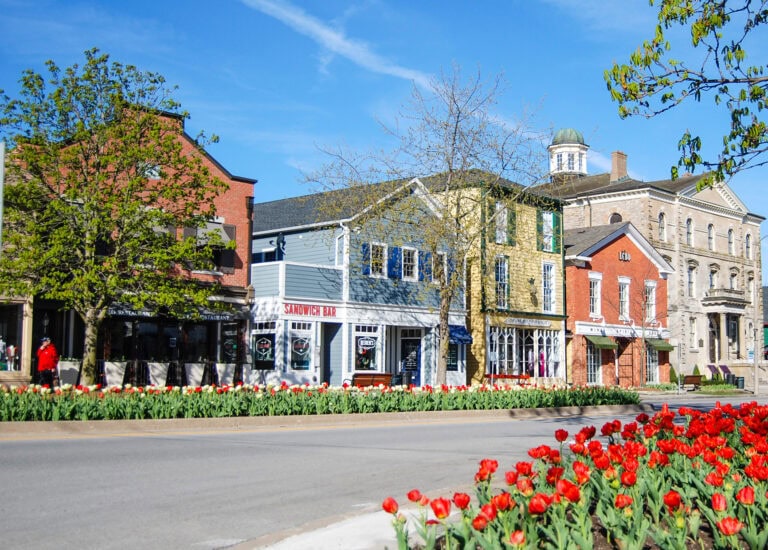
He said he was “deeply contemplating” smashing Niagara into one or four larger cities, which would certainly mean the official end of Canada’s most beautiful town.
Who asked him? Certainly not our own Lord Mayor Gary Zalepa or our council — both have spoken out loudly, and for a change, unequivocally, against the idea. The regional council has spoken, too, passing a motion calling on Gale to cease and desist and to not use taxpayer-funded staff time for his thinly disguised amalgamation campaign.
Regional council also voted sensibly to conduct its own review of local government services, seeking to determine whether there are areas where there is duplication or inefficiency.
Going through actual facts rather than “contemplation” may determine that amalgamation would be terrible for our town and others in the region. But it may also find areas that can be improved or streamlined, without destroying small-town life.
To be fair, amalgamation may be bad for us, but it is not always an objectively bad idea. For example, New York City amalgamated successfully in 1898.
It’s fashionable also to think that amalgamation is simply a blunt instrument deployed by bossy senior governments, like Premier Doug Ford’s, which has obliterated a wide swath of Ontario’s planning, conservation and environmental laws.
But this is not always so; in the 1980s, the uber-bossy former British prime minister Margaret Thatcher wiped out the Greater London Council, leaving smaller local councils intact (London-wide government was later restored).
It makes sense, therefore, for us in Niagara to look at whether there are situations where residents are needlessly paying taxes or have to seek approvals from two governments instead of one.
But it should be made clear to whoever is tasked with reviewing this that this does not necessarily mean considering amalgamation. If you sometimes buy milk from the supermarket and sometimes from the convenience store, it does not mean that one or the other should be shut down.
Bob Lehman, a highly respected urban planner whose work includes assisting the Niagara Foundation, points out that there are some things that a regional government can do well, while others are best left in local hands.
“Since land use decisions are all close to home and they impact peoples’ daily lives, they should be made by a local authority,” he says.
He added in an email that in fact, this is one reason that the province actually took away planning authority from all regional governments.
“Putting it back there does not make sense [which could happen under amalgamation],” he said. In fact, it might be better for NOTL if planning was even more local than it is now, with a separate planning authority just for our historic Old Town.
At the same time, there are services, such as policing and perhaps also water and sewers that could be handled on a regional basis. This is why we set up bodies such as police service boards or utility commissions.
By all means, let’s look at what kind of government works best for our town and region. But let’s put seat-of-the-pants amalgamation contemplation to rest.
David Israelson is a writer and non-practising lawyer who lives in Niagara-on-the-Lake.