



If you’re a parent looking to figure out a way to manage a young child who won’t get off their tablet, the Niagara-on-the-Lake Public Library has just the right person for you.
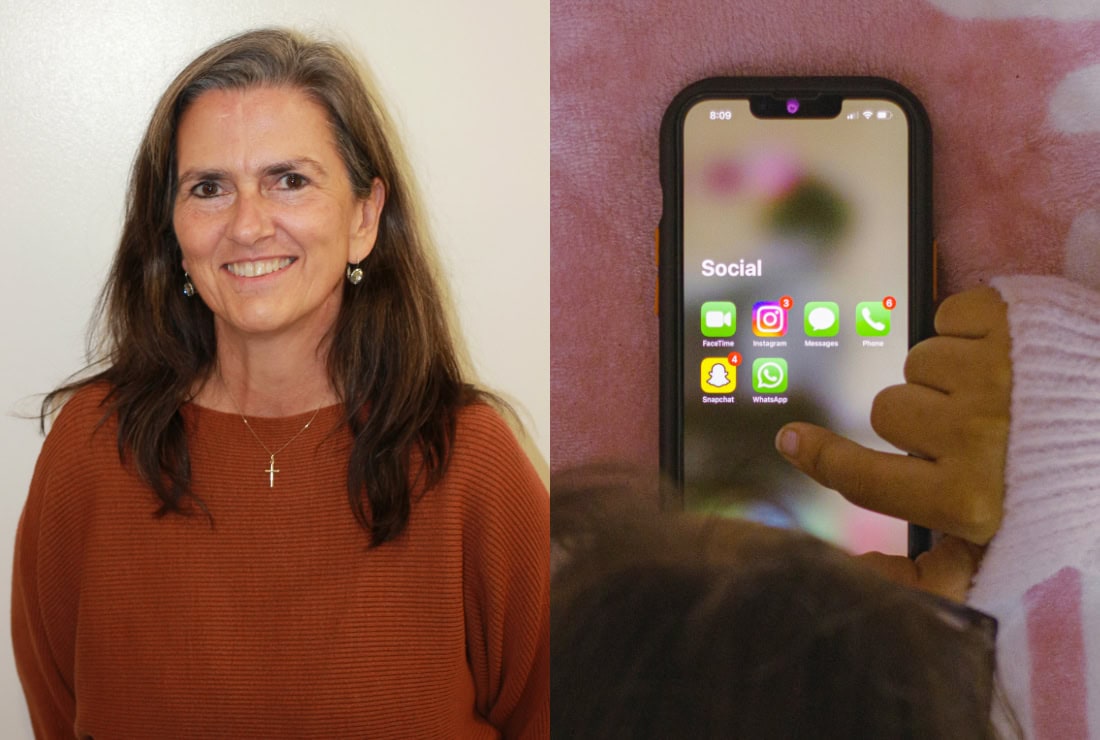
Jackie van Lankveld has decades of experience working with children under five in settings ranging from Uganda and Costa Rica to the Niagara region, where she lives.
She will speak to parents about preschoolers and their interactions with smartphones, tablets and other tech devices at an event hosted by the library on Jan. 22. The invitation followed a similar talk she gave to parents in Pelham/Fonthill last November.
Van Lankveld is a pediatric speech and language pathologist and has worked in early literacy for 20 years. She also runs her own company, Expressive Edge, and said she has worked with “hundreds” of children during her career.
She is also a member of the Canadian Paediatric Society’s digital task force on screen time, a role she has held since the group was founded in 2015.
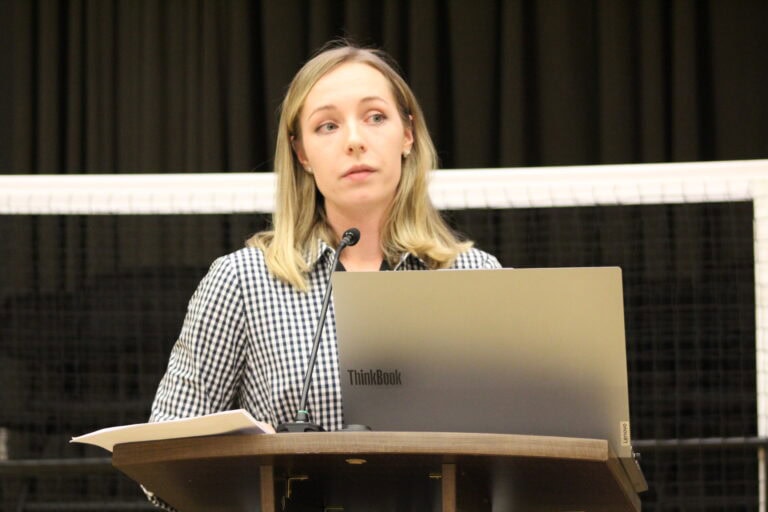
Dr. Robin Williams, a pediatrician who has also worked in public health and has worked with Van Lankfeld, said they reviewed the data and it came to a strong conclusion about screen usage.
“It’s become more evident that it definitely has an impact on kids,” she said, particularly saying that particularly interferes with kids’ social interaction and learning abilities.
Van Lankveld also said there’s a remedy, saying there is an “abundance of literature out there” showing children learn language best through face-to-face interaction with real people.
While she does not view screens as inherently harmful and noted they can offer educational, “interactive” programmes such as “Sesame Street” or “Dora the Explorer,” she said screen time for young children should be limited.
“The research tells us that … increased screen time is associated with decreased cognitive development, language acquisition, social emotional health (and) attention-related difficulties,” she said.
One parent in NOTL, Christy Vanderloos, told The Lake Report via the NOTL 4 All Facebook group that she believes she’s seen the consequences of too much screen time in her seven-year-old daughter.
“Because of COVID and working from home, my daughter was exposed to more screen time than she should have. I see the effects now. Needed glasses by age six, and several other kids in her age group at school also have glasses now,” she said.
“I blame the screens for that, among other things. I regret allowing so much use during that time.”
A systematic review and meta-analysis on digital screen time and myopia, or nearsightedness, was published last February by JAMA Network Open, a medical journal published by the American Medical Association.
That review, which analyzed 45 studies on the subject, found that the risk of nearsightedness increased significantly from one to four hours of screen time and then rose more gradually thereafter.
Williams, who also played a role in introducing public smoking regulations to Niagara, said there were parallels with the topic of screen time and smoking, particularly in terms of how the data coming in is pointing to a conclusion that society has to do something about something that can harm people.
In December, Australia made global headlines when it became the first country in the world to ban social media for users under the age of 16, including platforms such as Instagram, TikTok, X (formerly Twitter), Facebook, YouTube and more.
Williams said efforts to get screens out of Australian schools are a positive development — the country’s province of Victoria is looking to introduce a 90-minute screen-time limit for primary school students. She also sees it is as potentially positive that Canadian schools are going more in that direction.
She said she couldn’t comment on the age 16 limit for social media in Australia because it just came in and there wasn’t data on it yet.
Van Lankveld said the Canadian Paediatric Society recommends no screen time for children under two and less than one hour a day for children aged three to five.
She said parents should establish clear guidelines around screen use, especially given how prevalent screens are in daily life. She added that parents’ own screen habits matter, noting she applied those principles with her two daughters, who are now adults.
She said the amount of time parents spend on screens can reduce the time available to support their children’s learning.
“Specifically, for the under five, I would recommend that they focus on learning opportunities that our real life and make sure they’re modelling and monitoring,” she said. “Some people just really have no idea how much screen time they are actually doing.”
Van Lankveld said she hopes to provide parents with strategies to help children navigate a screen-heavy world and to ease the guilt that can come with monitoring screen use.
Williams said for children who should be spending time getting socialized, there’s no replacement for an actual human face and that screens should be done in moderation.
“I think any way that we can moderate it, minimize it is a good thing,” said Williams.
The event runs from 4 to 5 p.m. Registration is available at notlpubliclibrary.org.
daniel@niagaranow.com