



Could Niagara-on-the-Lake become one community in the larger city of Niagara? Not if the leaders of Niagara-on-the-Lake have anything to say about it.
Reactions are pouring in from across Niagara in response to letters sent this week from regional government chair Bob Gale backing the amalgamation of Niagara’s municipalities. The letters have prompted concern from politicians and some residents in Niagara-on-the-Lake.
NOTL’s regional councillor, Andrea Kaiser, says she’s against the idea: amalgamation, she said, would reduce NOTL’s level of representation on the regional stage. The proposal overlooks what she considers to be wasteful discretionary spending at the region.
“I was really disappointed to see that it was brought forward in this manner without public consultation,” she said. “I certainly have very strong opinions that (are) not in favour of amalgamation.”
Lord Mayor Gary Zalepa said he received Gale’s letter to Niagara’s mayors on Feb. 19. In the letter, Gale described Niagara Region’s “fragmented, outdated and unwieldy governance structure.”
“I am deeply contemplating a four-city or one-city model to maximize efficiencies and benefits to the communities we serve,” he said in the letter.
Zalepa responded Thursday with a statement in which he made it clear that NOTL is “strongly opposed” to amalgamation.
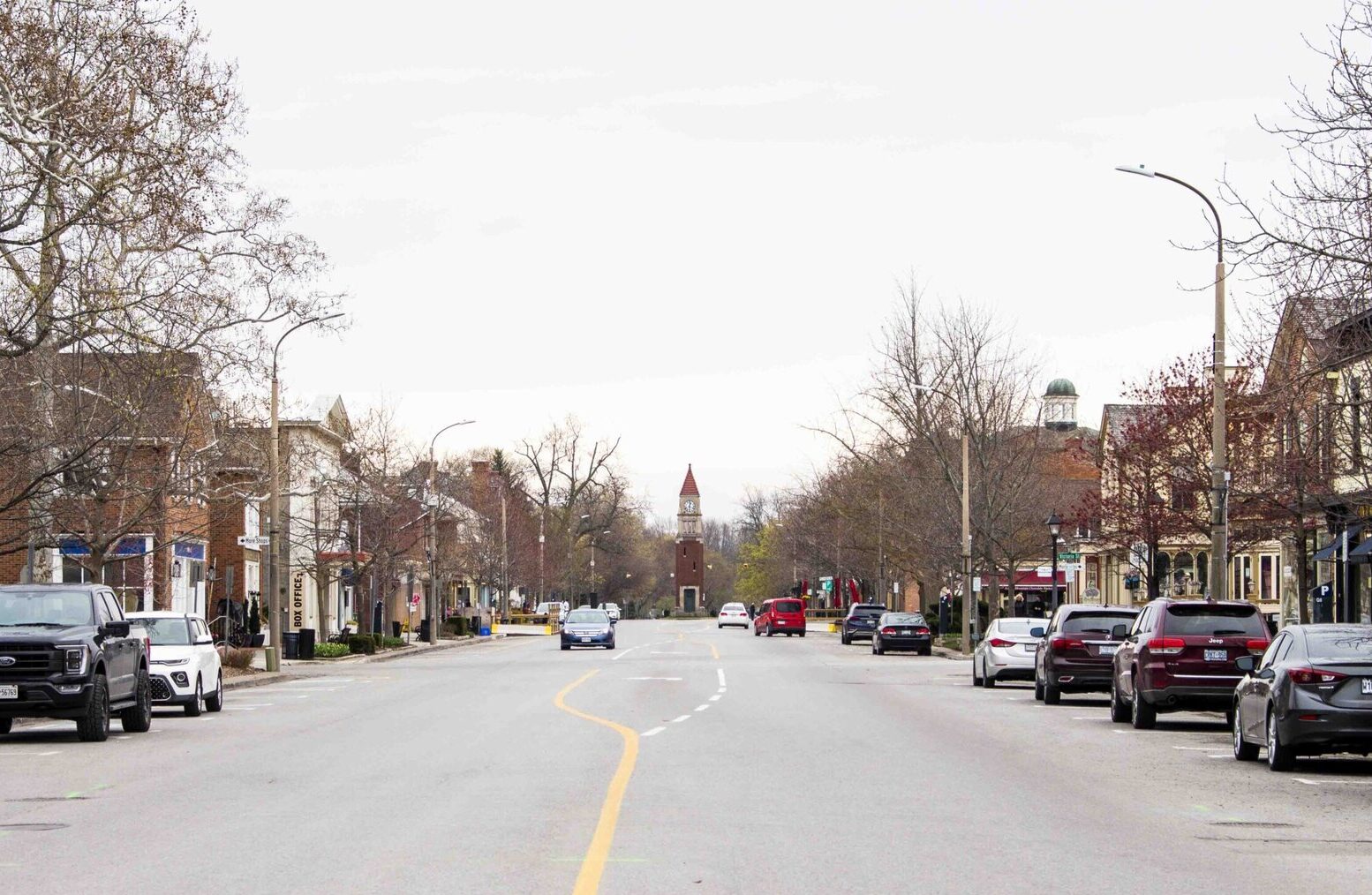
“NOTL is the first capital of Upper Canada and a community with a distinct identity, proud history and strong local governance,” he said. “Any proposal that would fundamentally change our municipality must have a clear legislative foundation, a transparent process, and meaningful public consultation. None of that has occurred.”
The Niagara region is made up of 12 municipalities, including NOTL. Coun. Erwin Wiens said a one-city model would merge all 12 into a single municipality. Under a four-city model he has heard “bandied about,” NOTL could be absorbed into a municipality with Niagara Falls and Fort Erie.
Gale wrote in the mayors’ letter that his goal is to reduce bureaucracy and wasteful spending. He pointed to the region’s 126 councillors — more than the number of seats in the provincial legislature — as an example.
In a second letter dated Thursday to Municipal Affairs and Housing Minister Rob Flack, Gale repeated concerns about “waste, abuse and a culture of casualness with taxpayer dollars.”
He said solutions could include a “reduction in the number of municipal councillors and a municipal restructuring of the region, including potential amalgamations.”
Gale also cited “successive tax increases” of seven per cent, 9.6 per cent and 6.3 per cent over the past three years.
The current system “is no longer capable of delivering the level of fiscal discipline and administrative efficiency that the moment requires,” he wrote, adding it could “undermine the provincial government’s ambitious agenda for Niagara.”
Wiens and Zalepa said they share concerns about waste and inefficiencies at the regional level. Wiens said he would support reducing the number of regional councillors to 12 and creating service boards, but not amalgamation.
“NOTL has the most to lose and the least to gain for this,” he said.
The Town of Niagara-on-the-Lake is no stranger to amalgamation: in the 1970s, Old Town, Virgil, Glendale, Queenston and St. Davids joined forces to become part of one municipality, Wiens said.
He said a new amalgamation would bring “no benefit” to NOTL, arguing it would reduce representation, raise taxes and erode what he called the region’s most efficient municipality.
“We would lose the uniqueness of the town of NOTL,” he said.
At this stage, Wiens said, the town is trying to “get the message out” in response to Gale’s letter.
“There are no savings or efficiencies to be found through amalgamation,” he said. “There’s other ways of finding efficiencies.”
Steve Hardaker, a Glendale resident and a director of the NOTL Residents Association speaking on his own behalf, opposes amalgamation, citing progress Glendale residents have made advocating on development issues. He also said he believes the province could move quickly on plans to amalgamate.
Wiens, Zalepa and Hardaker all said they take seriously the possibility that Premier Doug Ford’s government could force amalgamation.
Hardaker said he believes it could happen soon.
“My fear is that regardless of local objections, it’s going to happen,” he said. “I feel it’s going to happen before the next municipal election, which means it has to happen before May of this year.”
“I have a feeling the Doug Ford government is going to do this quickly.”
Niagara Falls’ member of provincial parliament, Wayne Gates, said taxpayers will end up paying more and services will be reduced for the vast majority people, and pointed to Toronto amalgamation as an example.
He said there should have been more consultation on Gale’s part.
“I have always said, ‘I am opposed to forced amalgamations,'” he said. “It should be made a Niagara solution, not a Toronto solution.”
“We need more consultation, we need more time.”
Hardaker urged residents to speak out and said the NOTL Residents Association will discuss the issue at its next board meeting.
Zalepa said council will develop a plan to “engage” residents and encouraged those with provincial contacts to lobby against amalgamation.
“We need all parts of the town coming together. This is existential,” he said.
The Greater Niagara Chamber of Commerce said it supports reform but did not explicitly endorse amalgamation, stating that “structural reform should not be pursued for its own sake.”
The chamber said any reform must preserve “local voice, representation and the unique character that residents value,” be evidence-based and address “gaps in infrastructure, housing readiness and economic competitiveness.”
Other Ontario municipalities, including Hamilton, Toronto and Ottawa, were amalgamated in the late 1990s and early 2000s under the Progressive Conservative government of Mike Harris. Wiens said those moves should serve as cautionary tales.
“They haven’t been as successful as people have wanted,” he said. “They did not reduce costs at all.”
Kaiser said she has not spoken to Gale. Zalepa said he reached out but has not connected with him about the letters. Wiens said he spoke with Gale and described the conversation as respectful, with both men agreeing on the need for efficiencies but disagreeing on amalgamation.
The Lake Report contacted Gale for comment but did not receive a response by press time.