

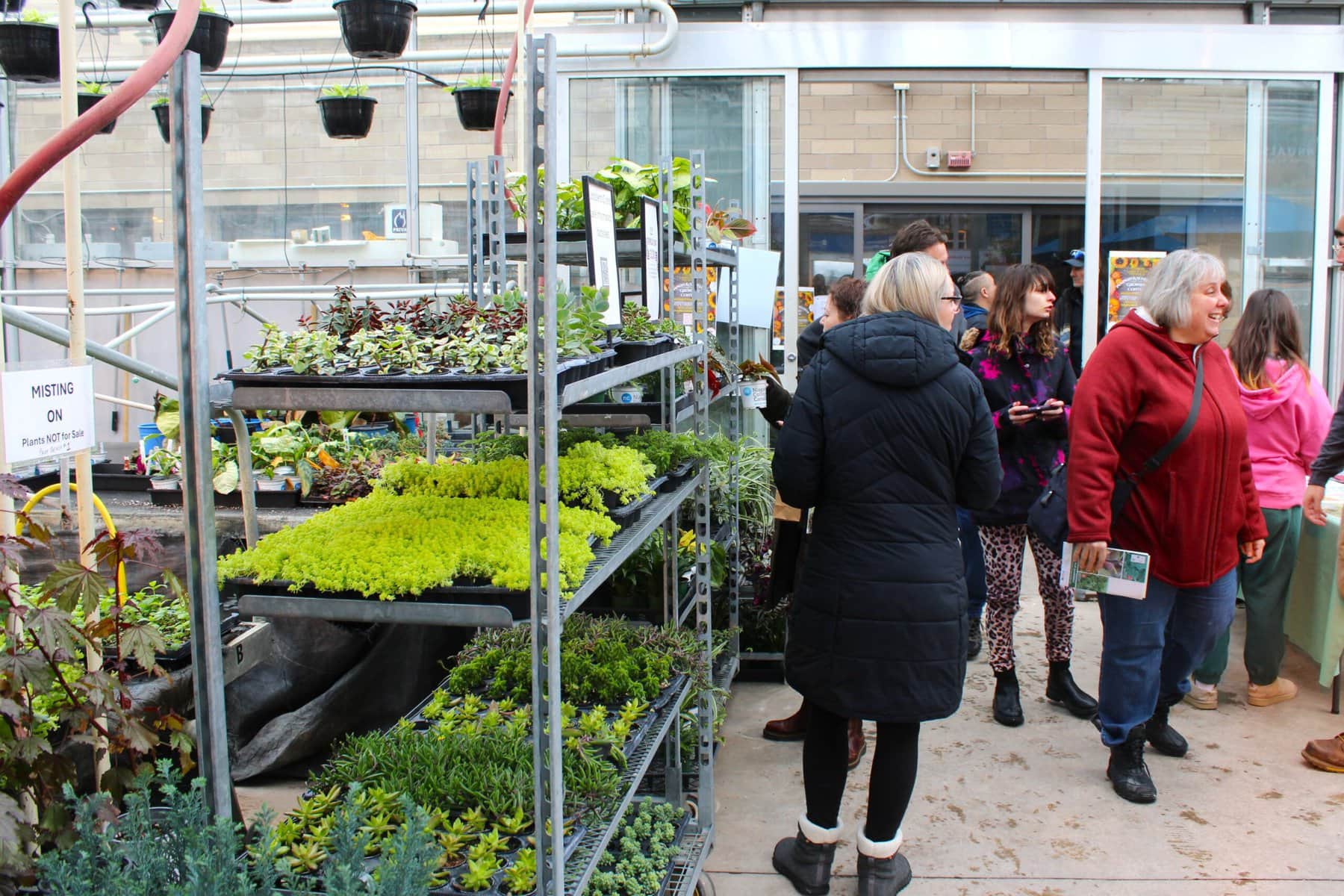


Outside temperatures sat around -17 C last Saturday, yet inside Niagara College’s teaching greenhouse, it might as well have been summer.
Seedy Saturday brought residents indoors to peruse a variety of seeds and receive some advice to help their gardens thrive, whether spring, summer, fall or winter.
The annual fundraiser hosted about 50 vendors and introduced local residents to year-round growing at the Daniel J. Patterson campus.
The event connected residents with practical food-growing skills at a time of rising grocery costs while also promoting the little-known greenhouse that has operated for 25 years producing hydroponic vegetables and student crops.
Tami Lyons, president of the Thorold Garden Club and organizer, said the event relies on donated and collected seeds, including native seeds collected and packaged by volunteers and seeds saved from home gardens.
“People are looking at grocery prices and realizing they can grow their own tomatoes, even in a pot on a balcony, and it is not as hard as they think,” said Lyons.
The club sells the seeds as a not-for-profit fundraiser and brings in artisans and seed vendors to help cover speaker costs for Seedy Saturday.
Lyons said the event’s speakers covered topics that ranged from gardening with children to winter gardening, climate-related planting changes and cannabis cultivation.
“This is a good way to introduce people to the fact that we always have crops growing year round and that the greenhouse is not just for students,” said Jennifer Laverty, Niagara College horticulture technician.
Laverty said students in the horticulture, landscape and greenhouse program at Niagara College ran drop-in children’s activities through the day, including botany colouring sheets, origami butterfly crafts, pollinator games, vermiculture demonstrations with living worms and microscope stations where children examined leaves, insects and soil organisms.
Second-year horticulture student Avery Ringer said the response from kids surprised her.
“I was nervous they would be too cool for it, but they really got into it,” said Ringer.
Laverty said the greenhouse grows hydroponic vegetables for sale and was currently growing a spring hydrangea crop timed for Easter along with annuals for the spring season.
Local environmental groups also had tables inside the greenhouse. Niagara Bee Group runs a Host a Hive program across the Niagara region, including Niagara-on-the-Lake near the water, leading to a unique tasting honey compared to other hosts.
Jolene Drouin, co-owner of Niagara Bee Group, said interest in bees can lead people to pay attention to broader habitat issues.
“Awareness is a great superpower. Once people see how bees live, they start paying attention to plants, insects, and the whole ecosystem around them,” said Drouin.
Lisa Deyoung, District 9 director for the Ontario Horticultural Association, said public events like Seedy Saturday help connect residents with local horticultural clubs that they may not know exist.
“People come for the plant knowledge, but they also meet like minded people and build connections,” said Deyoung.
Some horticultural societies across Niagara, including groups in Fort Erie and St. Catharines, are struggling to maintain executive boards because of declining volunteer participation after more than 100 years of community service.
Deyoung said districts are encouraging societies to adopt committee-based leadership models that spread responsibilities among several people rather than relying on a single president or vice-president, which she said can make involvement more manageable and help keep local clubs operating.
The Niagara-on-the-Lake Horticultural Society meets on the fourth Tuesday of the month at the NOTL Community Centre.
Niagara College is developing one-time workshops and short seminars for people who want local gardening instruction without enrolling in a two-year program, with more options planned for children in winter.