


Niagara-on-the-Lake residents could face longer ambulance wait times and disruptions to medical care at home as early as Tuesday if Niagara’s paramedics and their employer, Niagara Region, fail to reach a new collective agreement.
The Canadian Union of Public Employees Local 911, which represents Niagara’s paramedics, dispatchers and occupational therapists, served strike notice Thursday.
The two sides are scheduled to return to the bargaining table Monday. If no agreement is reached, workers are set to begin striking at 7 a.m. Tuesday, Dec. 1.
Emergency ambulance services would continue, but the union estimates roughly 15 per cent fewer emergency response vehicles would operate across Niagara over a 24-hour period.
How many, if any, would be taken off the road in NOTL remains unclear.
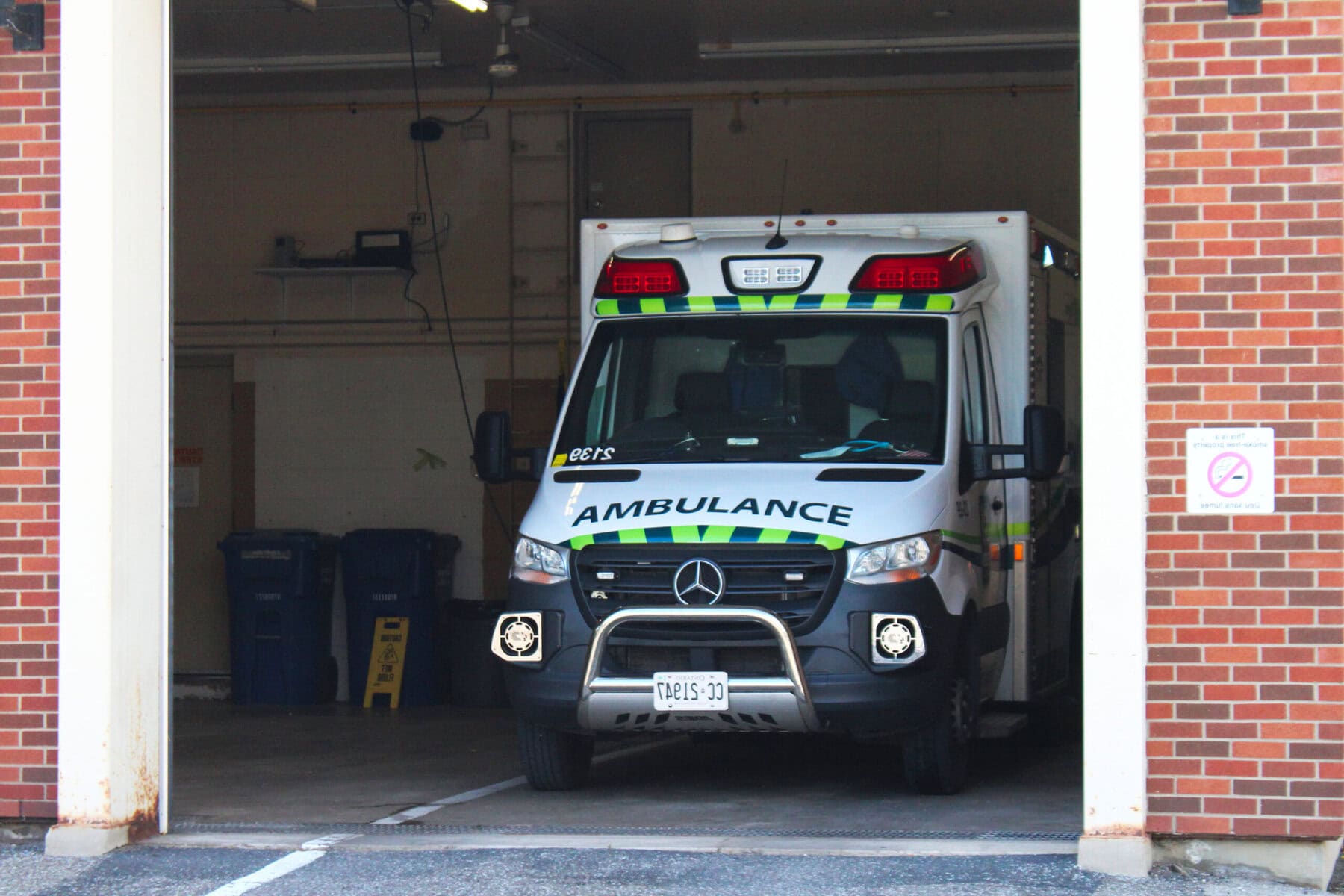
Dave Barnett, president of the union and a Niagara paramedic of 17 years, told The Lake Report Friday that NOTL currently has three ambulances — one operating around the clock in Old Town, another operating around the clock in Glendale and a third operating for 12 hours a day in Glendale.
He estimates roughly nine ambulances and one first-response vehicle would be taken off the road across Niagara over a 24-hour period, but said the region has not informed the union which vehicles would be affected.
Even if NOTL’s ambulance allocation remains unchanged, reductions elsewhere could affect local coverage in a town that has historically struggled to meet ambulance response-time targets, he said.
“Just because a truck starts in Old Town doesn’t mean it’s going to spend its entire shift or any of its shifts in Old Town protecting the Niagara-on-the-Lake residents,” Barnett said. “It gets pulled to where it’s needed.”
The region confirmed Friday that daily paramedic staffing would decrease from 138 to 119 during a strike, a 13.8 per cent reduction, while dispatch staffing would decrease from 16 to 14, a 12.5 per cent reduction.
It said ambulances are deployed across Niagara as needed, the most urgent medical emergencies would be prioritized and full staffing could be restored in an unanticipated emergency.
It did not specify whether NOTL’s ambulance staffing or response times would change.
What other services would be affected?
Under an Oct. 13 Ontario Labour Relations Board decision, community paramedicine programs, which help patients manage medical conditions at home, would be suspended except for palliative care.
Barnett said community paramedics would be redeployed to frontline emergency care. Patients would lose access to their usual specialists but could still call 911 in emergencies.
Neither Barnett nor the region provided figures on how many NOTL patients would be affected. The region did not outline alternative care arrangements or how patients would be notified.
Stephen Szeplaki, executive director of the Niagara North Family Health Team, acknowledged the role paramedics play in supporting patients but did not address the potential impacts of suspending community paramedicine services.
“We value our partnership with Niagara EMS and the important role paramedics play in helping the patients that we serve,” he said in a written statement.
Barnett said reduced dispatch staffing could result in more callers being put on hold after being transferred to ambulance dispatch.
Certain non-urgent ambulance transfers from urgent care centres to hospitals would also be suspended during a strike, Barnett said.
NOTL Fire Chief Jay Plato said local firefighters would continue responding to medical calls when requested through the existing tiered response system.
“At this time, there are no changes to our role or response protocols,” he said in a written statement.
Both the town and the region advise residents to continue calling 911 in medical emergencies.
Negotiations began in January, Barnett said, with four issues remaining unresolved: wages, mental-health benefits, meal breaks and time off in lieu of working statutory holidays.
The union is seeking compensation more comparable to that of police officers and firefighters, improved mental-health benefits for full- and part-time workers, two meal breaks per 12-hour shift and a full shift off in lieu of working a statutory holiday.
Barnett said paramedics currently have one meal break per 12-hour shift “and we currently aren’t guaranteed to get that at all in a shift.”
The region declined to comment publicly on bargaining issues, saying it preferred instead to “settle these matters at the bargaining table.”
In his 17 years with Niagara EMS, Barnett said he has never experienced a strike or come this close to one.
He said the union is prepared to negotiate right up until Tuesday’s strike deadline.
“If we can avert a strike, then that’s my main goal,” he said.
The region said it remains committed to reaching an agreement and avoiding a labour disruption.
“The safety of residents and the continuity of essential emergency medical services remain the region’s priority,” the region said in a Friday news release.