




Plans to use a property on protected farmland near St. Davids to store farm equipment and crops took centre stage at the latest Niagara-on-the-Lake planning meeting, with some nearby resident challenging the details of these plans.
Town staff recommended approving the zoning bylaw amendment for the 25-acre property at 263 Concession 6 Rd., but several residents urged council to refuse the application.
During the meeting on Feb. 3, council deferred a decision on these plans. It referred the recommendation report back to staff, which will be presented to council at the next soonest possible meeting.
These plans would allow a 43,000-square-foot building to be used to house farm equipment, store produce in a temperature-controlled area and open a small agricultural market.
The site is located within a prime agricultural area designated as a specialty crop area under Ontario’s Greenbelt plan.
The proposed zoning would limit development to no more than five per cent of the property, with the proposed building measuring roughly four per cent of the site, while the remainder would be protected as woodland and wetland through open-space zoning, where building is not permitted under provincial planning rules.
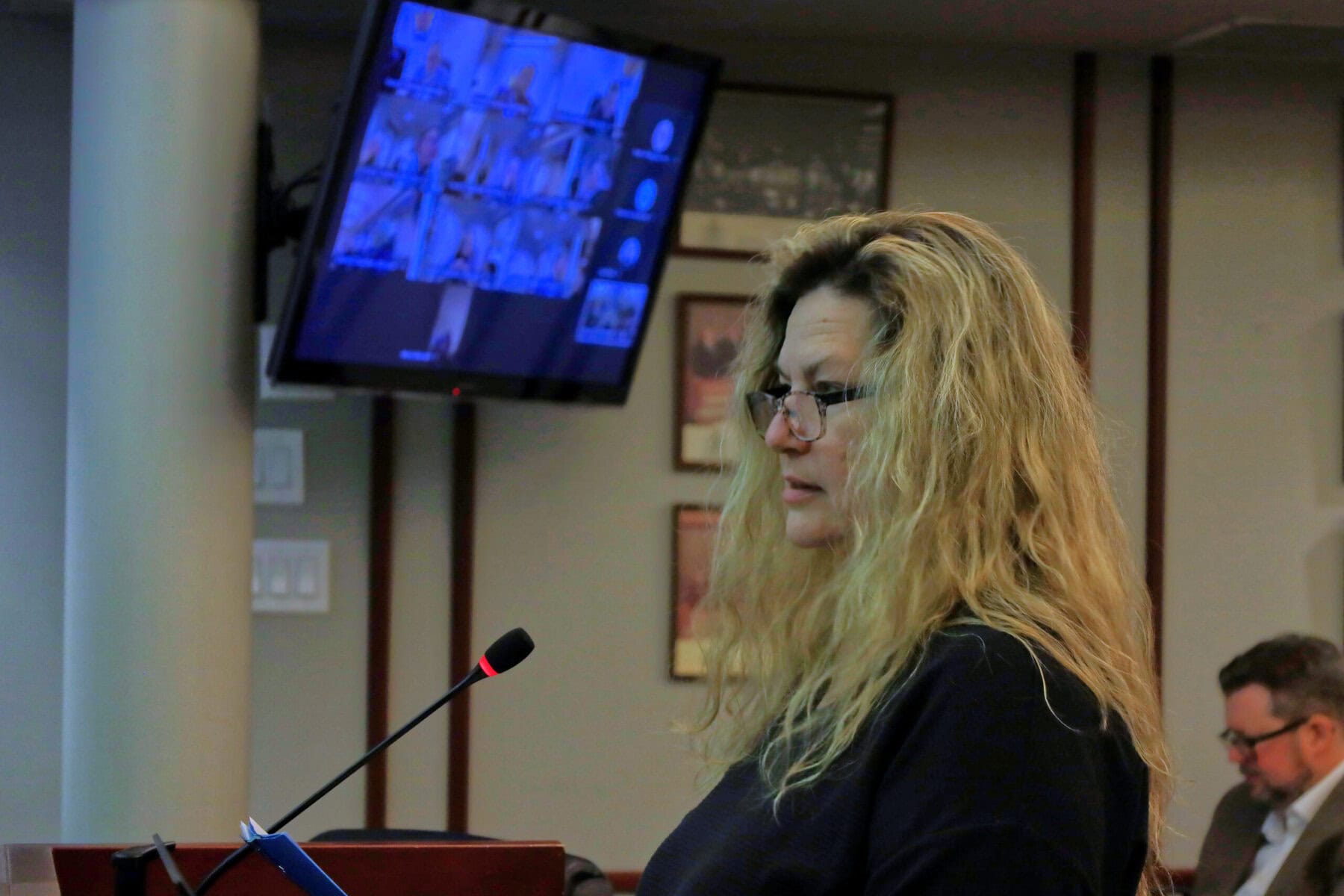
Michelle Lament, who farms across the road from the property, told council the application relies on opinion rather than evidence and fails to demonstrate that the development truly supports agriculture.
“Farmers do not store their equipment in a warehouse miles away from their farms,” Lament said. “We are not in support of this application.”
She questioned why the town’s agricultural advisory committee was not involved in the application and raised concerns about a list of anonymous farms the applicant submitted as evidence of agricultural support.
“Who are these 23 farms?” she asked. “Provincial policy expects evidence, not just a bunch of random numbers to appease the staff’s request.”
Associate planner Eric Brathwaite of MHBC Planning, speaking on behalf of the applicants and property owners, Parth Patel and Sejal Patel, said the list of farms was made anonymous to protect their privacy.
“This isn’t an intent to hide anything from council,” said Brathwaite. “That’s why we are in attendance and are here in person to answer any questions.”
Lament said “nobody came knocking on our door” to ask whether the proposed facility would be useful for her 16-acre grape farm operation and pointed to an existing cold storage facility in nearby St. Davids.
“We don’t need another large-scale cold storage, where we already have one three kilometres down the street,” she said. “Buildings like this do not require farmland and can be built on the worst possible soils.”
Coun. Andrew Niven echoed some of these sentiments during council’s question period, saying he was about whether or not agriculture-related uses need to be located on what he described as “arguably, probably some of the most protected farmland.”
After questioning from Niven about how evidence of agricultural need is assessed, Brathwaite said the proposal is intended to be deliverable and located close to farms and agricultural operations in the surrounding area.
“We’re understanding that this is what the clients have assessed the market to be.”
But to Niven, “proximity doesn’t really relate to necessity.”
“How do you know those are serviceable farms, without having anything other than letters?” he asked.
“Which, we may or may not be able to vet,” Niven added, questioning how letters of support are vetted.
Staff said submissions are accepted as provided and not independently verified unless clarification is needed.
Nicholas Colaneri, a nearby resident, told council the changes made to the application after the public meeting held on March 4 last year did not fix what he described as fundamental policy problems.
“The key issue is not whether the application has changed, but whether those changes have resulted in compliance,” he said.
Provincial planning policy restricts development and site alteration in natural heritage features and on adjacent lands unless it can be shown there will be no negative impacts — a standard he said the proposal does not meet.
Brathwaite said “a number of technical documents, including a natural heritage review,” have been submitted.
Colaneri said the application asks council to approve the zoning before questions about the land’s suitability for the use are fully resolved.
Brathwaite said the proposal has been revised multiple times in response to concerns — changes, he said, limit how much of the site can be developed, set caps on the size of the building, add setbacks to protect nearby environmental features and require private water and sewage servicing, subject to Niagara Region’s approval.
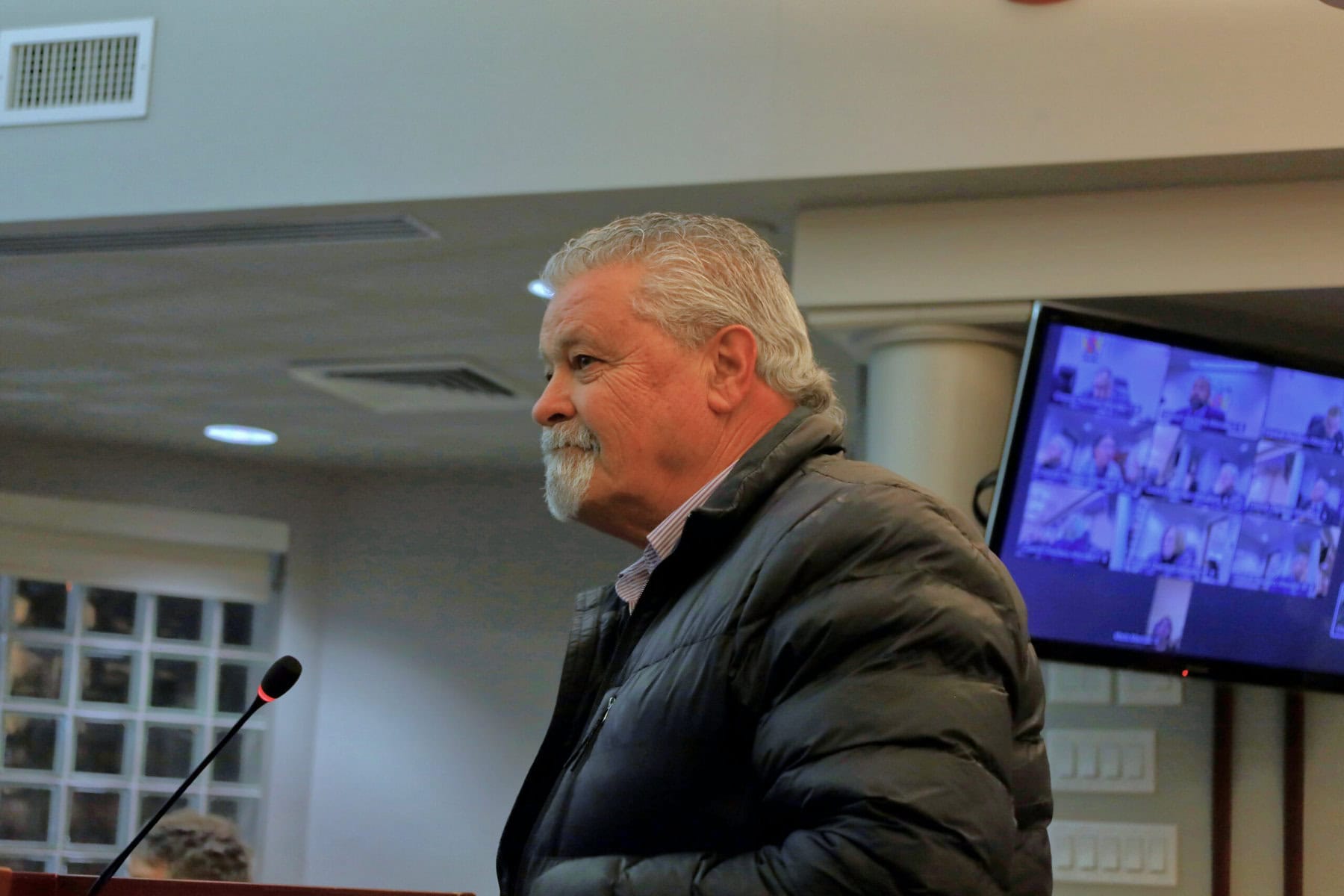
Colaneri Estate Winery owner Nick Colaneri, father of Nicholas Colaneri, also spoke against the application.
“I strongly urge council to refuse the proposed zoning by law amendment,” he said, speaking “in support of the written submissions already on record.”
“Council should rely on planning evidence and enforceable limits in its decision.”
Coun. Gary Burroughs asked whether the property owners spoke with St. Davids Cold Storage and questioned the proposed building’s proximity to the intersection of Concession 6 and York roads.
“The potential drawings appear very close to the intersection,” said Burroughs. “Does it have to be that close?”
Brathwaite said the proposal meets the town’s 15-metre setback requirement, though the final location could be explored, and said the owners haven’t been in discussions with St. Davids Cold Storage, noting the facility is located within a settlement area rather than on agricultural land.
Lord Mayor Gary Zalepa asked if past agriculture-related zoning approvals required proof of business activity.
“I don’t recall that,” said Zalepa.
Niven said provincial agriculture guidelines allow municipalities to request evidence, such as letters or contracts from local operators, to justify an agriculture-related use. Staff said it would take Zalepa’s question back for review.
Coun. Wendy Cheropita asked if the applicant had spoken directly with nearby farmers — Brathwaite said no. She also questioned how much of the site would be used for agricultural activity.
Brathwaite said the proposal qualifies as an agriculture-related use under provincial policy and does not require farming to occur on the property “to be considered” as that use.
He added that the proposed zoning also identifies a small seasonal growing area east of the building, measuring 3,500 square feet.