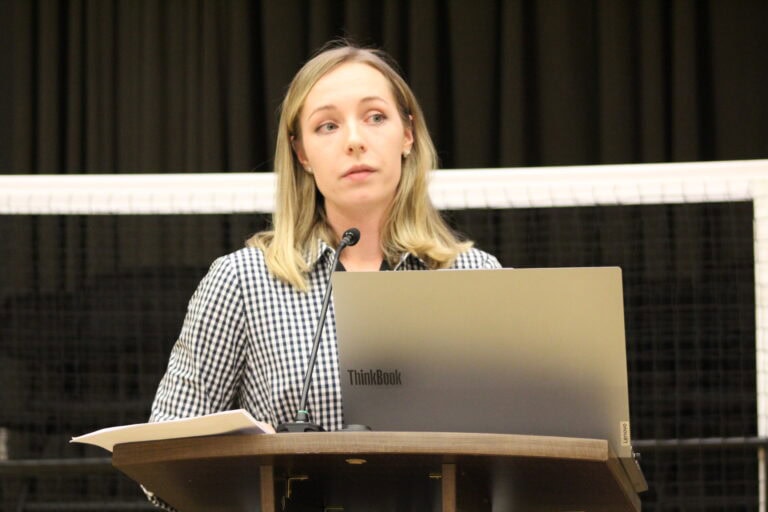




The idea that kids spend too much time on screens is something which hits home for parents like Christy Vanderloos of Virgil.
Vanderloos has a seven-year-old daughter named Daisy who she said was often given a tablet as a two-year-old when she was working from home during the COVID-19 pandemic. Her husband, Jason, was working out of the house as an essential worker doing sanitizing in the hospitality industry, while she was doing commercial banking at Meridian Credit Union.
Vanderloos said it “became the babysitter,” during her working hours and seemed like the best thing to do at the time. But now she said she would now do things differently, as her daughter developed a need for glasses at age six. Daisy’s eye doctor told Vanderloos screen time could have been a factor in why she would have needed them.
Daisy’s mom said she also constantly needs the hum of what’s playing on the screen in the background, even as she’s playing with other toys or doing something else.
“I see the impacts every day,” she said.
Vanderloos sees the regulation of kids’ screen time as a personal responsibility. If so, how much time is too much time for a parents to young kids to spend on their tablet or smart phone?
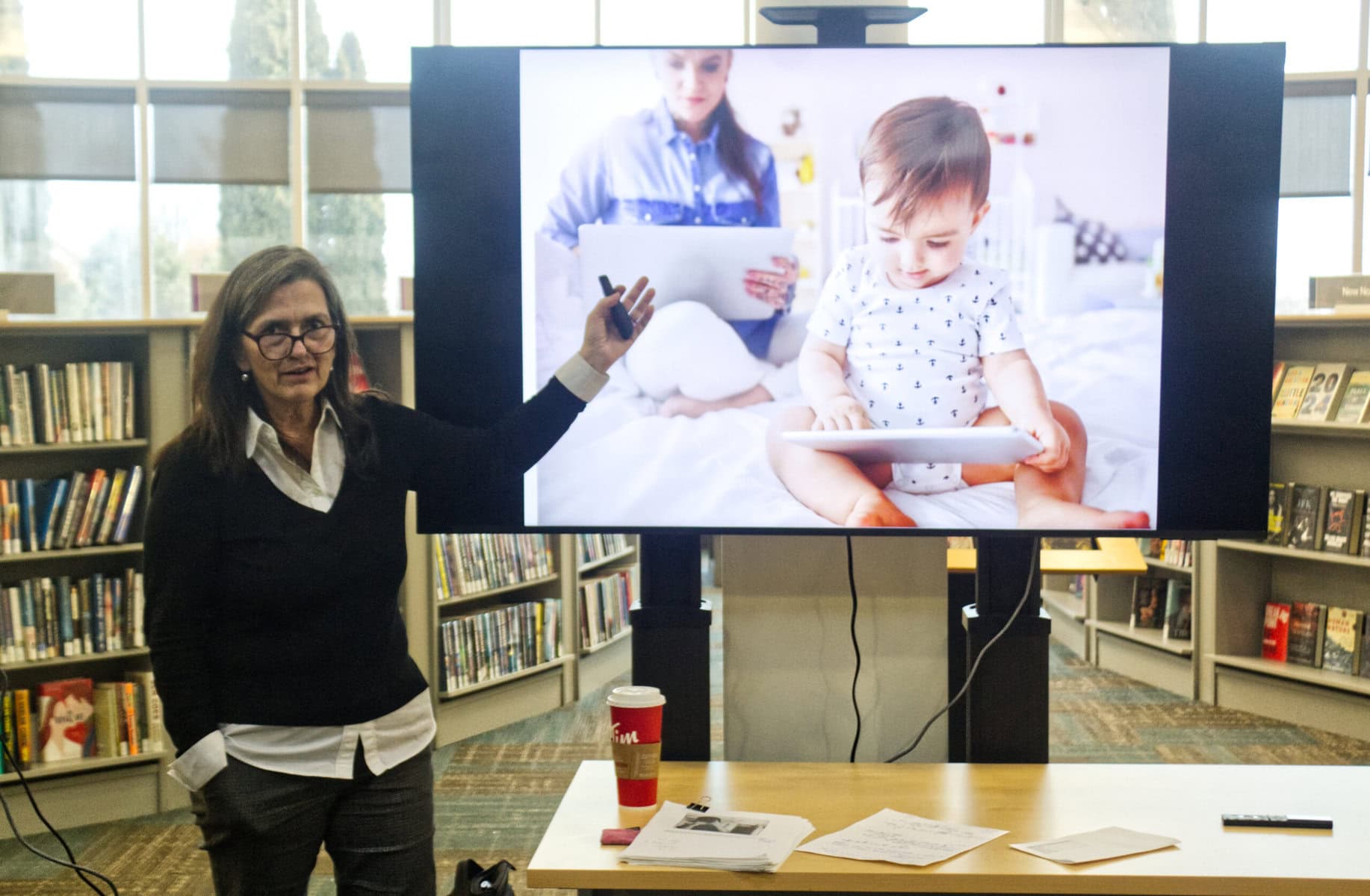
That was one of the questions Jackie van Lankveld tried to answer last Thursday at the NOTL Library. She said if your child is between the ages of three to five, their screen time should be limited to an hour a day — if they’re younger than three, it might be time to consider putting the screens away for good.
The Niagara-based speech-language pathologist led a discussion on the effects of screens on preschool-aged children’s health, during which she warned of the consequences of screen time on children’s ability to develop language, social skills, decision-making and problem-solving skills.
“When I talk about why we would focus on the 0 to 5 … it’s because at this age, parents are mostly, hopefully, in control of their kids’ screen time,” she said.
Van Lankveld, who has worked with young children for decades in early literacy, is a member of the Canadian Paediatric Society’s digital task force on screen time, a role she has held since the group was founded in 2015.
A report published last year by Media Technology Monitor, which van Lankveld referenced in her talk, found that 70 per cent of children aged two to six use screen technology unattended. She referenced how some parents often use technology to calm their children down.
For those kids who currently still in preschool or kindergarten, the consequences if this issue goes unaddressed become apparent as these children will get older, she said.
“I think it’s only going to get worse,” she said. “We’re going to see an increase in screen time and then the latest research coming out as kids get older and the impacts that it has on their mental health as they become teenagers, that’s when we’re going to run into some bigger issues.”
She discussed strategies for setting limits, including no screen time for children aged two and under and up to one hour a day for children aged three to five. These recommendations come from the Canadian Paediatric Society itself.
That advice resonated with Kane Harvey, who attended the event with his daughter, who’s almost two years old, in mind.
He said he wanted to understand the implications of screen use for her development and has already followed van Lankveld’s recommendations.
“We’ve had no screen time as of yet,” Harvey said. “I just wanted to see kind of from two onwards what would happen to her development if we did introduce screen time.”
He said he is slightly apprehensive about an upcoming trip to Colombia, where his daughter will be exposed to airplane screens.
Vanderloos said with the amount of time parents work nowadays, and with both parents out of the home, it can be hard to give children the attention that they need. She said she has a closet full of “crafty things” to keep her occupied during the summer.
Van Lankveld said she knows enforcing limits isn’t easy: in fact, she said, a report from Pew Research Center, published last October, found that while 86 per cent of parents have rules around screen time for their kids, 19 per cent of them have a hard time sticking to those rules.
Vanderloos said this checked out from her own experience.
“We have not put rules on her screen time,” she said. “We should 100 per cent, but it’s easier said than done.”
Based on the difficulties some parents are having, a more robust, top-down approach may offer them some assistance.
This week, lawmakers in France approved a bill to ban social media for children under the age of 15. This follows a move by Australia from December, which became the first country in the world to ban social media for users under the age of 16, including platforms such as Instagram, TikTok, X (formerly Twitter), Facebook, YouTube and more.
Van Lankveld noted this latest development and said it would be great to see the successes the ban has — and, potentially, for Canada to follow suit.
“We would love to see our government take more notice and implement more policies,” she said.
Despite her warnings, she emphasized that she does not advocate eliminating screens altogether. Instead, she encouraged parents to be mindful of how much screen time their children have and what content they consume.
Julia Friesen, a mother of a six-year-old daughter and a three-year-old son, said setting a strong foundation is important. A family friend of van Lankveld’s, she said she limits her children’s iPad use to about an hour a day.
“I think there’s a lot more talk about restrictions on screen times vs. when I was growing up,” she said. “I don’t think restricting him to zero is the answer, but what is like ‘the healthy amount.’”
Van Lankveld agreed: “Everything in moderation,” she said near the end of her presentation.