

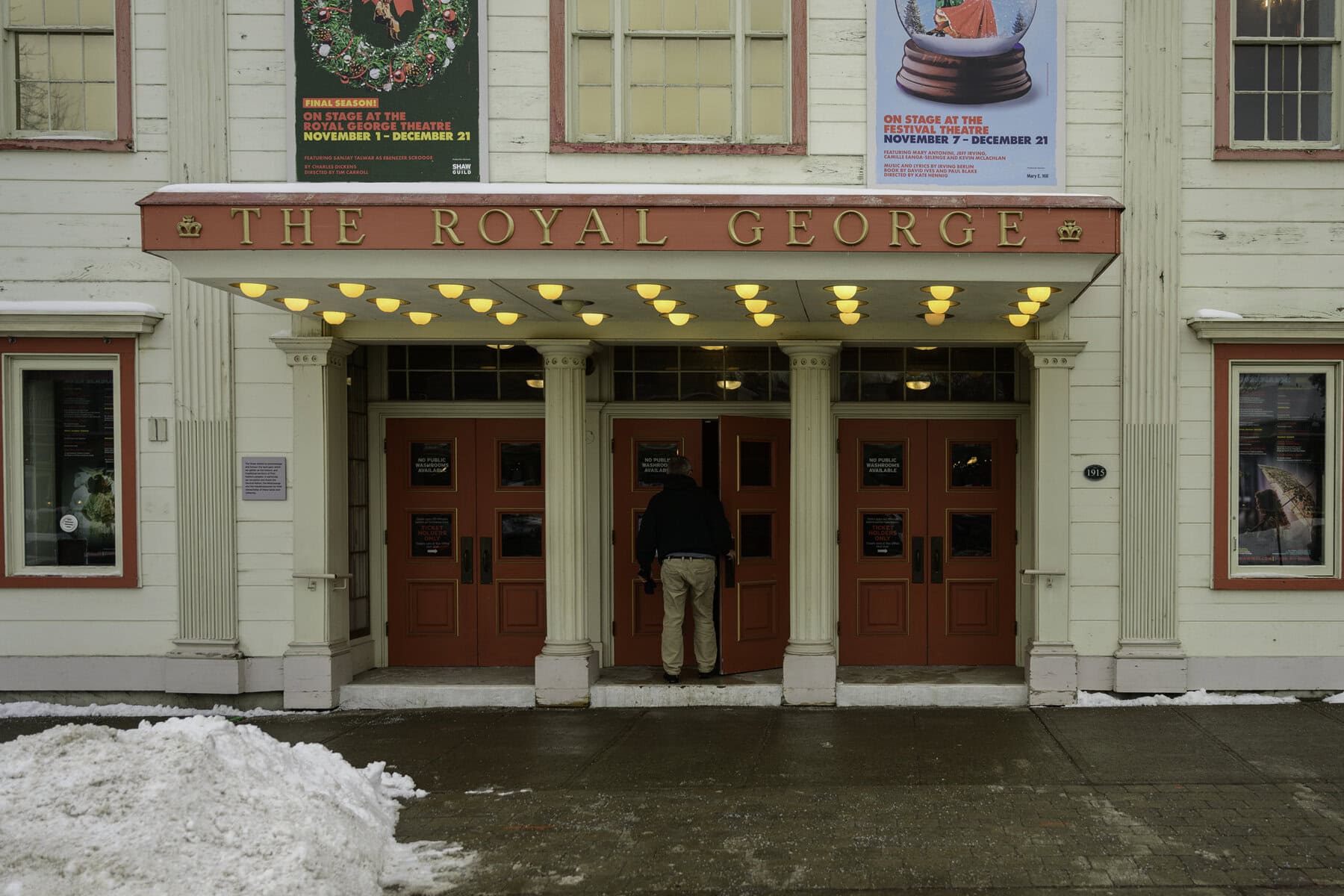


On Saturday, the front doors opened for the last public entry into the Royal George before the careful work begins of taking apart the little theatre occupying a big place in the town’s heart — without, many hope, losing what it means to the people who made it their home for more than four decades.
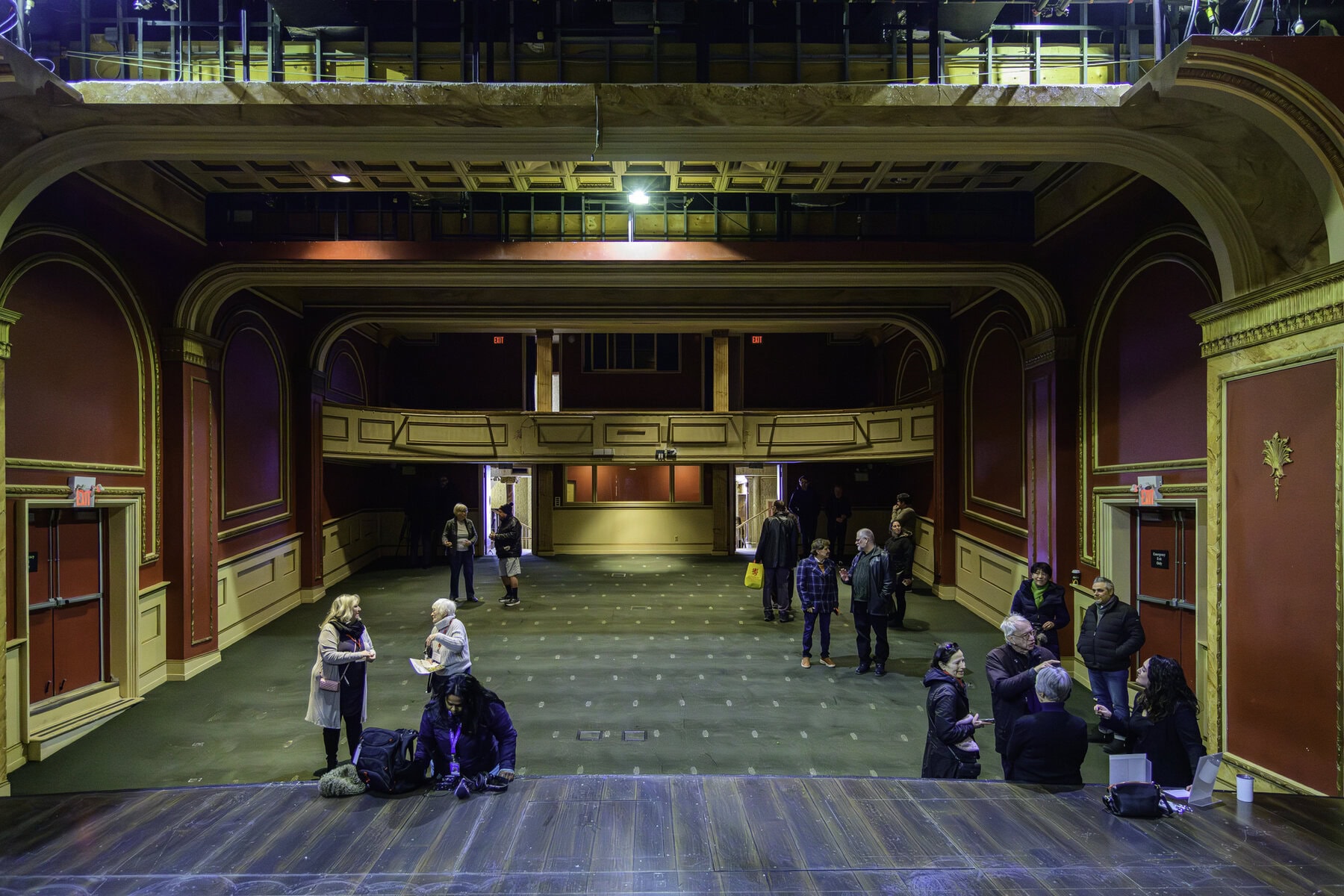
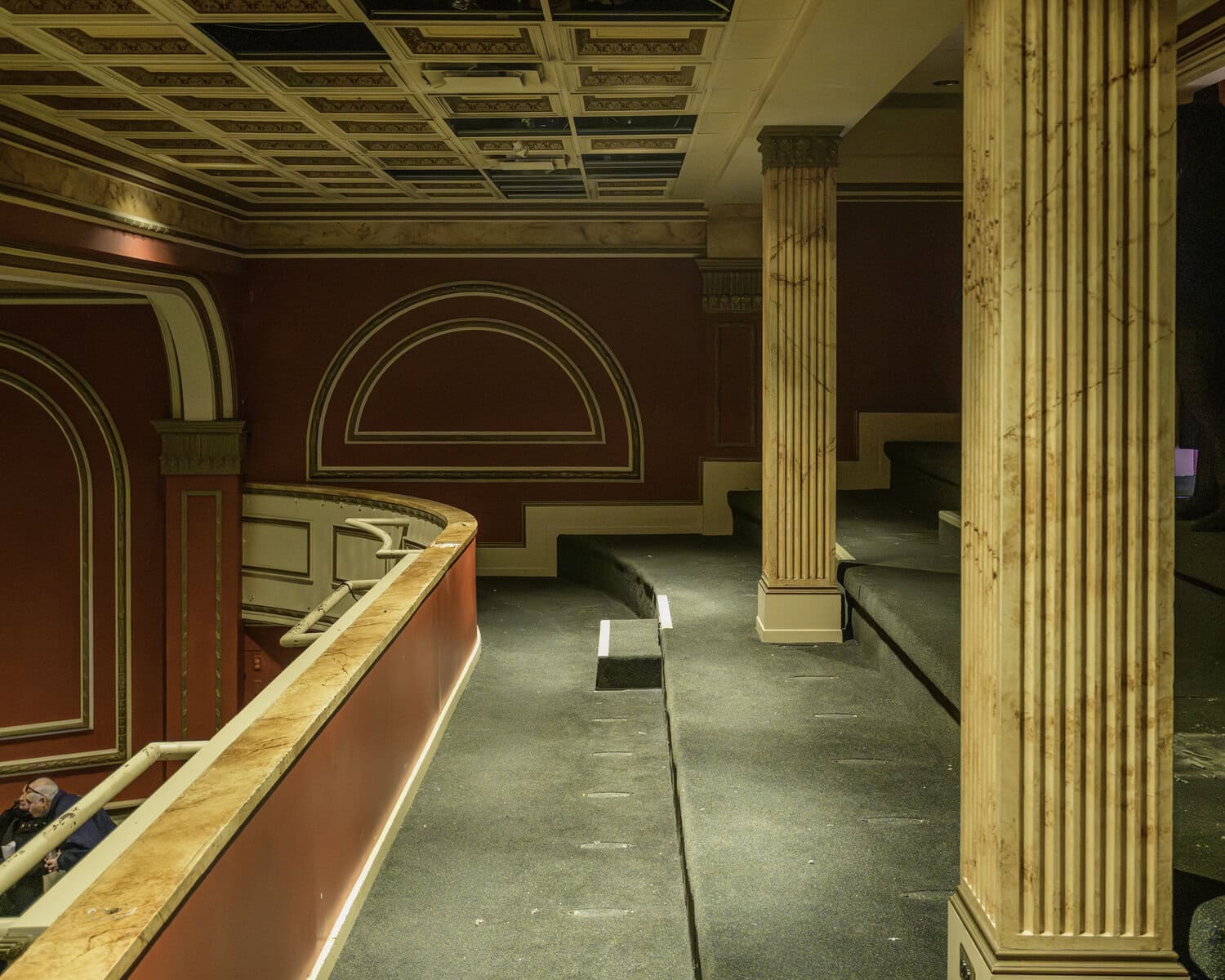
Inside, the 110-year-old theatre has been stripped bare of many of its features, leaving a stark, exposed auditorium — the past three weeks, all 335 of its plush, red seats were taken out, major equipment removed and lightbulbs unscrewed.
Shaw Festival staff packed up what they could for storage and reuse at the Niagara District Courthouse, the Shaw’s new home for the next couple of years — until the new, larger Royal George is built in the old one’s place.
Upon entering the building, Reynold Scholey had the same first reaction as many other visitors. He stepped into the empty venue, paused, and said, “I can’t believe it’s this small.”
“You’d have thought it would seem larger without the chairs,” he said, but instead, it sharpened his realization of how intimate the jewel-box theatre really is.
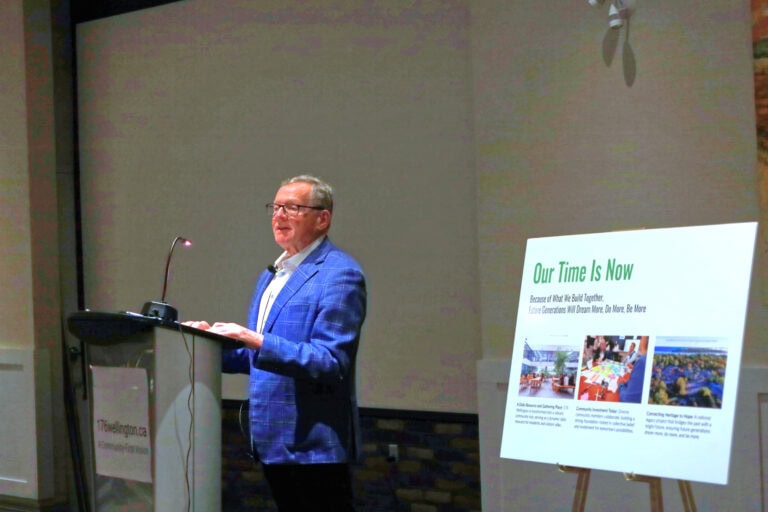
Tim Jennings, the Shaw’s executive director, spoke about the demolition of the theatre, slated for the end of March, the historical conservation work that will happen in the meantime and the future of the Royal George.
The Shaw, which has called the theatre home since 1981, is replacing the old building with a new one, set to open in fall 2028. The new theatre will be around 38,000 square feet above ground. The Shaw Festival says the new venue needs to be larger to bring it into compliance with current building codes.
“It will be the most accessible theatre in North America,” Jennings said.
The new complex is designed as a zero-carbon theatre, a shift away from an old system that still carried the memory of baseboard heaters and patchwork insulation fixes spanning the building’s 110-year-old history.
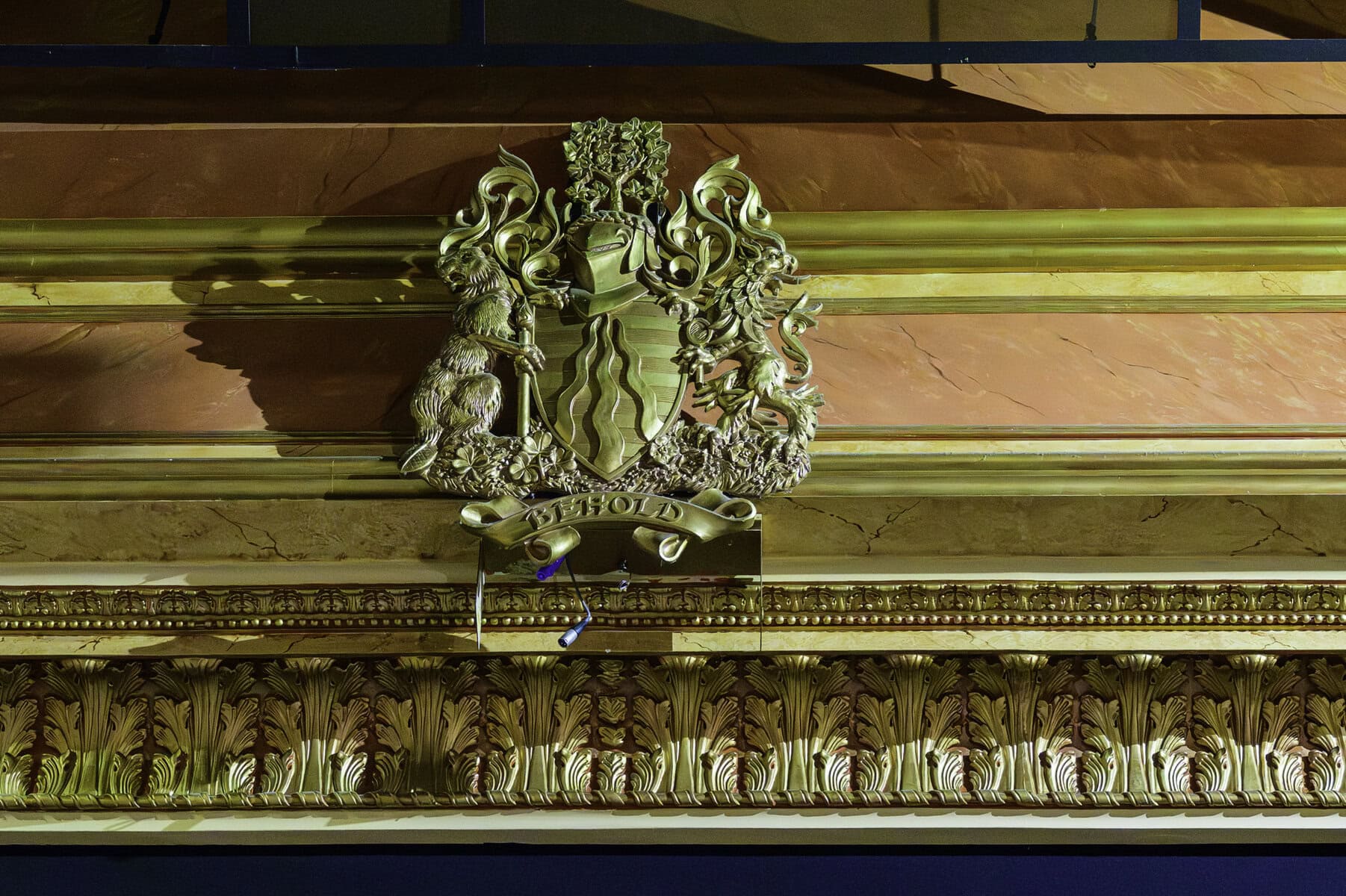
Jennings pointed to the items the Shaw Festival plans to salvage before demolition, to be restored or remodeled for the new theatre: the Royal George crest and lion ornaments mounted above the stage, a pane of glass from the old projection booth at the front from the years it operated as a movie theatre, as well as small decorative appliques that look like they have always been there, but were added in the 1980s with the Shaw’s aquisition of the theatre.
“My first day on the job, I remember being handed the engineering report that said in 10 years, this building needs to be torn down.”
That blunt reality has been building for years, on paper and in the cracks in the foundation. The building was erected as a temporary First World War entertainment and lecture hall for soldiers training at Niagara Camp nearby, a quick build that relied on clay “speed” tile and a foundation that was never meant to do this job for a century.
What was a farewell for some was something closer to a reunion for others. Several crew members of the Royal George hired by the Shaw in the 1980s returned in the afternoon.
Bill Talbot was the building’s electrician for more than 40 years and crawled through every ceiling or attic in the theatre. Cindy Emery worked in wigs and makeup in the 1980s. They spotted Daniel Bennett who worked a summer as “the flyman” at the theatre and “got to pull on ropes eight times a week,” as he described it. The group met with Paddy Parr, former director of operations for 22 years starting in 1987.
Jason Woodgate, the current technical director, walked the group downstairs to the familiar little green room, wardrobe room, furnace rooms, bar areas, electrical spaces, dressing rooms, and the small orchestra pit and trap area. He also pointed out the sump pump meant to help prevent flooding, which has been a common occurance since the 1980s, the group acknowledged.
Jennings said in late January last year, a two-feet deep basement flood in the Royal George led to $500,000 worth of damage, requiring a complete renovation of the floors, ceilings and walls for mold mitigation. He pointed to visible cracks in the clay tile foundation as the cause.
Shaw Festival’s chief financial officer, Bo Wang-Frape, added that it took about two months to finish and wrapped only a few days before rehearsals.
As Woodgate led the group downstairs, people kept pausing to point at the empty corners where things used to be, laughing, reminising and taking quick photos.
Standing in the little old wardrobe room, Cindy Emery recalled how, when she started in 1986, she and wardrobe shared that space and what would become the wig room was beer storage, so she asked, “Can we not move the beer closer to the bar and let me have this little nook for the wig room?”
“They let me have that little nook,” she said.
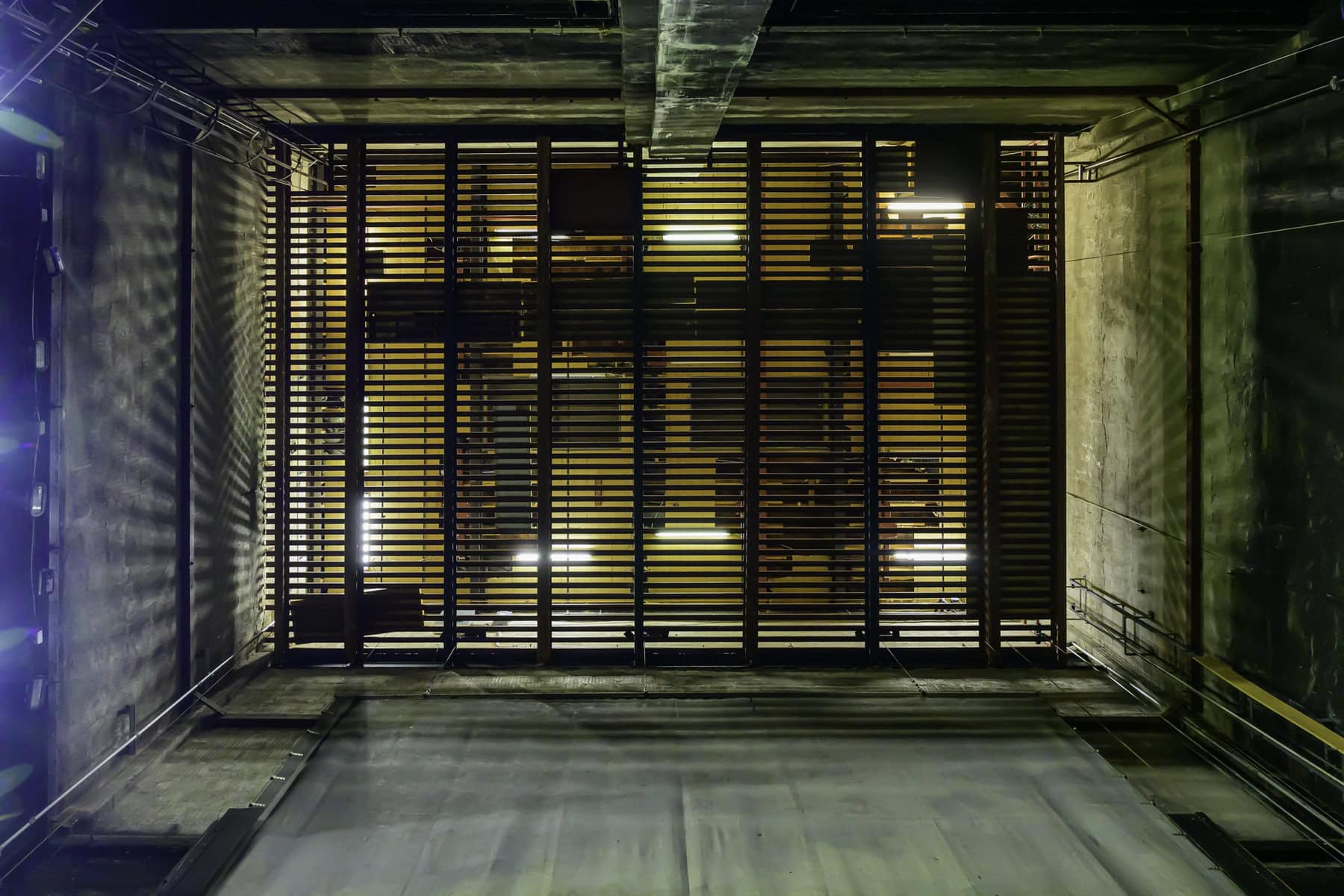
Talbot recalled back when the Royal George was a black box, before the Shaw’s decorative additions in the mid-1980s. Back on the stage, Talbot pointed up at the gridiron, the overhead steel structure where blocks, pulleys, lighting positions and flown scenery are rigged.
The steel grid, he said, was installed with the channels running the wrong direction, a mistake that’s existed since he started and has limited where equipment could be placed for decades.
Talbot also described the Royal George as a rare “hemp house” style space, where hemp ropes and sandbags were part of how soft goods and scenic elements moved.
Emery remembered a moment from the old hemp-and-sandbag fly system when a “teeny tiny” crew member was so light “she kept going up with the rope,” and coworkers had to keep pulling her back down.
Juliana Uguchioni, a Shaw staff member of 13 years, said the auditorium’s intimacy is what people will miss.
“It’s definitely a vibe,” she said, describing the feeling of being part of something smaller and closer than a modern hall.
What she will not miss is the daily physical grind the building demanded, especially the stair-heavy layout and the lack of an elevator.
She mentioned the patron complaints around accessibility, and described how even the bar was rebuilt after the flood with future dismantling in mind, and is now being repurposed in the courthouse.
Parr laughed when asked what she would miss about the old Royal George.
“I couldn’t be happier,” she said, calling the rebuild “long overdue.” She listed the things audiences rarely see but she dealt with for 22 years: skunks, bats and mice, sewage failures, floods, and late-night calls about odours drifting toward the audience.
Terry Babij, a longtime Shaw Guild volunteer, said he and his wife have volunteered for 18 years, and as donors they have been around the festival even longer.
“We got married late, so we don’t have any family,” he said. “This is our family.”
In his view, the rebuild is not a loss of community but a chance to widen it, with more public space and new kinds of gathering spots like the Artists’ Village.
Others framed it as history behaving like history.
Megan Gilchrist, who worked in Shaw’s education department, called herself “a historian by trade,” and said she can feel sad about the end of the building while still being excited for what comes next.
“First and foremost, it has to meet the needs of the community,” she said.
Her daughter Hannah, now working front of house at the Shaw, said she grew up coming to the Royal George and described the day as “bittersweet,” pointing again to the stair-heavy layout and how limiting it has been for accessibility.
Even among those supportive of change, there were questions about how much of the theatre’s look and feel can survive.
Adam Gardiner from Stratford, who has attended shows at the Royal George several times, said he likes that the façade will be kept, but worries the project could leave only a shell, with something entirely different behind it.
He said he would prefer to see as much of the architecture replicated as possible, and planned to reserve judgment until the final result is real.
Theatre-lovers got one last walk through a place that has always asked them and the staff to squeeze, climb, adapt and keep the show going anyway.
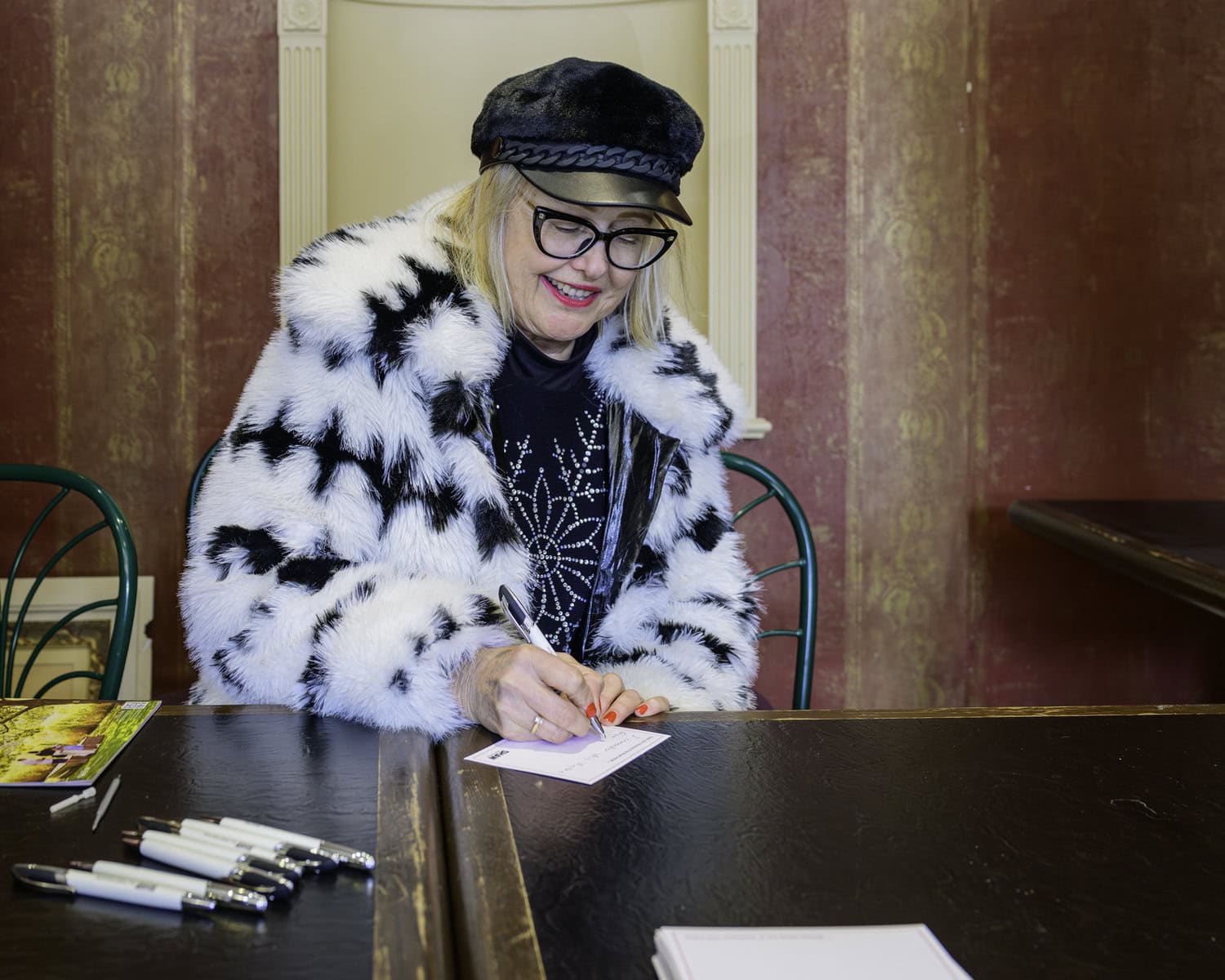
The building will come down, but the stories, written in the guest book and spoken out loud in the basement, were already doing what the day was for: keeping the heart of the community intact.