



It’s been almost a year since U.S. President Donald Trump flipped the economic relationship between Canada and the United States on its head by announcing 25 per cent tariffs on all Canadian goods, prompting counter tariffs, American products being pulled from shelves and a boycott of U.S. travel and goods.
Today, the tariff regime is not total, but tariffs remain on some products, particularly steel and aluminum. They were first imposed at 25 per cent in March of last year and raised to 50 per cent in June.
And, in response to Canada and China thawing its icy economic relations, annoucing a potential new trade agreement this winter, Trump has been threatening a “very substantial” response if that trade deal is enacted.
For some residents of Niagara-on-the-Lake, the tariffs have become a part of daily life, though some are finding ways to adapt.
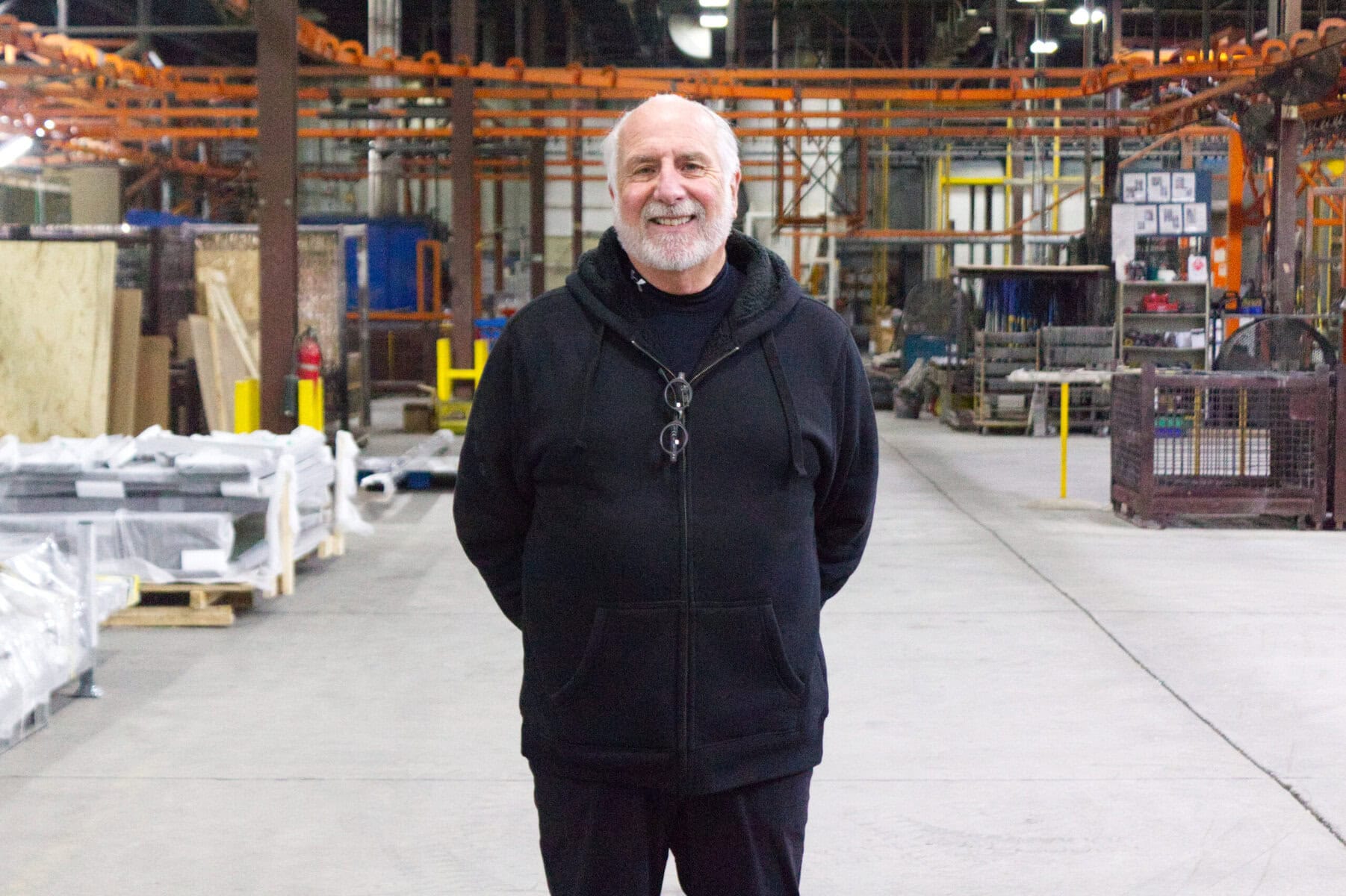
Paul Mace, a Niagara-on-the-Lake resident and vice-chair of the NOTL Museum, owns Luxyclad, a luxury cladding system company based in St. Catharines. The business manufactures and sells aluminum products designed to look like wood.
“It’s an absolutely spectacular product,” said Mace. “Very expensive, but spectacular.”
Mace said the introduction of tariffs abruptly shifted the company’s trading environment. He said Luxyclad moved from a “zero tariffs” regime under the Canada-U.S.-Mexico Agreement to an “unpredictable” situation.
“(This) makes it difficult for the end purchaser to make a decision,” he said.
Before the tariffs, about 25 per cent of the company’s annual volume went to the United States, Mace said. Afterward, that figure dropped to 12.5 per cent, a decline of about 50 per cent.
Despite the drop, Mace said the business has continued to perform well and often experiences exponential growth. He said that trend has continued this year.
He attributed part of that success to diversification, saying the company has developed “six or seven” new products, giving customers more options in the marketplace.
He also opened a separate $12-million area in his factory to be able to make his product more efficiently. It opened last July, though the processed started in 2023. He called it good timing.
Mace said customers have also begun budgeting for the tariffs, noting that the past three months have seen a rebound in orders from American buyers.
“People are just learning to live with it,” he said.
Still, Mace said the company likely would have seen even greater growth under previous free-trade rules.
Mace said he has one competitor on the West Coast that operates at a larger scale and is also doing well.
He said he doesn’t think a stable trade deal is coming under the Trump administration. While the trade agreement with China involving electric vehicles and canola products doesn’t affect his business, he said it was a “strong move” on Carney’s part.
But in general, he said he tries not to let geopolitics affect him because he “can’t do anything about it.” Asked about the state of Canada-U.S. relations and the broader global situation, Mace said he separates business from emotion and avoids becoming overly concerned.
“I don’t worry about emotion.”