



Niagara Regional Chair Bob Gale is not backing down from his push to rethink how Niagara is governed — even after councillors voted to rein in his amalgamation efforts and launch their own review process.
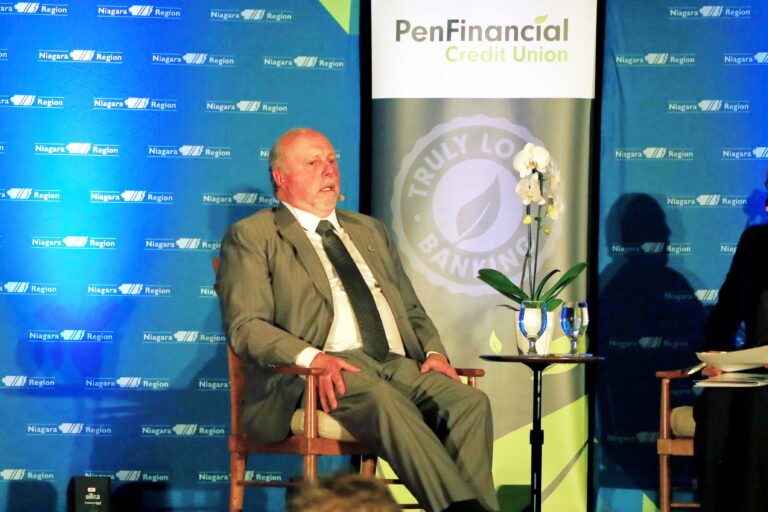
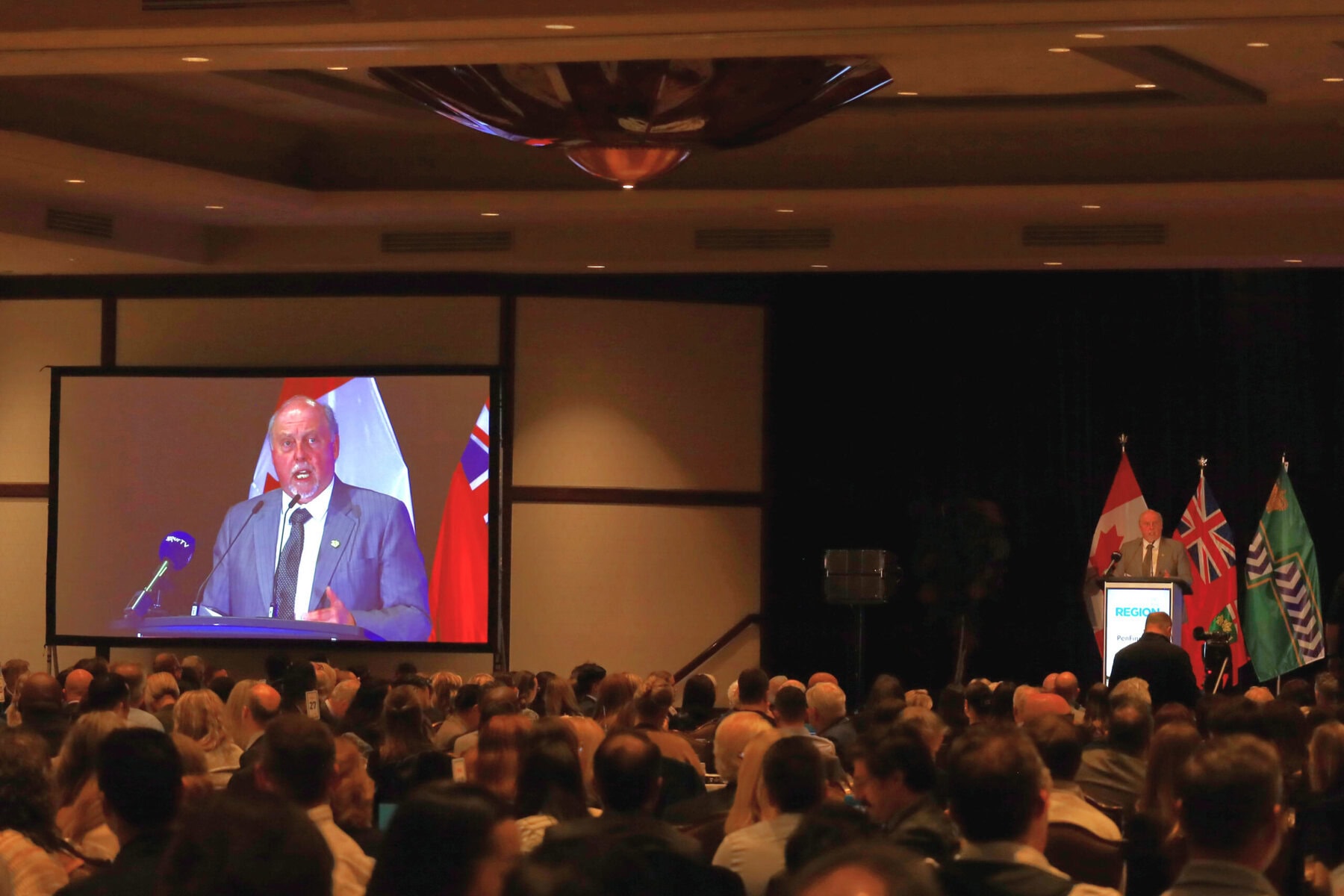
Speaking at the Sheraton Fallsview Hotel in Niagara Falls on Friday, Gale delivered his State of the Region address to the residents of Niagara, covering issues such as infrastructure costs, tax pressures and governance reform.
“You can see some things out there written about me — I have a reason on everything I’ve done,” Gale told the audience. “Some are confidential. I can’t tell you. I will never tell you what will hurt you.”
Two weeks ago, Gale wrote to the Municipal Affairs Minister Rob Flack calling for a review of Niagara’s governance structure — including possible amalgamation — and asked Niagara’s mayors to provide feedback by March 3.
Regional council instead voted on Feb. 26 to launch its own formal governance review, directing staff to examine duplication, service efficiency and costs and to report back with data and public consultation before any structural changes move forward. Council also voted to direct Gale to stop his amalgamation efforts.
Any changes to Niagara’s structure must move forward through that council-led process, not independently.
Gale framed that decision as momentum.
“I have heard from some unhappy people this week,” he said. “But I make no apologies — because it’s about time that regional council passed that motion.”
At one point, Gale compared the debate to broader political moments, asking, “How much did Trump bring us together as Canadians? Maybe my conversation caused us to come together and say, ‘We got to change things.’”
He said pushing for change on regional issues had, at times, strained his family and personal reputation.
“I did it for Niagara and the Niagara Parks,” he said. “Don’t get in my way for doing stuff on amalgamation or other things. I’m not saying I’m for amalgamation — I’m just saying I’m here for the right things.”
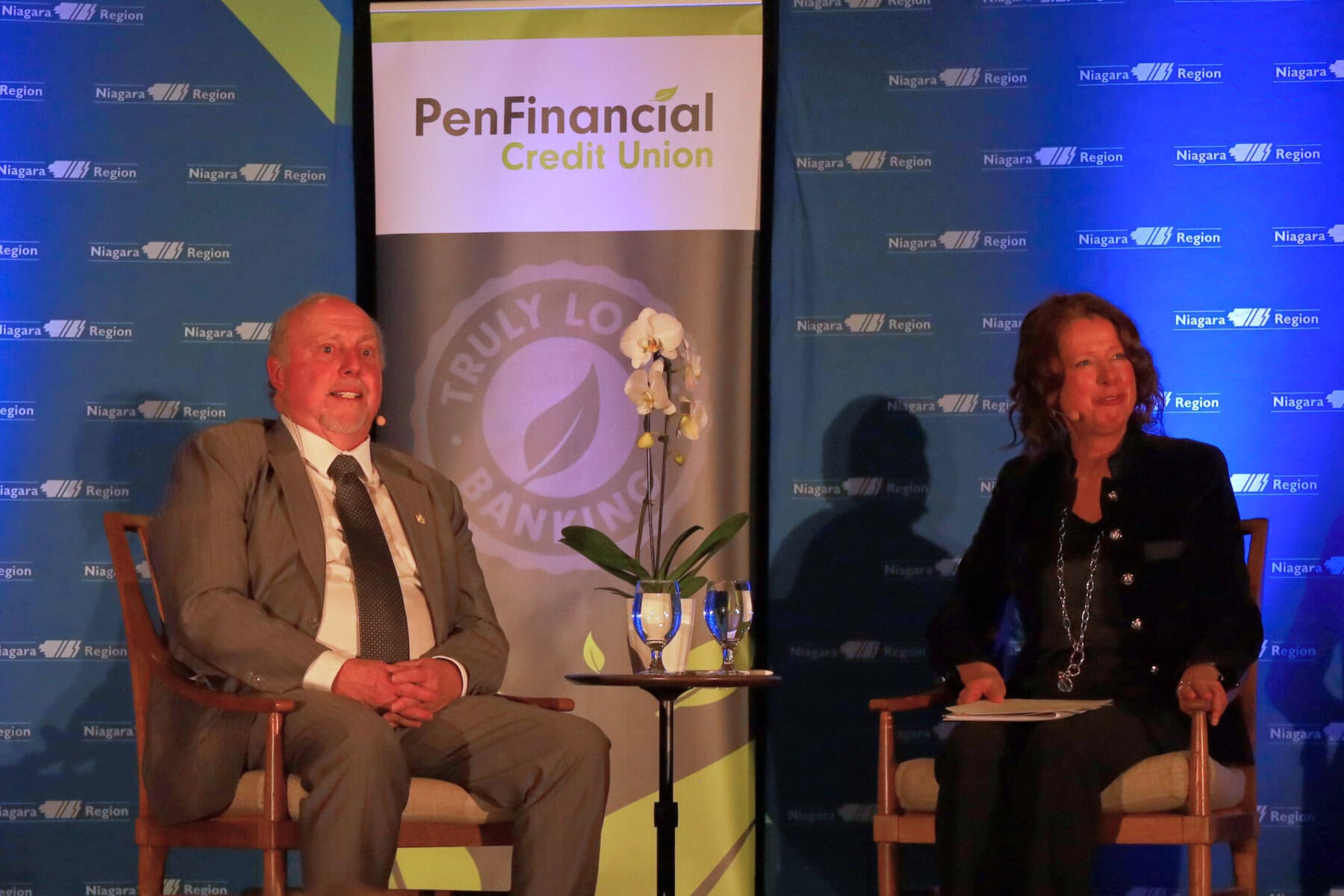
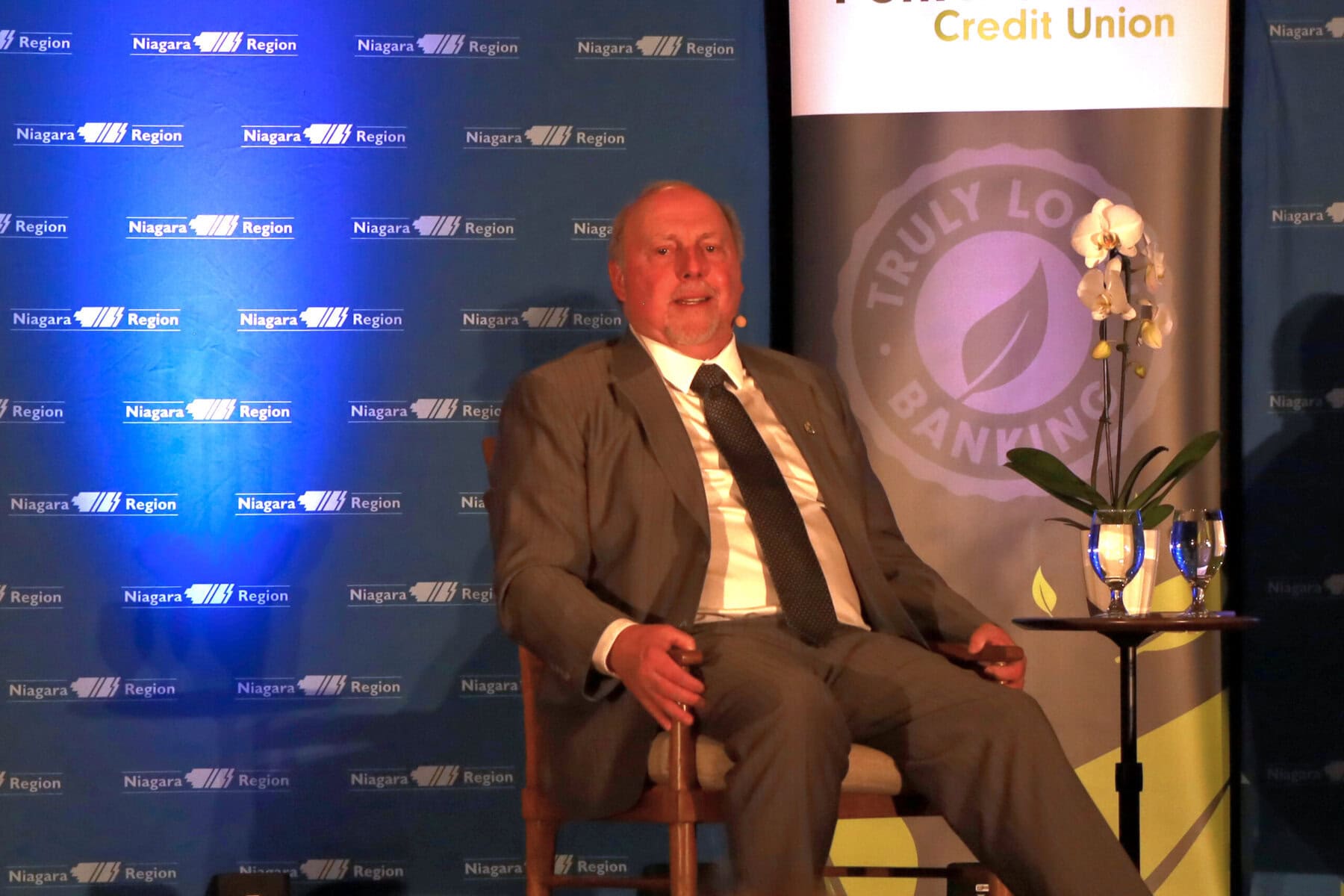
During a public chat at the State of the Region hosted by the Greater Niagara Chamber of Commerce, its CEO, Mishka Balsom, pressed him to define the problem he is trying to solve. Gale repeatedly returned to one word: efficiency.
He pointed to duplication between the region and local municipalities, slow permit approvals and what he described as the challenge of making decisions with 32 members around the regional council table.
“Cities take care of this, region takes care of this, ministry takes care of that — we can’t go with that.”
Gale said the Niagara South wastewater treatment plant, along with aging water systems and roads, tops the region’s infrastructure priorities, warning that billions in upgrades are needed and taxpayers cannot bear the cost alone.
But he said Niagara must streamline services and control costs before seeking more funding from senior governments.
“Municipalities are not my responsibility,” he said, “but we all have to get our house in order.”