

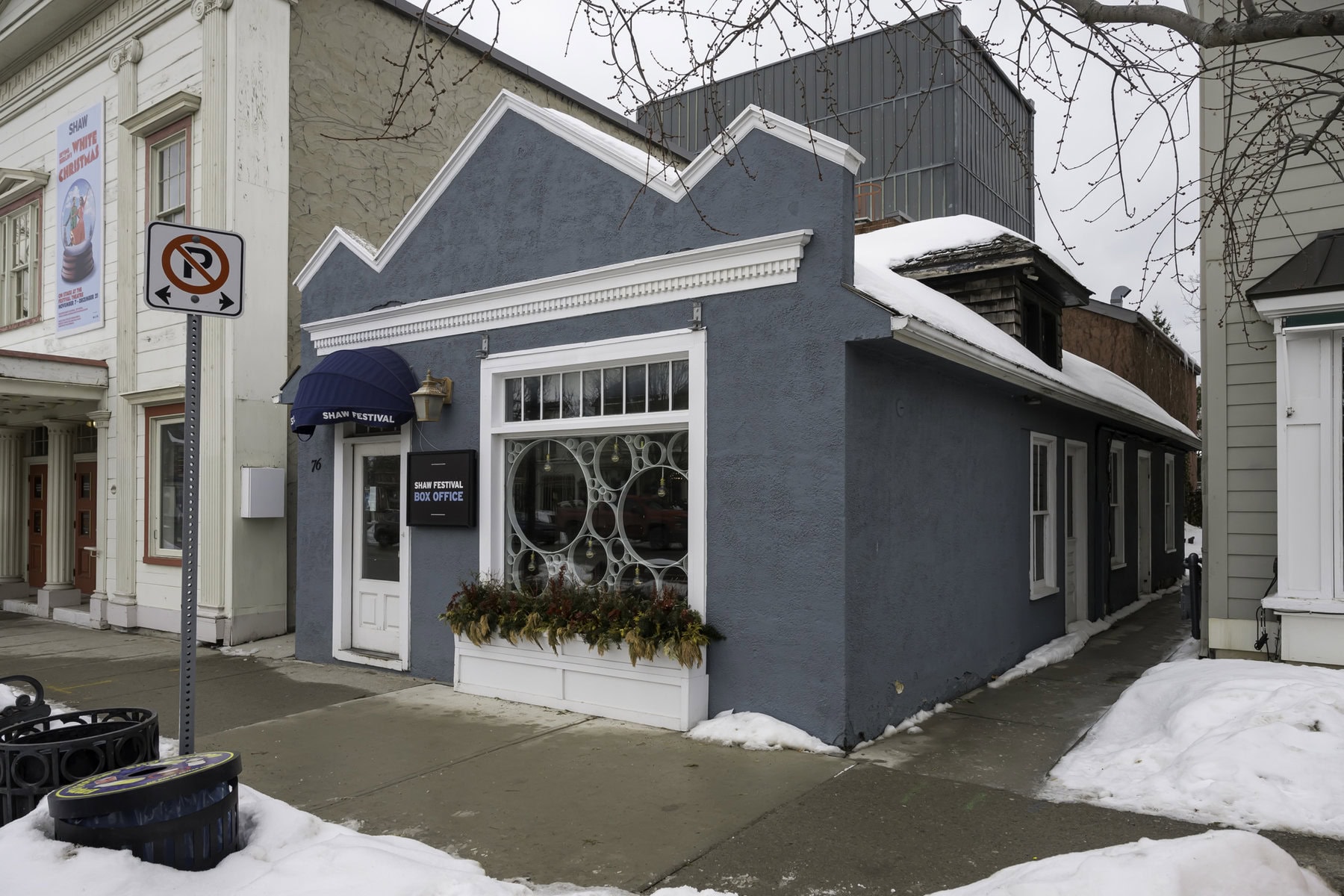


The Shaw Festival has temporarily halted the teardown of the Royal George Theatre and its box office after a Niagara-on-the-Lake builder launched a court challenge alleging the town failed to follow proper planning and heritage rules.
Centurion Building Corporation, led by president Nicholas Colaneri, is asking Ontario’s Divisional Court to quash council’s approvals tied to the Shaw’s redevelopment project, arguing the approval process was flawed and key issues — including parking — were not properly addressed.
“I am doing this because I care deeply about Niagara-on-the-Lake and the people who live here, and I believe our planning and heritage laws exist to protect our community not to be set aside when they become inconvenient,” said Colaneri in an email.
“The residents need to be able to trust that decisions affecting our town are made fairly, transparently, and in accordance with the laws meant to protect our heritage and our future.”
The judicial review challenges official plan and zoning amendments approved by council and seeks to pause demolition permits and related approvals tied to the properties, alleging the town failed to comply with the Planning Act, the provincial policy statement, the Ontario Heritage Act and applicable official plans.
Shaw notified residents Feb. 2 that demolition would proceed. On Feb. 6, a Divisional Court judge ruled the matter urgent and directed that a motion to stay be scheduled.
On Feb. 10, the court ordered that demolition of the theatre and its box office could not proceed pending a Feb. 26 judicial review hearing.
Demolition of the Victoria Street homes began Feb. 9, before the stay order was issued. The order applies only to the theatre and box office.
“The goal here has always been to ensure compliance with the law,” said Centurion’s lawyer, Eric Gillespie.
In his sworn affidavit, Colaneri said he made oral and written submissions to council and its committees throughout the planning process, including speaking at a July committee of the whole meeting and again in November.
He said he also submitted written materials to council and the municipal heritage committee and repeatedly asked for evidence that conserving or reusing the existing theatre was not feasible.
Centurion also attempted to appeal council’s decision to the Ontario Land Tribunal late last year, but Gillespie said the appeal was denied due to recent legislative changes, including Bill 185, passed in 2024.
“The rights of the public to appeal have been dramatically reduced under Bill 185.”
Gillespie said the case centres on how the town handled the approval process.
“The process was very fragmented,” he said, arguing the project was reviewed at different times by different committees examining separate parts of the proposal.
He said the Ontario Heritage Act is intended to preserve and protect heritage assets and argued that doing so requires a well-rounded understanding of a project “to look at the overall cumulative impacts of what’s being proposed.”
One of the central concerns, Gillespie said, is parking.
“As everyone in town knows, there’s no parking — for a theatre that seats over 300 patrons and has significant staff,” he said.
Under current town rules, a theatre the size of the Royal George would normally require more than 100 on-site parking spaces. But because the theatre has existed in its current location for decades, that condition is legally grandfathered under the Ontario Planning Act — which, the town has said, means it cannot impose modern parking requirements as long as it remains a theatre.
As a result, Shaw agreed to a $72,664 cash-in-lieu payment for one parking space tied to the redesigned building — a detail Centurion argues was not properly addressed under the town’s bylaws.
“It’s not clear that this existing situation can be legally continued,” said Gillespie. “That is one of the other issues that the judicial review application is raising.”
He added that if a new theatre were proposed today, it would require substantial parking or a significant cash payment.
“Centurion estimates (the cash payment) is about $7.5 million,” he said.
The town declined to comment.
Communications co-ordinator Marah Minor said the town cannot comment “as this matter is under litigation.” The town did not provide contact information for its legal counsel by press time.
Shaw provided a written statement from chief executive officer Tim Jennings, who said the organization believes it followed the proper planning process and has agreed to the temporary stay.
“We are certain Shaw followed or exceeded all of the town’s planning procedures,” Jennings said.
The festival filed “a very fulsome response to the court,” he said, and does not believe “any process issues on the town’s part” will surface from the review.
Shaw’s legal counsel, Sara J. Premi, said she had nothing further to add beyond Jennings’ statement.
If the court finds the town acted improperly, Gillespie said the approvals would likely be quashed and sent back to council.
“It would be up to the court, but often in these circumstances, the court will refer the matter back to the decision-making body to address the areas that the court has found to be deficient.”
Asked whether there could be legal consequences for demolition activity that took place before the stay order was issued, while the matter was before the court, Gillespie said: “There may be. That was discussed in court yesterday, and on consent, we all agreed that we may address that again when we’re back in court on Feb. 26.”
Jennings said demolition proceeded “following issuance of a building demolition permit to the Shaw last month and heritage approvals last fall.”
If the court rules against Centurion, demolition could move ahead. Gillespie said information provided in court showed a demolition permit has been issued for the Victoria Street houses but not yet for the theatre and box office.
Theatre and box office demolition is expected in early April, according to the Shaw’s announcement.
Gillespie said it is too early to say whether Centurion would take further legal action if it loses.