

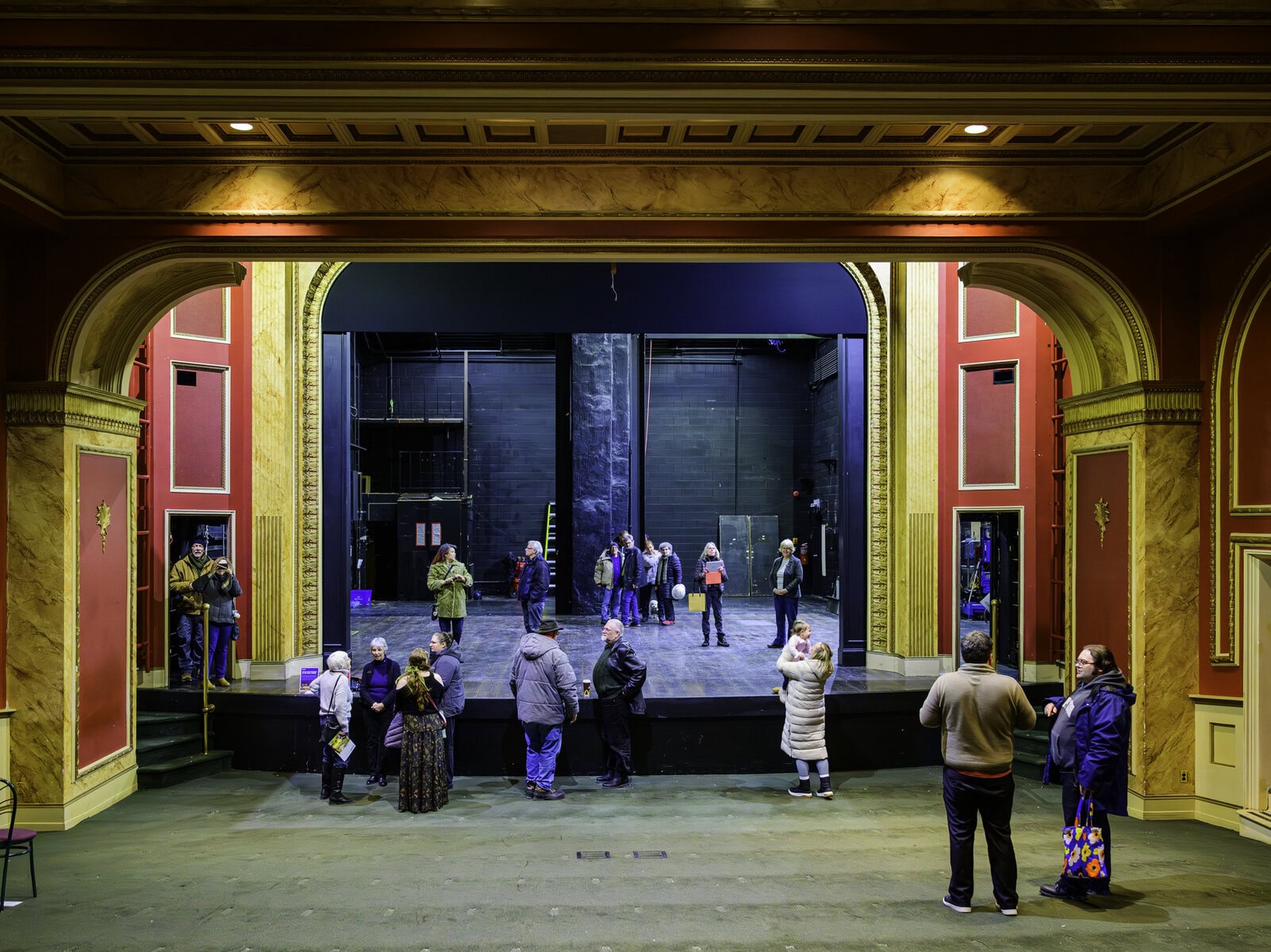


A court decision on whether Niagara-on-the-Lake’s approval of the Royal George Theatre teardown will stand is now a race against time — with demolition possible next week if judges don’t rule first.
A three-judge panel heard arguments Tuesday in a virtual Divisional Court hearing involving Centurion Building Corp., the Town of Niagara-on-the-Lake and the Shaw Festival.
The ruling will be delivered by email at a later date, though the panel did not indicate timing despite acknowledging the urgency.
The undertaking prevents Shaw from going forward with demolition until after March 26.
The fate of the Royal George now hinges on whether a ruling is issued before then.
“Theoretically,” said Centurion’s lawyer, Eric Gillespie.
“Given that the Divisional Court is very well aware of that deadline and specifically asked the Shaw Festival to extend it — it seems, realistically, that a decision may well come before that date.”
The case also carries a financial component.
Combined, the town and Shaw are seeking roughly $70,000 if successful, while Centurion is seeking about $24,000, plus about $8,000 related to a motion it won on Feb. 10 to temporarily stop demolition, Gillespie said. Cost claims reflect the time each party says it spent on the case.
“What’s surprising in this case is that the town and the Shaw ended up spending about five times more time than our office spent,” Gillespie said.
“That’s one of the matters that we’ll ask the court to consider when it makes its decision on costs,” he added.
Cost submissions are still to come.
“We will meet the deadline, but beyond that, it’s still a work in progress,” said Gillespie.
At the centre of the hearing was whether Centurion even has the right to bring the case — a legal question known as standing — along with broader arguments about whether the town’s decision to allow demolition was reasonable.
Centurion argues that the town’s decision to approve demolition was not properly supported by evidence — particularly around costs to preserve — and that it should be set aside. The company maintains it has the right to bring the case forward.
“Someone had to stand up,” said Nicholas Colaneri, Centurion’s president.
“Niagara-on-the-Lake has hundreds of heritage properties. Every single one of them may be affected by how this case is decided.”
Colaneri said the Ontario Heritage Act requires preservation to be taken seriously “before irreplaceable heritage buildings are demolished” and coming forward was “simply the right thing to do” as a NOTL resident and business standing up for the town and “every heritage community in Canada.”
“Once these buildings are gone, they are gone forever,” he said. “Everyone involved in shaping this community, the town, developers and institutions alike, should follow the laws that exist to protect it.”
Shaw and the town argue Centurion does not have standing and say the company is not directly affected by the project and does not meet the test for public interest standing.
Both say the case should be dismissed because the town followed the proper process in approving the demolition.
When Gillespie referenced other cases, including the Ontario Place redevelopment, judges pointed out that Centurion’s case differs from groups who represent broader matters of public interest.
“It was an organization representing quite a number of people — and yours is a single individual,” a judge told Gillespie.
Gillespie said the panel’s decision to hear full arguments could suggest standing has already been addressed, since courts usually deal with the issue early to avoid hearing a full case.
The undertaking originally prevented Shaw from demolishing the buildings until after March 25.
Centurion pushed for more time, while Shaw said it could only offer a day or two of flexibility — referencing a federal minister visit related to funding next week.
Shaw declined to comment and would not respond to questions about the minister’s identity, the purpose or timing of the visit, whether it is tied to funding or construction, or how it relates to the demolition timeline, citing the ongoing court case.
“As this matter is currently before the courts, we will not be providing any comments at this time,” said Shaw spokesperson Cathy Cowan.
The town declined to comment on the case for the same reason but “remains committed to respecting and following the legal process as it proceeds,” said communications co-ordinator Marah Minor.
In court, Centurion argued demolition cannot be justified when the cost of preservation and redevelopment is unknown.
“That information was never before the heritage committee, and it was never before the council, and it’s not before you,” said Gillespie.
“The only way they could make that determination is by knowing the number.”
Gillespie said it is impossible to assess whether council’s decision was reasonable without clear cost figures, noting estimates could vary widely — from thousands to millions.
“How could anybody say ‘Well, that’s a reasonable conclusion,’ with absolutely no backup?” asked Gillespie.
The town and Shaw said the decision wasn’t just about cost and that the town considered several factors — heritage reports, public input and plans to preserve parts of the theatre — before approving demolition.
“On the pure dollar figure, (Gillespie) may be correct — I do not recall seeing, in any of the information, a dollar figure attributed to what it would cost to try and save the old theatre,” said Terrence Hill, counsel for the town.
“But the materials are ripe with information about why a new project needed to be undertaken,” he added.
In its submission, Centurion raised a potential conflict of interest involving Lord Mayor Gary Zalepa in council’s decision to approve demolition.
“In addition to sitting as lord mayor, he sits ex officio as a member of the board of governors of the Shaw Festival,” said Gillespie.
He said Zalepa’s position and Shaw’s role in fundraising could amount to an “indirect pecuniary interest” and raise concerns about whether proper processes were followed.
“We’ve provided you with excerpts from the Municipal Conflict of Interest Act and in our respectful submission raise the issue,” Gillespie told judges.
Zalepa said the town’s integrity commissioner previously reviewed the matter and found no concern.
“The matter of conflict of interest is unfounded,” said Zalepa in an interview. “Not sure why they would continue claiming this when someone has that written opinion.”
Gillespie said an integrity commissioner’s review applies different criteria than a court.
“The court may examine an issue such as bad faith — the integrity commissioner did not do that,” he said. “So they are different processes that could lead to different results.”