



The Niagara-on-the-Lake Museum is celebrating Black History Month this year with a bevy of educational events that highlight Black history in Canada, the United States and the world — plus, it has reading recommendations with a list of featured titles available at the museum’s book shop.
The museum book shop will highlight titles on Black history for adults and children, including Karolyn Smardz Frost’s “I’ve Got A Home In Glory Land: A Lost Tale of The Underground Railroad,” which won the Governor General’s Award for non-fiction.
It tells the story about an escaped enslaved person who who was caught in Michigan and slated to return to Kentucky. The response from the local Black community sparked the Blackburn Riot of 1833, the first racial uprising in Detroit’s history.
Other featured books include Natasha L. Henry’s “Emancipation Day: Celebrating Freedom in Canada” and “Slavery and Freedom in Niagara” by Michael Power and Nancy Butler.
On Feb. 6, the museum’s Doc Club will host a Zoom discussion of the documentary “Captive,” which follows women who escaped imprisonment by the Boko Haram group in Nigeria. The film was made by Canadian journalist and producer Mellissa Jung.
The Doc Club discussion is free and begins at 10 a.m. Participants are asked to watch the film in advance. Those wishing to attend can email Barbara Worthy at bworthy@notlmuseum.ca.
On Feb. 11, Jacqueline Dixon, a certified sales professional and entrepreneur, will give a talk as part of their February virtual lectures on Richard Pierpoint, a formerly enslaved person who gained his freedom during the American Revolution, came to Canada and petitioned for an all-Black militia to fight on the British side.
The talk will explore the “resilience, advocacy, and struggle for belonging in early Simcoe County,” according to the museum.
It begins at 11 a.m. Registration is free and can be done at notlmuseum.ca/whats-on.
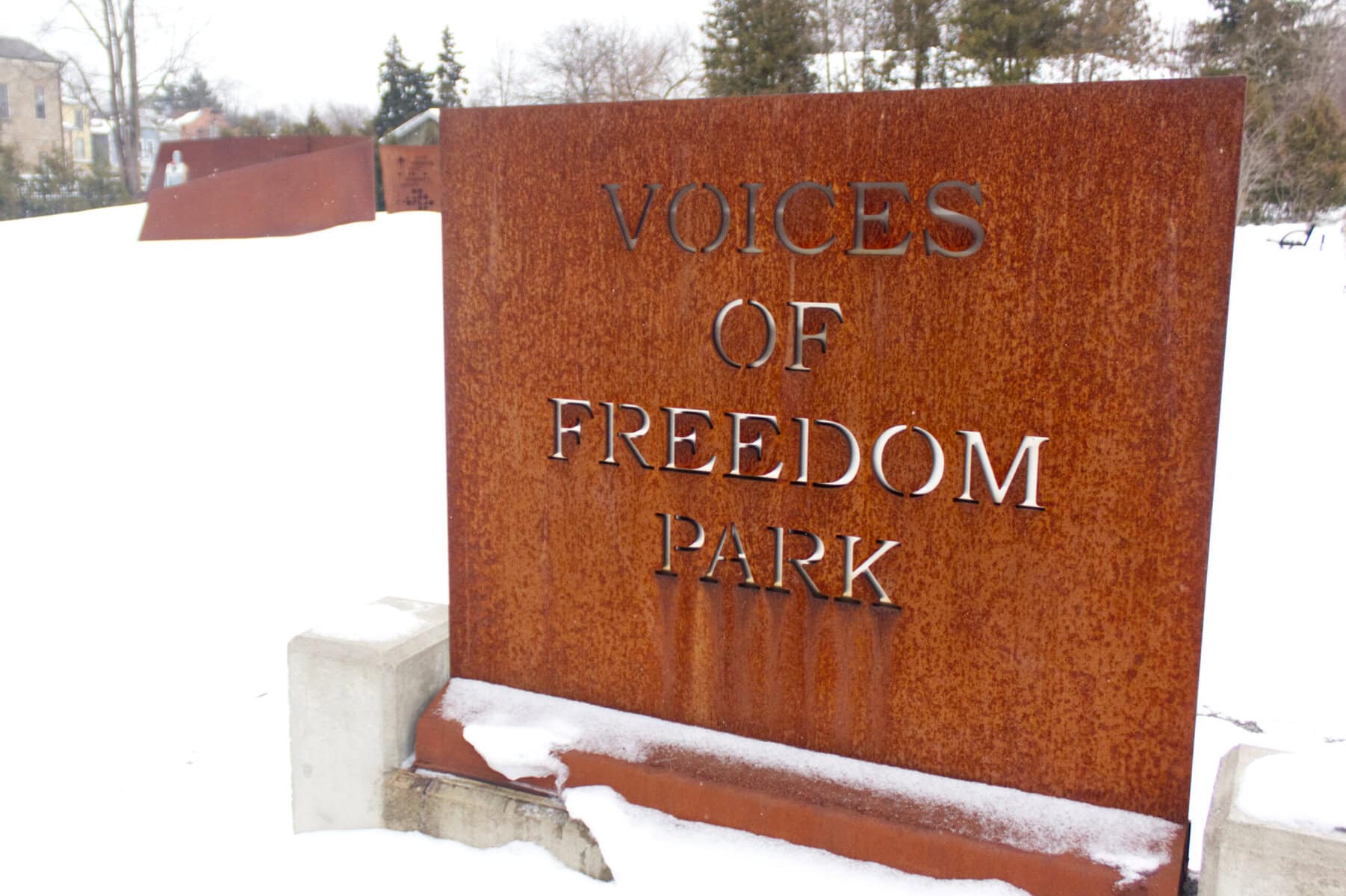
The museum is also highlighting its Voices of Freedom Interactive Park, noting that “it provides an infinite online resource for information on Black settlement in Niagara.”
The museum also points to a “comprehensive online resource of videos and complementary research material focusing on early Black settlement.”