

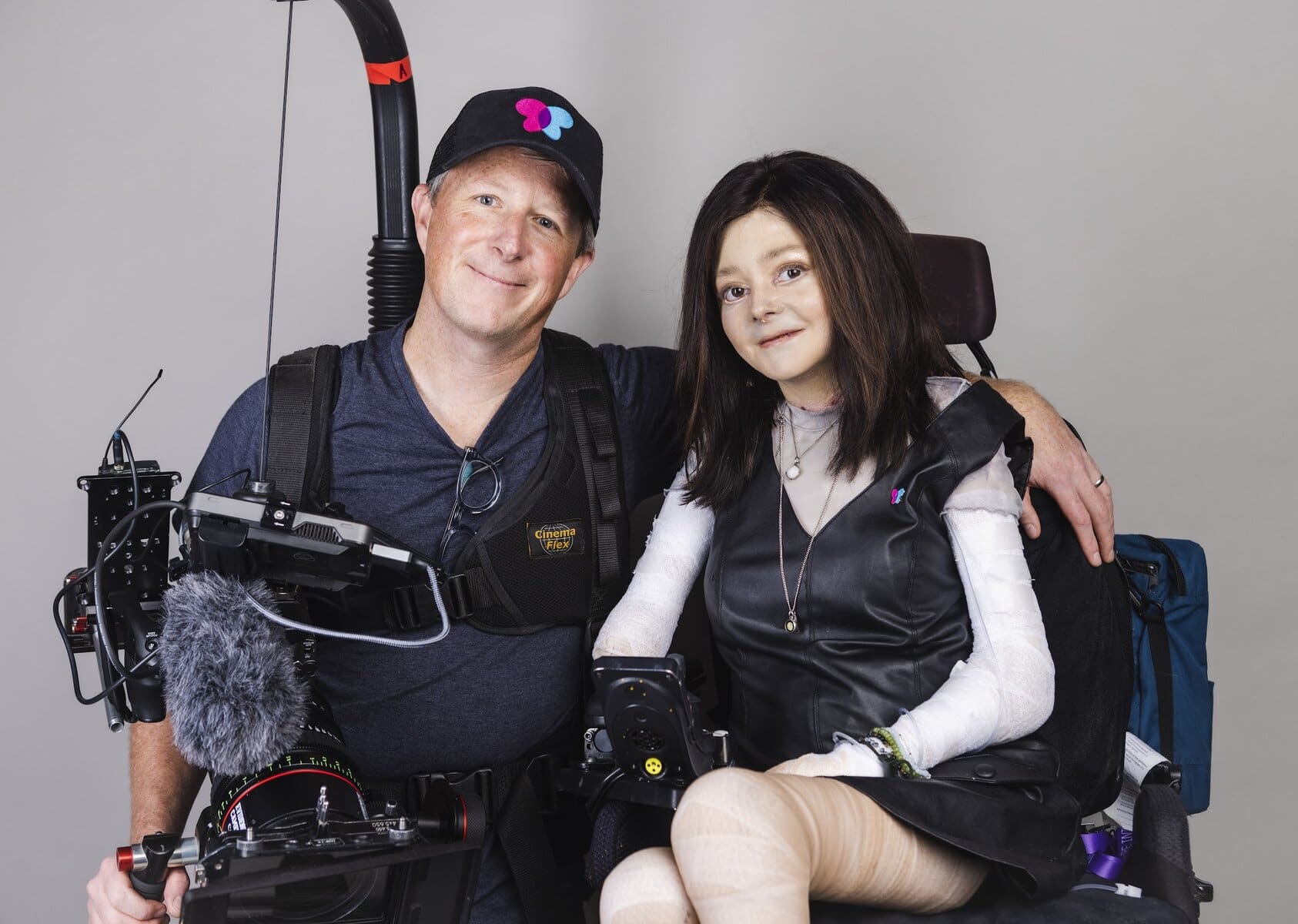


Niagara-on-the-Lake’s Matt Finlin has built an accomplished career in the not-for-profit and film worlds, producing advertisements and music videos and even serving as a producer for WE Charity’s WE Day.
That background means he knows how to put on a performance. Now, the Door Knocker Media partner has turned those skills to another cause.
His latest documentary, “Matter of Time,” will debut on Netflix on Feb. 9, the story of the fight to cure a rare genetic disorder — featuring the frontman of Pearl Jam, Eddie Vedder.
The film premiered at the Tribeca Film Festival last June and has since found success on the festival circuit. It won Best Music Feature Documentary at the Nashville International Film Festival and Best Film at the San Diego International Film Festival, leading to a 30-theatre run across the United States and Canada.
“Matter of Time” focuses on people living with a rare genetic skin condition called epidermolysis bullosa, often shortened to EB. The condition causes extremely fragile, easily blistered skin that can make everyday life painful. Those with EB are sometimes called “butterfly children” because of the delicacy of their skin.
Finlin said he met a young boy named Eli who has the condition in 2019, an encounter he said changed his life.
“When you meet someone with EB, it puts your life into perspective pretty quickly,” he said. “Because they’re living with, you know, wounds that may never heal and it’s sort of the equivalent of third-degree burns in a large part of their body.”
Despite those challenges, Finlin said Eli’s spirit wasn’t broken, describing him as a “vibrant, funny kid.”
The documentary also highlights Vedder, who appears in the film during a series of solo benefit concerts in Seattle in 2023. The concerts raised money for the EB Research Partnership, an organization Vedder and his wife, Jill, co-founded.
Finlin, who listened to Pearl Jam as a kid, said Vedder’s efforts have helped raise $35 million for EB research. He said there are now 120 clinical trials underway and three Food and Drug Administration-approved treatments for the condition.
He credited the Vedders for using their celebrity to support a cause beyond themselves.
“They were such lovely people really trying to find treatments and cures for this,” he said. “I just said to them, ‘If there’s anything I can do to help, I’m in.'”
Finlin said he does not yet know how much money the documentary has raised, but described the amount as “significant.”
“I think Jill says this in the film,” he said: “‘EB used to be called like the worst disease you’ve never heard of, but we’ve kind of hopefully changed that — that it’s, hopefully, the worst disease we’ll find a cure for.'”
The film concluded its run with a sold-out screening in Toronto. Finlin said the experience was especially meaningful because many people living with EB attended.
He said he continues to promote the film and encourage support for the cause, and he remains in touch with Eli.
“I’m happy to say we’re still doing pretty well, and we’re still close,” he said.
Donation options are available through the EB Research Partnership at ebresearch.org.