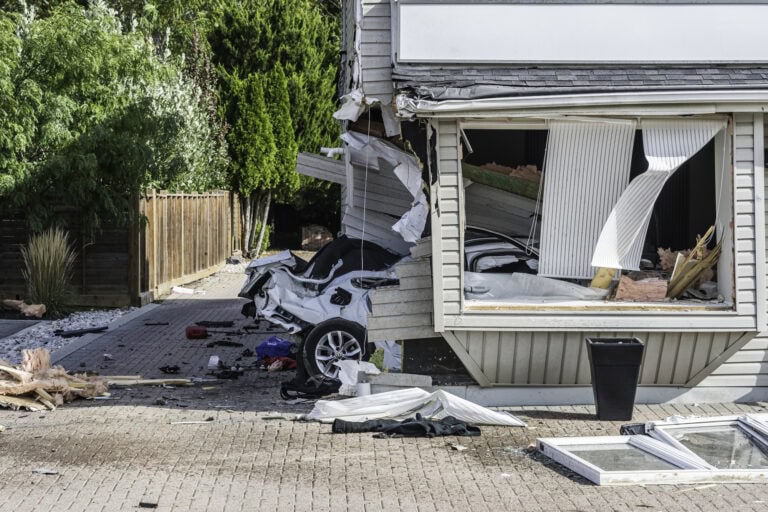

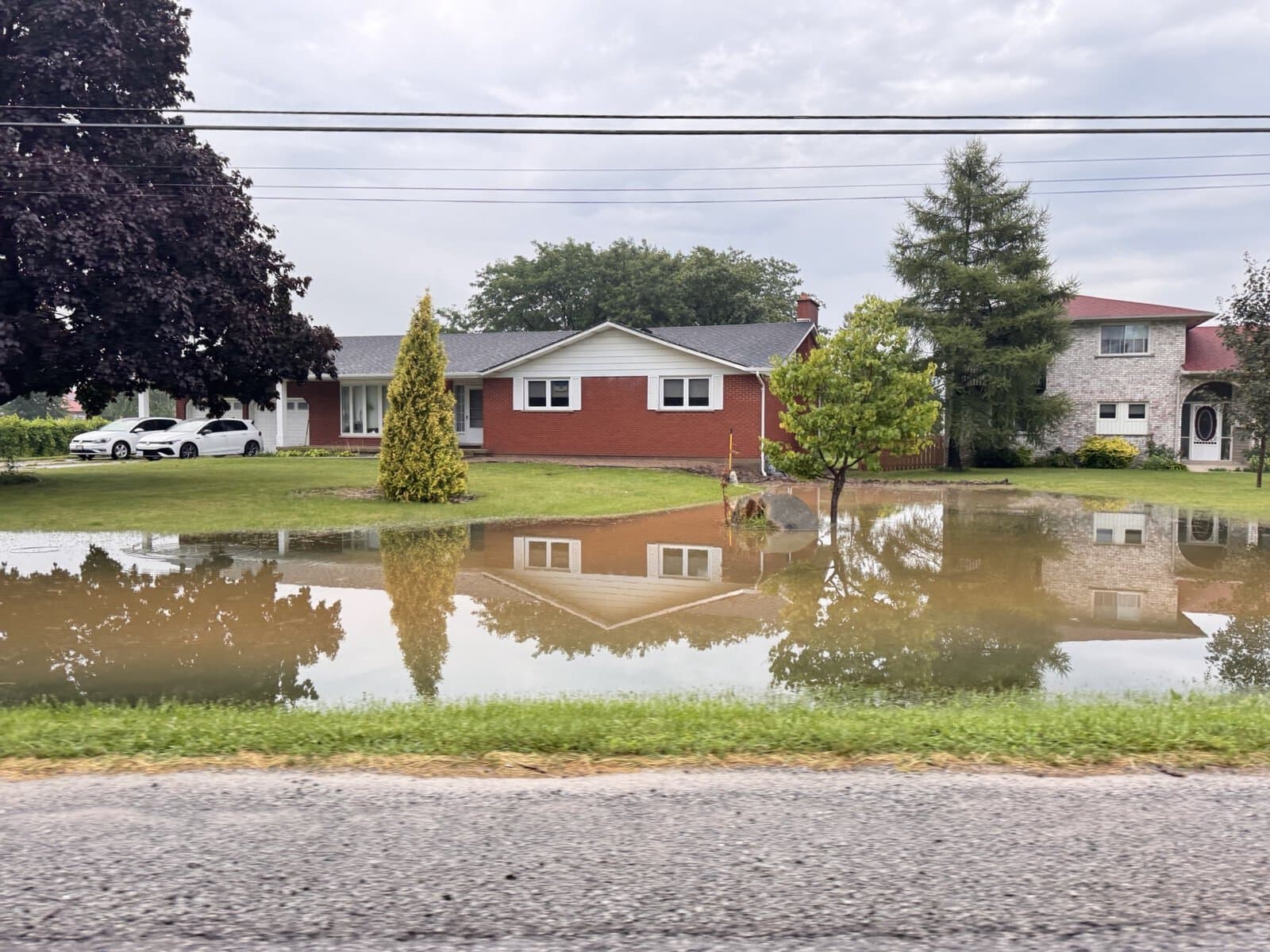


The water may be receding, but the cost of Niagara-on-the-Lake’s back-to-back floods could follow some homeowners for years.
The town was still cleaning up from the 146.26 millimetres of rain that fell July 28 when parts of NOTL received more than 110 millimetres Sunday, flooding some homes twice.
Jeff Wasiliw, an insurance adviser with BrokerLink, called it a double-edged sword: homeowners could have their damage covered but face two separate claims, higher renewal rates and fewer coverage options.
“You’re gonna get a nice surprise on your renewal.”
Wasiliw said the storms would ordinarily count as two separate claims but questioned whether insurers might “show that we have a heart” by treating them as one.
The Lake Report contacted three local insurance brokerages after the first storm to understand the number and cost of claims, what water coverage means and how residents should respond. Wasiliw was interviewed again after Sunday’s storm about the possible consequences of flooding twice.
Brokers help clients find coverage from insurance companies and assist policyholders when they make claims. But Wasiliw stressed that insurers, not brokers, will decide how the two storms are treated.
CAA Insurance and Intact Insurance were contacted for details on how they would handle claims from the back-to-back storms but did not respond by publication time.
Wasiliw has not yet heard of a homeowner being told to submit two claims for damage from both storms.
“Not yet, but they’re also not really saying,” he said.
Wasiliw said insurers were first focused on clearing the backlog, cleaning homes and getting immediate help to policyholders.
But he said claim history can affect more than a homeowner’s next bill.
“If you were to try to go somewhere else, if you have a couple claims within, say, three years — usually three to five — well, you’re high risk,” he said. “So you don’t really have many options.”
“That’s kind of the biggest thing right now,” said Wasiliw.
He estimated that BrokerLink’s Niagara Falls office, which also serves its former NOTL office’s clients, received more than 200 flood-related claims. He estimated close to half came from NOTL and said the St. Catharines office likely received about twice as many.
Wasiliw said BrokerLink received slightly fewer claims after Sunday’s storm than after the first flood.
An insurance adviser with Hope & Harder Insurance Brokers estimated that brokerage also received about 200 claims from NOTL and 300 from St. Catharines.
Reimer Verge Insurance Brokers reported receiving “hundreds” of flood-related calls and claims after the first storm but did not provide an exact figure. A local Desjardins Insurance agent was also contacted but did not respond by publication time.
“It was nonstop phone calls,” the Hope & Harder adviser said.
“It was really difficult just to keep up with reporting the claims, taking the calls.”
The adviser called it “one of the worst floods we’ve ever had” and estimated an average basement claim would cost between $20,000 and $30,000.
Wasiliw said one relative’s basement claim in NOTL reached $40,000 for damage to carpet, underpadding and drywall.
An adjuster arrived at that home at 9:30 a.m. carrying a list of 112 people to visit that day.
“Let’s say he does, maybe, 25 or 30 in a day, but then the next day he’s probably going to have another 200 on his list,” said Wasiliw.
“This has never really happened, I don’t think.”
Whether flood damage is covered depends on the policy and how the water entered the home, Wasiliw said.
“If they don’t have the coverage, I mean, they don’t have the coverage,” he said. “There’s nothing that can really be done.”
Coverage can differ depending on whether water flowed across the ground, backed up through a sewer or drain, or entered through the foundation, he said. The value of a claim also depends on how the basement was finished and what belongings were damaged.
“Every insurance company, they’re going to have a different risk appetite,” Wasiliw said, adding that some insurance companies may not offer certain water coverage in locations they consider at higher risk.
For now, Wasiliw said insurers were still adding water coverage to new policies and he had not seen rates immediately spike following the storms.
“It’s exactly the same as of right now,” he said.
But residents should not wait for an adjuster or restoration company before beginning urgent cleanup and Wasiliw said residents should record what they clean, remove or discard so they can later explain the work to an adjuster.
“Don’t wait for someone to come. Start cleaning up,” he said. “Go as quick as you can.”
The long-term insurance impact will not be clear until insurers decide how they will handle the two storms.
“Now, there’s just more to the list,” Wasiliw said.
“It’s really coming down to what’s going to happen and how insurance companies are going to be looking at this after the fact.”