
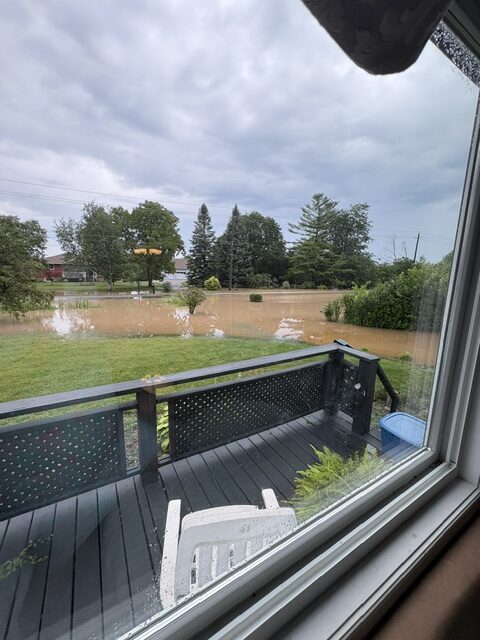
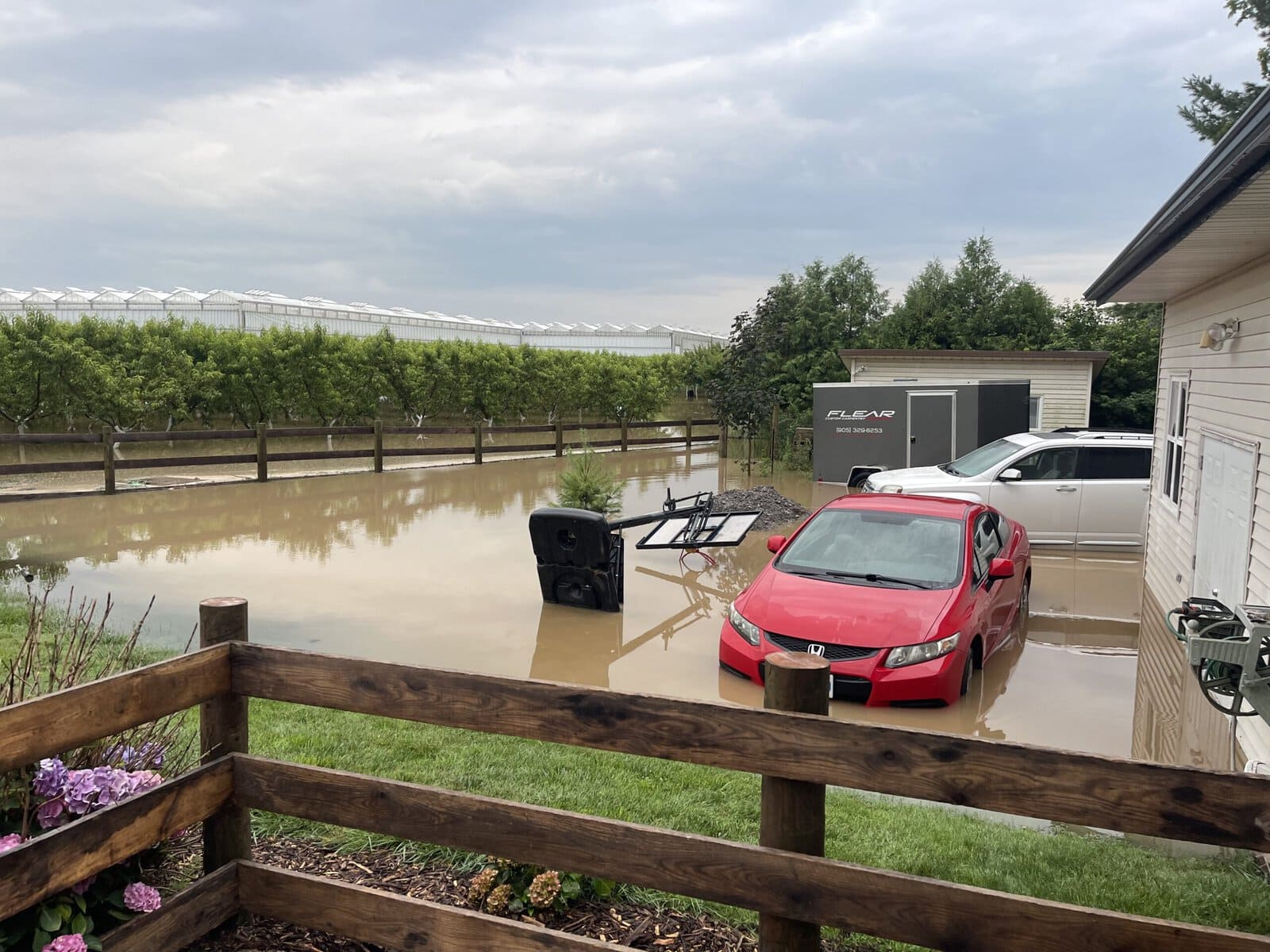
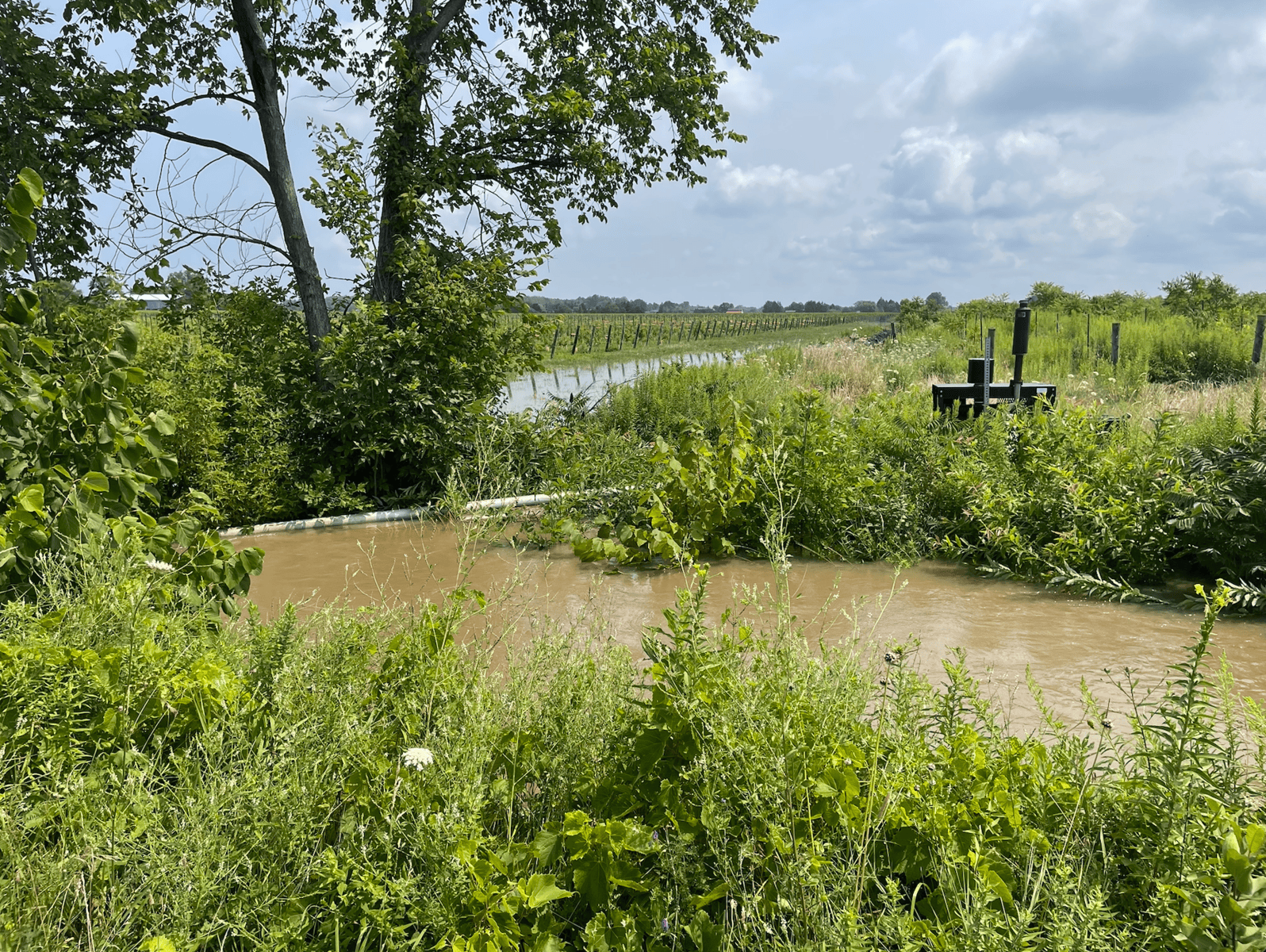
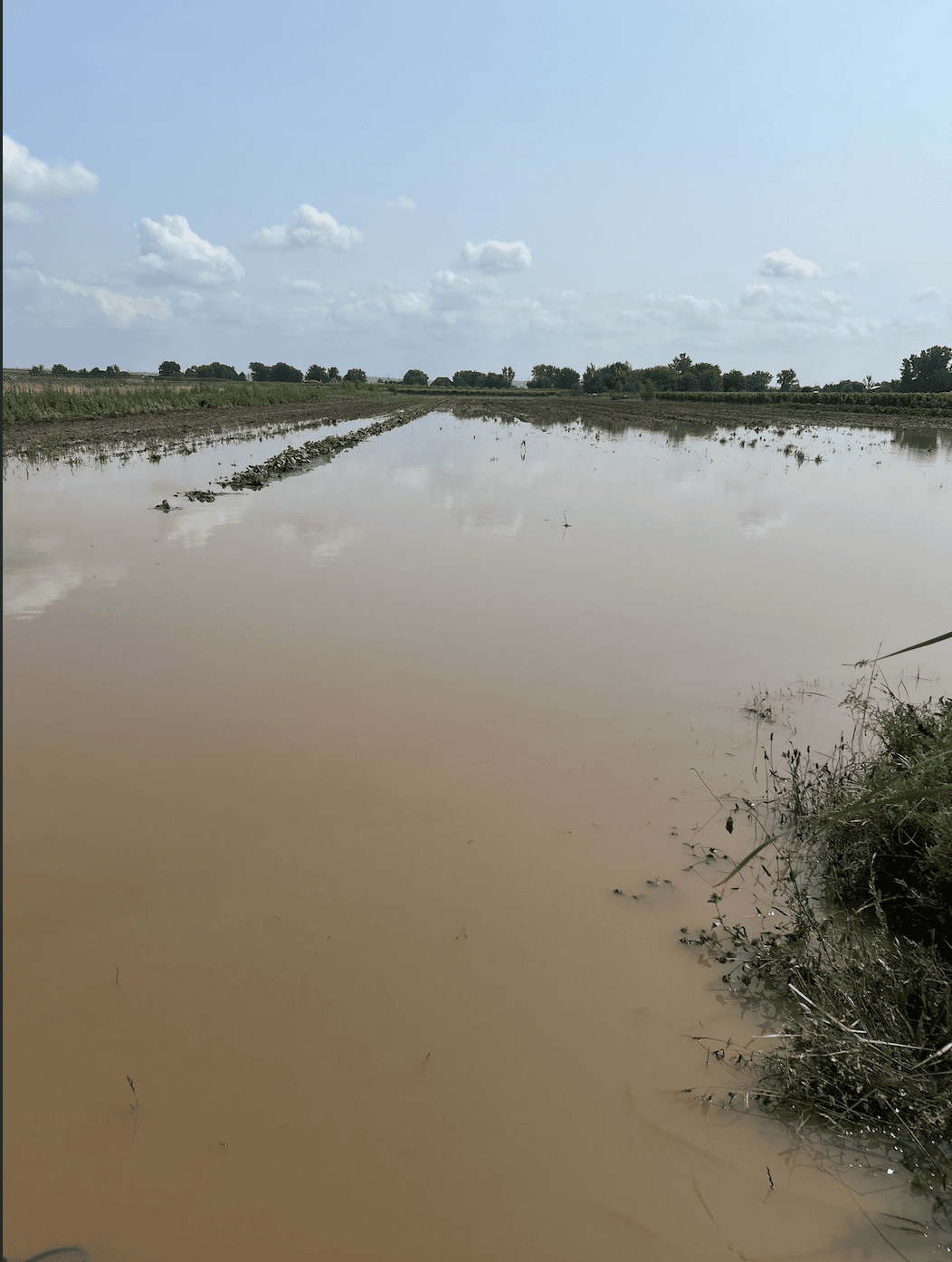
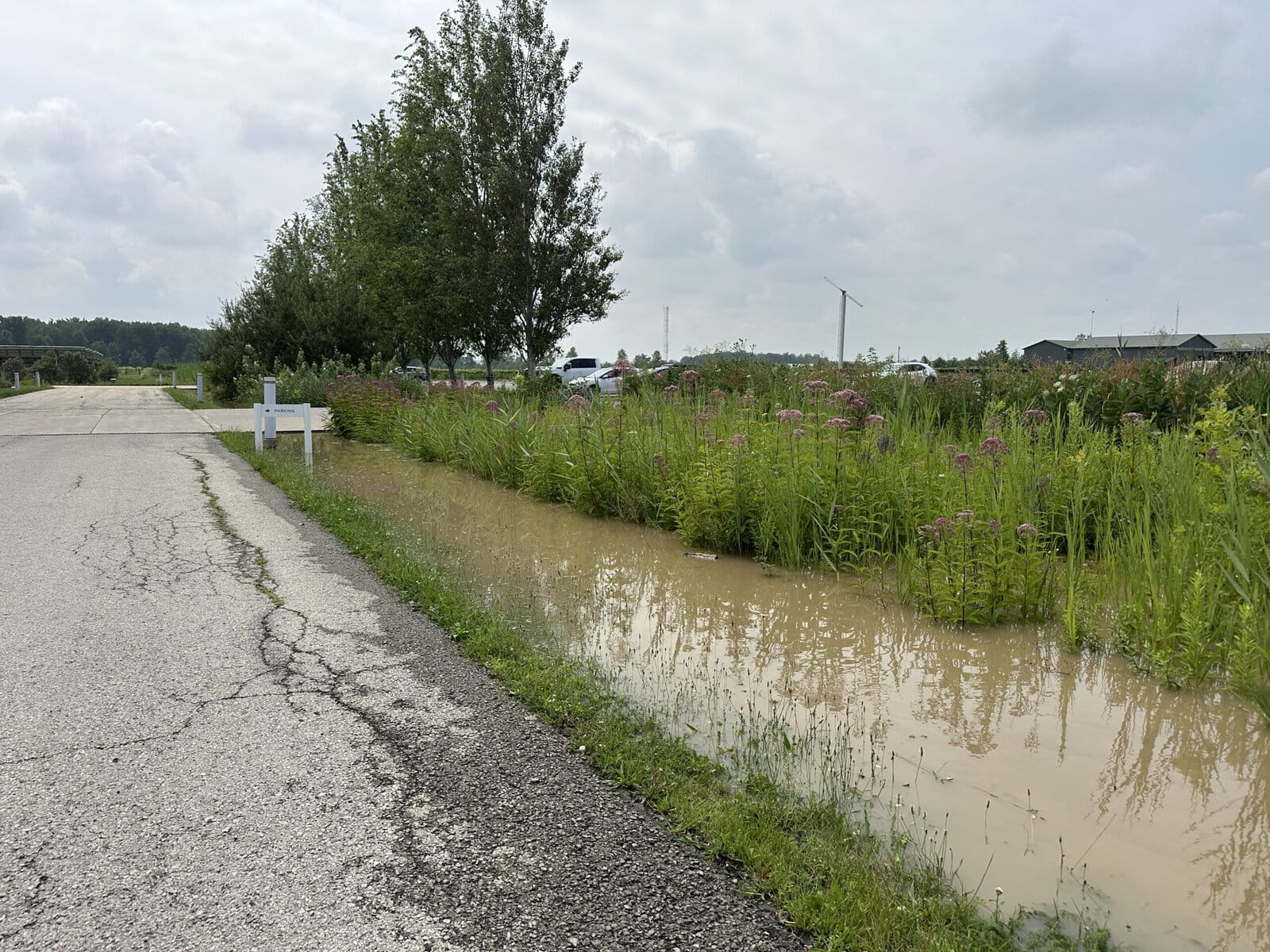


Basements filled, sump pumps failed and farm fields disappeared underwater Tuesday after heavy rainfall pounded parts of Niagara-on-the-Lake for five hours.
By Wednesday afternoon, less than 48 hours after the deluge, most of the flooding had receded, leaving a lot of large ponds and pools of water in vineyards, along roadsides and on rural properties.
But the cleanup, repairs and steps to mitigate such problems when the next storm strikes has only begun.
Over on Four Mile Creek Road, Elizabeth Farmer says her home’s basement flooded completely.
“Our basement is a write-off,” she said, adding it will have to be redone.
According to a town briefing sent to council and shared with The Lake Report by Coun. Wendy Cheropita, almost six inches of rain (146.26 millimetres) fell between 11:30 p.m. Monday night and 4:30 a.m. Tuesday morning, with Virgil bearing the worst of what it called “exceptionally significant, highly localized” rainfall.
The Town of NOTL shared on Wednesday that it received more than 100 service requests related to flooding, debris, road conditions and drainage concerns.
Municipal workers are labouring throughout the town to assess damage, restore affected areas and respond to requests as quickly as possible.
The town said it has not identified any confirmed infrastructure failures, but is still assessing the stormwater system and other infrastructure.
While all residents The Lake Report spoke to acknowledged that the overwhelming volume of rain triggered the flooding, a recurring concern was that the town has been reacting to drainage problems as they arise rather than addressing issues proactivley.
The town said it takes steps to look over its stormwater management system before forecasted storms hit the area, but that no municipal drainage system can completely prevent flooding during rainfall of this magnitude.
Staff plan to conduct a full review once the town is done responding to immediate flooding problems and they are inspecting roads, bridges, culverts, trails, parks and stormwater infrastructure to understand impacts, identify safety concerns and make repairs.
Emergency pumping began around 3 a.m. on Tuesday. By 4 a.m., every sewage pumping station had reached a high-level alarm because of the stormwater entering the system.
On Vincent Avenue in Chautauqua, Richard Begley woke up to more than six inches of backed-up water across his basement. He said a town worker told him municipal systems became overwhelmed.
Neighbours arrived with pumps and offers to help.
“While this has undoubtedly been a disaster for us, it has been another testament to the strength of the community here in Chautauqua and greater NOTL,” Begley said in an email.
On Line 4, Brent Asselin said his driveway and two crossings over drainage ditches remained submerged Tuesday afternoon. He feared his honeybee colonies had been lost or seriously damaged.
Asselin blamed irrigation dams in the Harrison Drainage System for worsening the flooding. He provided a complaint sent to the town in January last year warning that blockages previously caused drains to overflow and left his crossings unusable.
On Line 7, Charlotte Tutu had four inches of water in her basement despite two heavy-duty sump pumps running constantly. Water came through the floor drain.
Tutu said she did not experience that type of flooding during her first 19 years on the farm. It has now happened four times in five years.
The Niagara Peninsula Conservation Authority said its Line 5 rain gauge in Virgil was among several gauges that recorded rainfall estimated at a 50- to 100-year storm level, with a one per cent chance of occurring in any year.
A Lakeshore Road resident who asked not to be named reported nearly a foot of water in the basement. One sump pump began smoking and nearly caught fire before a backup was brought in. The resident said nearby fields were underwater and the air smelled strongly of sewage.
In Old Garrison Village, Sue-Ann Ramsden said about five inches of rainwater entered her home after drains could not handle the volume. Four other homes nearby experienced similar flooding. An insurance adjuster assessed the damage, but Ramsden said she would not know the cost until a remediation company arrived.
On Firelane 13, Rene Flear said two pumps saved her basement, but her garage was damaged. She said the town does not provide road or culvert maintenance there.
Ronda McGregor, a St. Catharines resident close to where the city said the unexpected pause occurred, awoke around 4 a.m. to find about two feet of water in her finished basement.
The water destroyed her furnace, washer and dryer, flooring, furniture, books and treasured keepsakes from her son. In a word, she said, she’s “distraught.”
The council briefing said sewage-backup reports remained relatively limited “despite the severity of the event.” Drinking water remained safe, with no watermain breaks or service interruptions reported.
Niagara Region reported no problems with its local wastewater system.
“All regional wastewater infrastructure was operating as designed during this period in NOTL,” said Phill Lambert, the region’s director of water and wastewater services.
Alongside starting emergency pumping, the town activated its Emergency Control Group, closed roads and sent crews to flooding and fallen trees.
NOTL Hydro disconnected power to six severely flooded homes “to ensure public safety.” Four transformers were knocked out by lightning and the utility’s office flooded. The Niagara District Airport terminal also flooded but later resumed operations.
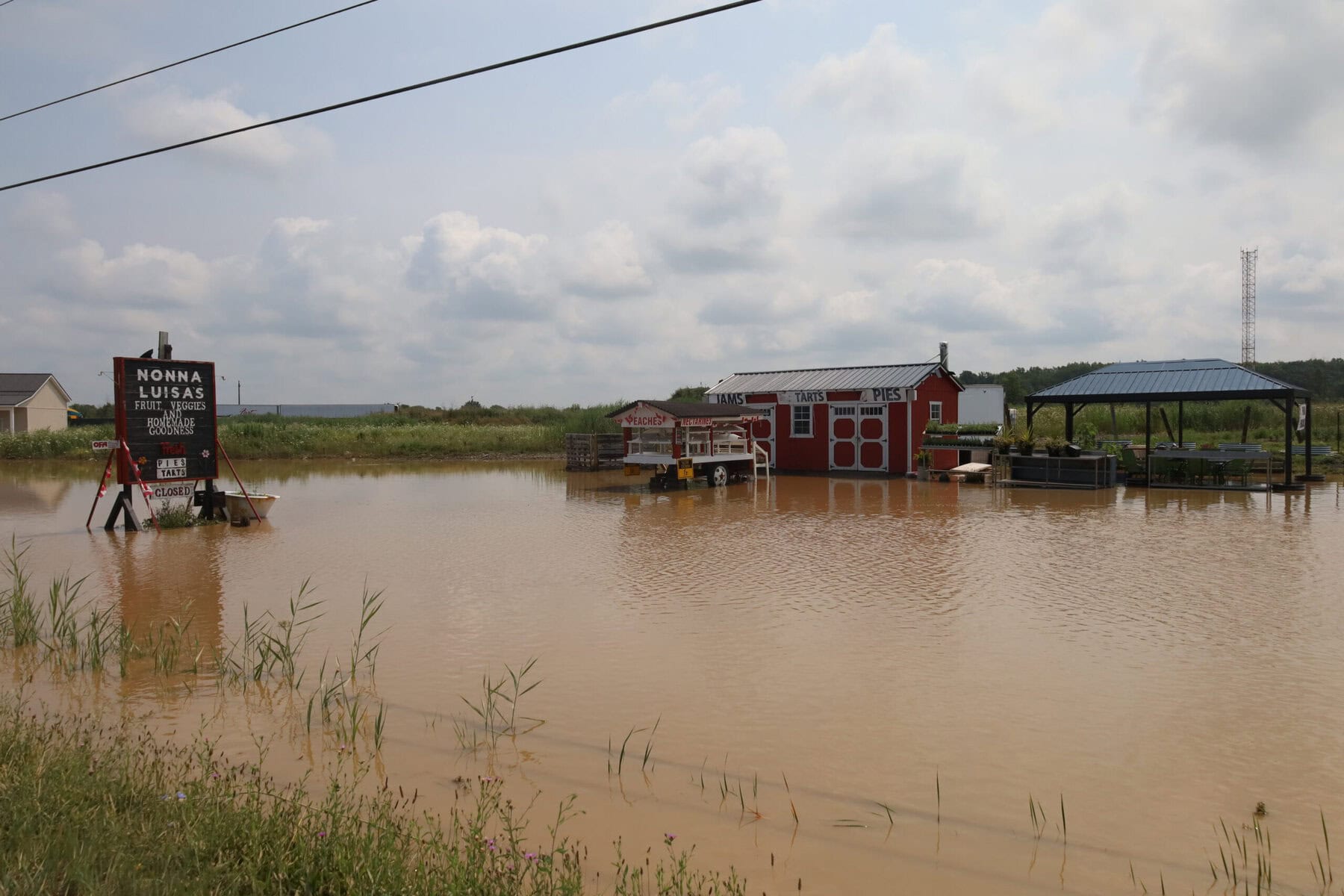
Nonna Luisa’s farm was severely flooded, with water covering much of the property and reaching the road Tuesday morning.
An employee who wished to remain anonymous blamed poorly maintained ditches.
“They could have been better prepared. Instead of being reactive, be proactive,” he said.
The employee said water drains toward Airport Road, beneath Niagara Stone Road and through the airport.
“If that backs up, I get overrun, and then the whole thing here gets overrun,” he said.
A resident who brought food to the employee and also wished to remain anonymous said the owners’ son raised vehicles onto jacks to keep them out of the water.
“Could a storm like this be prevented? No. But the flooding could be,” the resident said. “Preventive maintenance is a lot cheaper than emergency repairs.”
Some of the steps the town takes in assessing its stormwater management system before storms arrive include inspecting clear catch basins, culverts and drainage infrastructure, the town said.
At Southbrook Organic Vineyards, bioswales built to collect and filter parking-lot runoff filled to their rims. General manager Veronica Holmes said its weather station recorded almost 5.4 inches in about two hours.
“This is just simply a lot of rain in a very short period of time,” she said.
Floodwater never reached Southbrook’s grapes, but Holmes said vines can be harmed if their roots remain underwater too long. She said unpredictable rain, drought and freezing are making farming harder.
On his farm near Concession 4 and Line 1, Michael Watson said the west lateral of the Szockyj Drain overflowed until water reached roughly his knees.
The same field lost 500 young peach trees in 2024, Watson said. He was now watching potted rosemary after water reached the tops of the pots.
Watson, who has pushed the town to address the drain, said flooding has grown worse but defended current senior staff for moving the issue through the Drainage Act process.
“Who can control this amount of rain in a short period of time? Nobody,” he said.
Watson said an engineer’s report expected to go before council Sept. 22 could take more than a year. He said the town inherited decades of deferred infrastructure work and needs provincial funding.
“The only person that can help this town is Doug Ford, from a financial perspective,” he said. “We need money from the province to address what the town doesn’t have to spend.”
Developer Rainer Hummel took to Facebook to thank town staff for its quick response to the situation, noting on Wednesday morning he saw street sweepers out cleaning the roads.
“Thank you for doing a thankless job and putting yourselves out there,” he said. “Most of us appreciate you and those that don’t have their own issues they need to deal with.”
He also criticized members of town council whom he said voted against replacing infrastructure such as culverts, with funding instead going toward legal fees in Ontario Land Tribunal disputes.
Residents and businesses stepped up to help. Robert George, owner of Niagara Pools and Niagara Pool Liners, lent all his electric pumps to residents draining their basements and said he would continue lending them as they became available.
St. Davids resident Christine Blane also offered to help anyone affected by the flooding, particularly seniors and people living alone.
Residents can submit flooding, ditch or culvert service requests through the town’s online reporting portal.