
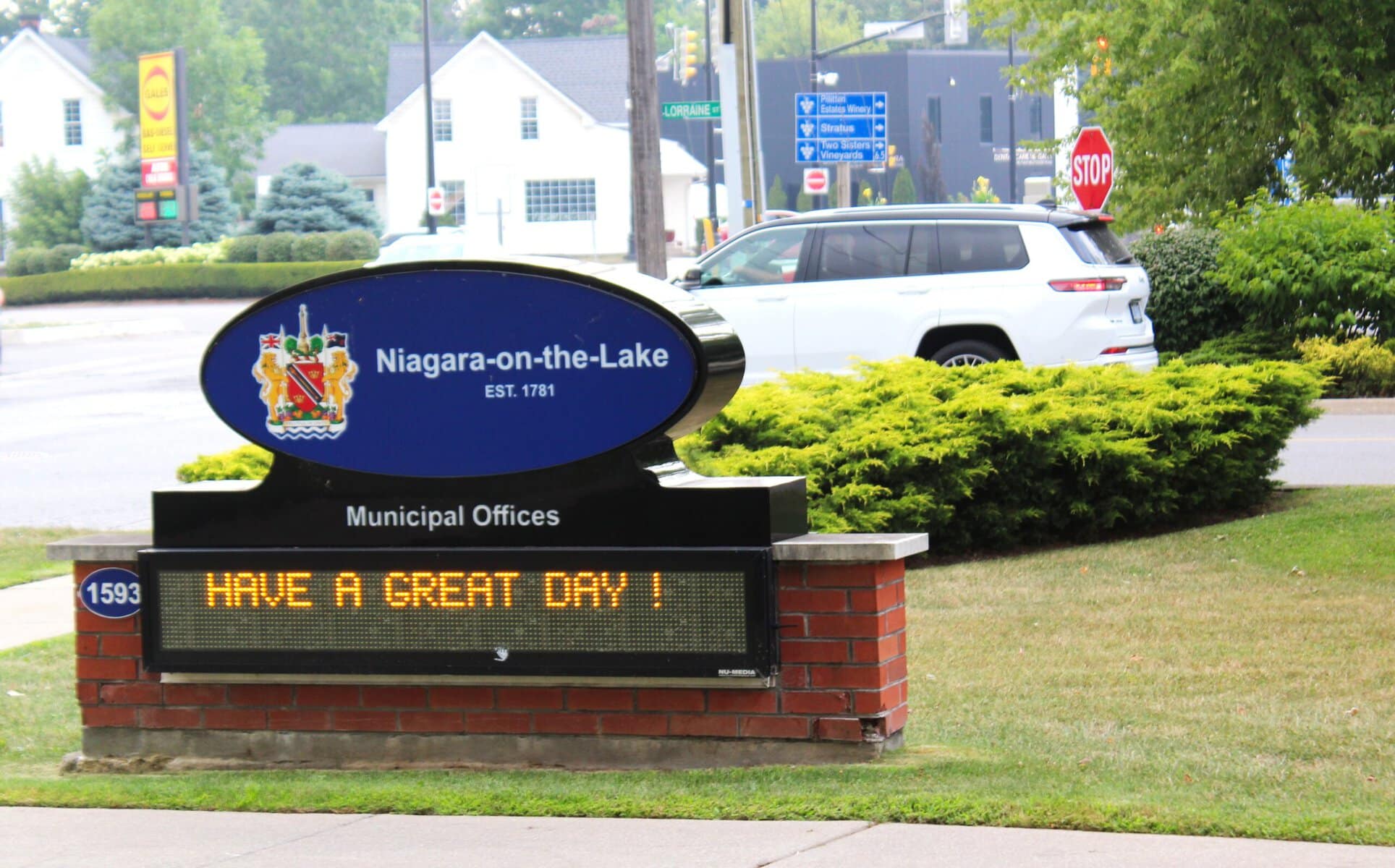


Niagara-on-the-Lake closed 2025 with an almost $212,000 operating deficit, less than one-fifth of the $1.18-million shortfall municipal staff forecasted and well below the almost $579,000 shortage recorded in 2024.
Council voted unanimously Tuesday to cover the shortfall using the town’s $500,000 contingency reserve.
The deficit of $211,958 was just 0.7 per cent of the town’s tax-supported operating expenses, compared with the 3.38 per cent staff predicted earlier. The deficit in 2024 was $578,897.
After the earlier forecast, staff held back non-essential spending.
Vacancies and staffing gaps in tax-funded positions saved about $632,000, while lower-than-expected legal costs of $250,000 also helped.
Higher-than-expected revenue from tax penalties and interest, town vehicle sales, provincial offence fines, a one-time Workplace Safety and Insurance Board rebate and Hydro dividends helped shrink the deficit as well.
While community centre memberships, facility rentals and bylaw fines brought in more money than expected, the town spent $746,169 more than budgeted on operations and roads.
Coun. Wendy Cheropita said she received questions from residents about that $746,169 deficit and asked staff to explain how it happened.
Staff blamed salaries, fuel and vehicle maintenance, roadwork materials and a long, snowy winter that drove up the costs of plowing, salting, sanding and repair.
Other departments helped soften the hit. Corporate services finished $334,147 under budget, community and development was $214,722 under and fire and emergency services was $125,234 under.
“Staff were proactive and they took steps to mitigate this and bring it down,” Coun. Sandra O’Connor said. “That is a good news story.”
Auditors also told council Tuesday that the town was set to receive a clean audit opinion, with no major problems identified.
“A clean audit opinion with no material findings reflects well on the strength of the town’s financial controls and reporting practices,” said treasurer Nick Alaimo.