


With one month to go until nominations close for Niagara-on-the-Lake’s municipal election this fall, the town is preparing for the possibility that council could temporarily lose some of its power until the election is over.
Committee of the whole endorsed a contingency plan Tuesday that would give chief administrative officer Nick Ruller temporary authority over certain major decisions if council becomes subject to Ontario’s restricted acts provisions, commonly known as “lame duck” rules.
Those rules, under the Municipal Act, can take effect when election nominations or results show too few current councillors will return to next council.
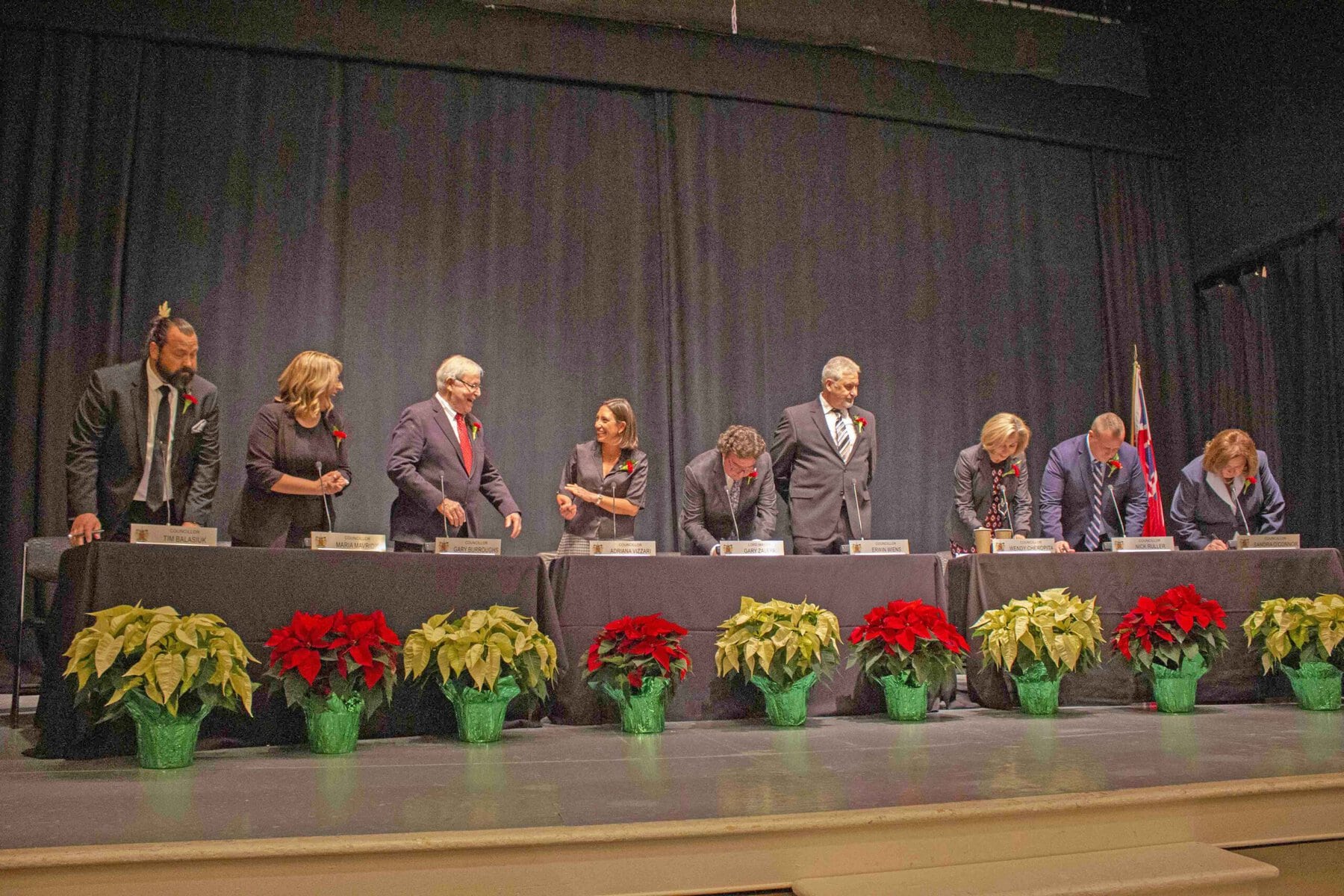
That’s a real possibility this year — the town is shrinking council to seven members from nine.
Restrictions for councillors would include hiring or firing employees, selling municipal property worth more than $50,000 and approving spending or liabilities over $50,000 that are not already included in this year’s budget.
To keep town business moving if that happens, the recommendation would give Ruller the power to make those decisions until the new council is sworn in after the election. Any actions taken would have to be reported back to the new council.
Ruller described the report as a routine step taken during municipal election years.
“A lame duck simply means that enough members of the current council are not returning after the election, so the Municipal Act limits certain decisions for the remainder of the term,” he told councillors.
“Because Niagara-on-the-Lake is reducing the size of council from nine to seven members, the legislation operates a little differently this election,” he said. “To avoid becoming a restricted council, at least six members of the new seven-member council must also be members of the incoming council, or candidates.”
As of Wednesday, four candidates are registered to run in the council election. Two of them, Couns. Sandra O’Connor and Gary Burroughs, are on this term’s council. The nomination period will end Aug. 20.
Ruller said the recommendation before council was “simply to delegate those limited authorities” to him during this period, “so that the town can continue to operate without interruption.”
“Ultimately, this report is about ensuring continuity of municipal operations throughout the election period while complying with the Municipal Act,” he said.
O’Connor asked whether those restrictions could affect planning decisions if they resulted in legal costs exceeding $50,000.
“Does that mean in our planning decisions, if something triggers, for instance, having to pay legal costs, does that impact that we can’t make a decision if it impacts legal costs over 50,000?” she asked.
“Based on our interpretation, yes,” Ruller replied.
He later said that without the temporary delegation, “there would be significant limitations in municipal operations.”
Ruller would be able to approve those expenditures if council delegated the authority.
The recommendation to endorse the contingency plan will go to council for final approval July 21.
After nomination day on Aug. 21, if too few current councillors have filed nominations to seek re-election, the restrictions could take effect. If not, the town will make the same determination after the Oct. 26 election once the results are known.