


Keith McNenly
Special to The Lake Report
The most dangerous power of the American presidency may not be the one Americans most fear.
When people think about unchecked presidential power, they usually think about military power: the nuclear codes, the commander in chief, the possibility of catastrophe at the push of a button.
But there is another presidential power, quieter and more respectable on paper, that in the wrong hands can do terrible damage to a constitutional republic: it is the pardon power.
If J. R. R. Tolkien had written “The Lord of the Rings” as a political parable for the 21st century, the “one ring to rule them all” might have been the presidential pardon: a lawful power that, when in the hands of the corrupt, can seduce a president into believing that ordinary rules don’t apply to him, and subordinates into believing that loyalty will be rewarded with immunity.
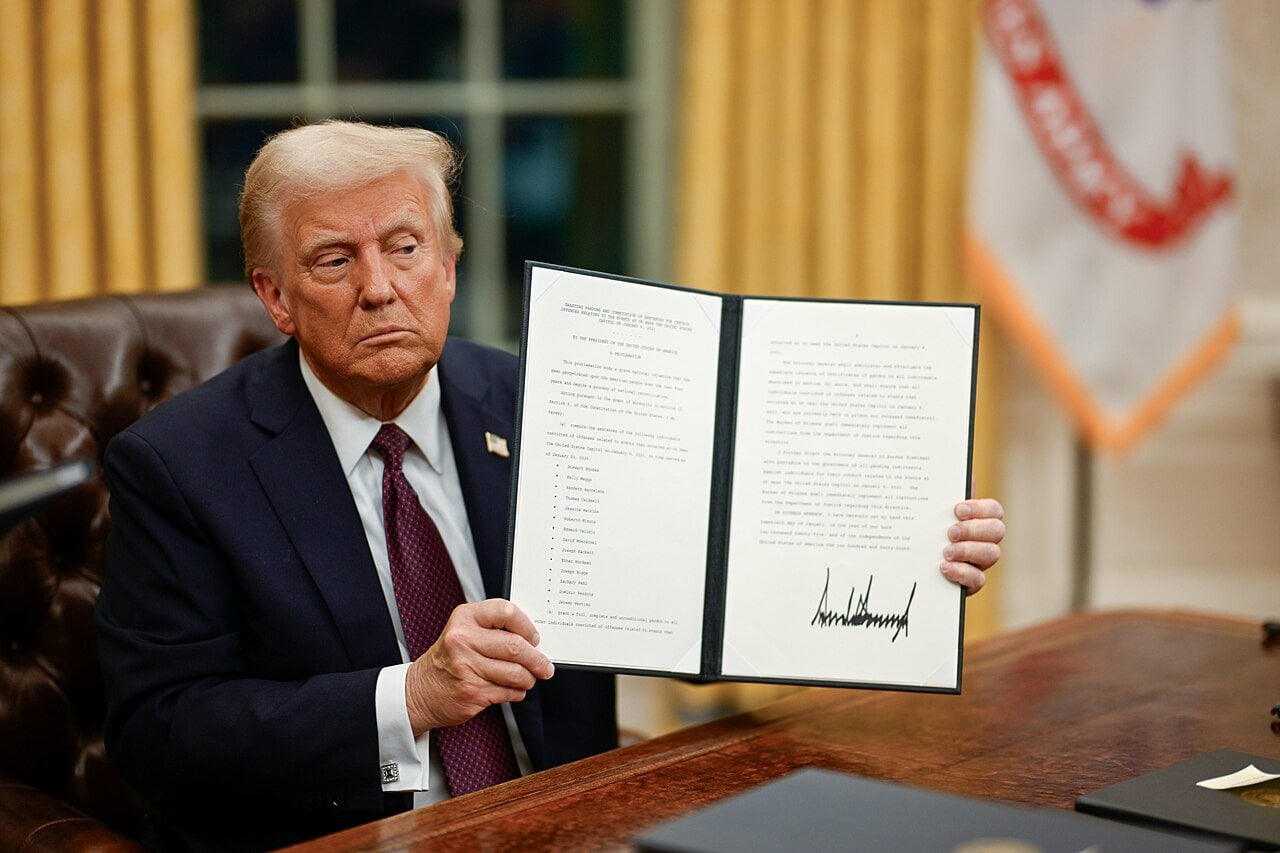
Pardon abuse started on U.S. President Donald Trump’s first day in office of his second term with sweeping clemency for those charged or convicted in connection with the Jan. 6 attack on the Capitol, an attempt to subvert the 2020 election he lost.
Since then, the controversial pardons have continued: last week, on the eve of the Fourth of July, he issued pardons to 11 people, including nine individuals who were convicted of violating a federal air pollution law, the Clean Air Act.
The Constitution gives the president broad authority to grant pardons for federal offences. Used properly, that power allows mercy where punishment has been excessive and correction where the justice system has erred.
But constitutional powers are only as safe as the character of the person entrusted with them.
For most of American history, presidents have exercised the pardon power with at least some sense of restraint. There has long been an understanding that clemency should not be used as a personal favour, a political reward or a shield for allies; however, in the hands of a self-serving president, the pardon ceases to be an instrument of mercy and becomes an instrument of retribution.
Once a president uses pardons to protect loyal associates or signal that certain people need not fear legal consequences, the rule of law weakens. The message is unmistakable: if you act in service to power, accountability may be optional. That is not mercy. It is privilege.
And that privilege is corrosive. It invites subordinates to take actions they might otherwise avoid. It undermines public confidence that justice is applied evenly. It creates the reality of a protected circle in which the law remains binding on ordinary citizens but negotiable for the well connected.
It frees family and allies to openly conduct obvious stock manipulation, be awarded non-competitive government contracts and receive foreign bribes, knowing those three magic words will absolve them in the final moments of the presidency: “I pardon you.”
This is what makes the pardon power so dangerous. It requires no vote in Congress, no approval from the courts, and no meaningful institutional consent. It can be exercised instantly and finally.
That is why abuse of the pardon power is not just another political controversy. It is a constitutional danger. A republic cannot survive indefinitely as a president creates a class of untouchables around himself. Equal justice under law cannot coexist with a standing expectation that obedience to power will be repaid with legal absolution.
At a certain point, appeals to presidential restraint become beside the point. If a president has already shown a willingness to use constitutional power in bad faith, the answer cannot be to rest on hopes of sudden self-discipline.
What is needed then is oversight from Congress, which has both the duty and the constitutional tools to respond when executive power is being used to subvert the rule of law rather than uphold it.
Some fear the possibility of a rogue or cornered president using military power to bring about devastation beyond their borders. But the pardon power, abused systematically, carries the risk of a different kind of ruin, aimed inward at the nation’s own constitutional order. It can weaken law, destroy accountability, and make public corruption functionally untouchable.
That brings us back to Tolkien’s central insight. The “one ring” does not simply grant power; it seduces the bearer already susceptible to corruption.
In the hands of someone bent on self-protection or vengeance, possession of that power does not produce restraint. It deepens the corruption and hastens the damage. That is why the answer now cannot be faith in the judgment of the holder. It must be the intervention of the institutions designed to keep any one person from standing above the law.
The presidency was never meant to resemble a throne, and the pardon power was never meant to be a device by which one corrupt officeholder could marshal an army of corrupted subordinates. If Congress fails to act when that danger is plain, then the constitutional balance the founders designed is reduced to words on paper.
That is how a nation comes apart from within.
Niagara-on-the-Lake resident Keith McNenly was the chief administrator of the Town of Mono for 41 years.