


Seven or nine? How many members will Niagara-on-the-Lake’s next council have?
Probably nine.
So far, Doug Ford’s government hasn’t formally told the town it won’t allow a reduction — but Municipal Affairs Minister Rob Flack indicated to town officials that its request to cut down council will not proceed for the 2026 election.
However, the minister has yet to provide an explanation to the Town of NOTL for why its request wasn’t granted.
Although the change would have required special provincial permission — Ontario typically requires municipalities to act before Jan. 1 of an election year — council voted March 24, after missing that deadline, to request that Flack reduce its size to seven members from nine.
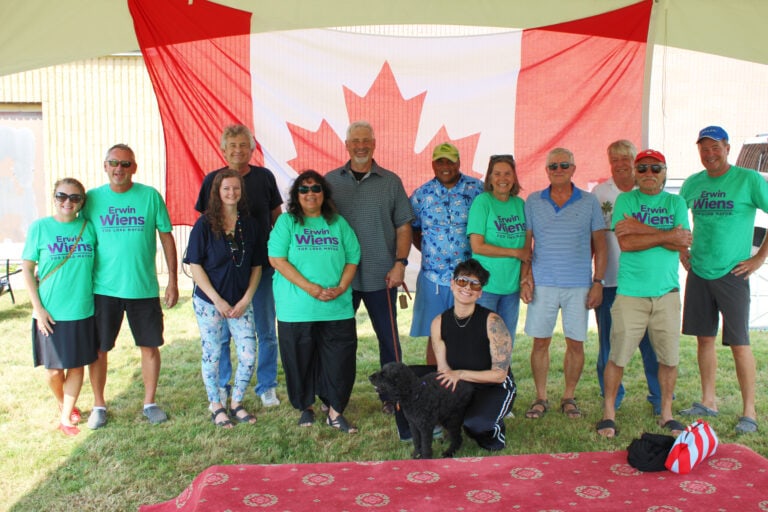
Coun. Erwin Wiens said Flack told him the decision does not mean the idea is off the table.
“What (Flack) said was, at this point in time, they weren’t going ahead with it,” said Wiens, adding Flack “did say that this could be done for the 2030 election.”
“Timing may have been an issue, but that’s a question for Minister Flack.”
Flack did not respond to questions by press time about why the proposal was declined — including whether timing or legislative requirements played a role.
Wiens said before Jan. 1, the town “hadn’t gotten to the point about reducing council size.”
“That’s why the request had to go to the province for their assistance,” he said.
Town spokesperson Marah Minor said the town has not received a formal written response outlining the decision not to go forward with NOTL council cutdown to seven.
She said that prior to an April 2 press conference — where Flack announced proposed legislation to cut Niagara’s regional council from 32 to 13 members and give the chair “strong” powers — there was a conversation between Flack and Lord Mayor Gary Zalepa.
“The minister indicated that the request would not be proceeding for the 2026 term of council,” Minor said.
Zalepa was not available for comment by press time.
Minor said the town’s governance working group did not play a role in communicating the proposal to the province. Instead, the information was conveyed through the town’s government relations consultant.
She added that staff were directed by council to provide the approved motion wording.
Minor did not respond by press time to questions about whether the approved motion wording will be made public, when it could be released or whether it could be provided.
“I think that the minister made the wisest choice,” Wiens said.
“He made some changes, but he did not make massive, drastic changes that were going to have huge implications and costly implications,” he said. “He’s left it up to Niagara region, Niagara-on-the-Lake, to make decisions based on their own future.”
“So now, we sink or swim on our own.”
Wiens said the request was also to show the province NOTL is willing to be flexible with its governance structure — work he said the province acknowledged.
“Yes, he did,” Wiens said when asked whether the minister explicitly said letters from Niagara municipalities helped avoid the prospect of amalgamation, calling it “the victory here.”
“(Flack) looked at the work we were doing in Niagara and other municipalities, but certainly in Niagara-on-the-Lake,” he said. “That helped him make his decision — the fact that we’re willing and open.”
Other councillors said the proposal raised concerns about representation and limited financial benefit.
“To me, the size of our council only affects the representation for our residents — not any budget savings,” said Coun. Gary Burroughs.
Coun. Sandra O’Connor said if the province wanted the change to happen, “they could have approved it.”
“The province changed the size of the Toronto council in the middle of an election period,” she said, referring to the province’s move July 2018, it reduced the number of council seats in Toronto to 25 from 47, halfway through the year’s municipal election campaign.
O’Connor said the town should weigh the broader implications of any reduction.
“The downside is that it reduces the availability of councillors that residents can contact for issues, thus reducing democratic access,” she said.
Coun. Andrew Niven said cost savings would be relatively minor in the context of the town’s overall budget.
“For that reason, I don’t believe cost savings alone should be the primary driver of a decision like this,” he said.
He said any future changes would need to balance efficiency with maintaining strong representation across NOTL.
“I do think there will continue to be conversations about council composition,” said Niven.
“Whether it remains a priority will likely depend on further input from the province, as well as ongoing local discussion and public feedback.”