


Niagara-on-the-Lake council says it has dodged forced amalgamation — but the fight over regional governance isn’t over yet.
Now, Ontario’s proposed Better Regional Governance Act could cut down the town’s representation at the Niagara Region council table to one person from two.
The legislation would reduce Niagara regional council from 32 members — currently made up of one regional chair, 12 elected mayors from Niagara’s municipalities and 19 elected representatives — to 13, consisting of the region’s 12 mayors and a regional chair.
It would also expand the chair’s powers and introduce a yet-to-be-defined weighted voting system among the municipalities.
The province has not publicly set a timeline for when the legislation could pass, but if approved, the changes would apply beginning with the 2026–30 council term.
For NOTL, that would mean losing its regional councillor seat, currently held by Coun. Andrea Kaiser, leaving only the lord mayor at the regional table.
“One of 12 is better than two out of 31,” said Lord Mayor Gary Zalepa, who backed the proposal in an April 2 news release alongside six other Niagara mayors.
“We wrote to Premier Ford in February because we believed Niagara needed reform,” Zalepa said in the release. “Today’s announcement reflects that direction, and we welcome it.”
Kaiser said she would likely have run again and supported some form of reform, but the province’s move has cut short a planned public consultation process.
“We were planning, as a regional council, to do a public process,” she said. “That’s obviously been curtailled.”
She said she does not believe the changes are in the best interest of NOTL residents.
“I was surprised to read that the chair will be getting strong powers,” said Kaiser, noting the position remains appointed, not elected.
“A person being appointed — and not elected by the public — having strong powers is concerning to me,” she said.
“Previously, in my mind, it was a very figurehead position that the chair was.”
Kaiser said her concerns extend beyond the chair’s powers to the proposed use of weighted voting, which could shift influence toward larger municipalities.
“We’ve already been struggling to have our voice heard over the years at the region,” she said.
With fewer members on regional council, she also said “it will be a really big struggle for the Niagara-on-the-Lake (lord) mayor” and smaller communities like NOTL to “find consensus on certain things.”
“With more people at the table, you can kind of find common thinking,” she added.
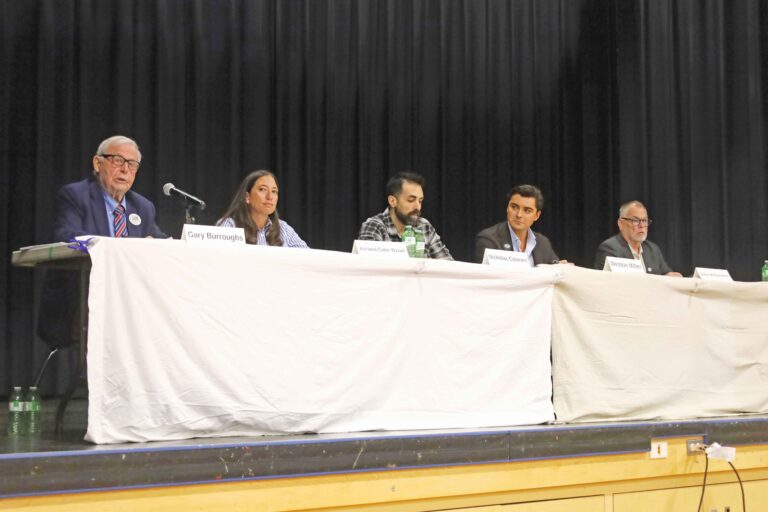
Coun. Gary Burroughs, who served as the region’s chair from 2010 to 2014, said the proposed changes could leave the town’s priorities unsupported.
“We have heritage — which we like to focus on — and that’s not true in any of the other municipalities,” he said, noting NOTL is “the only one with a large piece of Greenbelt that needs to be protected.”
“But that won’t be supported anymore,” said Burroughs.
He also raised concerns about how the announcement of Niagara mayors supporting the proposal was handled.
“In our case, (councillors) were never informed that the town had supported the change in regional structure,” he said, arguing council should be kept aware of decisions and news releases affecting the town in advance.
Zalepa dismissed those concerns.
He said the work behind the April 2 release was done through a council-approved group established to review governance reform. The group consists of Couns. Tim Balasiuk, Sandra O’Connor, Wendy Cheropita and Erwin Wiens.
“I don’t believe councillor Burroughs volunteered for that,” he said.
But Zalepa said for now, there are “really no changes.”
“I think sometimes we read things and maybe we don’t understand them quite — so we react quicker,” he said, noting the current regional government remains in place.
“We have a functional regional council that’s the same constitution that was elected four years ago,” said Zalepa.
“We have a mandate to consider reviewing services.”
He also pointed to what he described as the broader outcome — that earlier concerns about forced amalgamation have been avoided.
Former regional chair Bob Gale’s began a short-lived push for amalgamation in February, which met a wall of opposition from NOTL’s council and regional council. He back-tracked on that push, putting forth the idea of reducing regional council and introducing weighted voting in early March.
“We’ve managed to stave off forced amalgamation,” Zalepa said, adding that while the premier “made it very clear that he was interested in doing more,” the province ultimately chose to focus on regional governance and work with local mayors and municipalities.
“And I think we’ve successfully shown that we can do that,” he said.
Coun. Erwin Wiens said he is approaching the proposal with an open mind, pointing to the province’s focus on efficiency.
“We’re looking for efficiencies and savings — and that’s the goal,” he said.
Regional councillors in Niagara are paid about $45,309 annually, but the province has not outlined specific figures of cost savings resulting from the removal of 19 seats.
Wiens said the town will need to ensure its voice remains strong under any new structure.
“We have to make sure that continues. No question.”