


Ken Bosveld
Special to Niagara Now/The Lake Report
Who doesn’t want “better, more efficient government at less cost to the taxpayer?”
Or what about “lower taxes, improving services, reducing bureaucracy and achieving clear lines of responsibility and accountability?”
It sounds like a no-brainer. Where do we sign up?
Those were the exact promises made 25 years ago when the Mike Harris government imposed amalgamation in Hamilton despite widespread citizen opposition and outrage. Our local Conservative MPP felt so betrayed by his own party that he resigned and walked away from politics.
And those same promises of lower costs and better services were made in the early 70s when the Bill Davis government forced urban Hamilton and the surrounding towns and townships into the two-tier Regional Municipality of Hamilton-Wentworth.
Now you may be tempted to think that amalgamation would only occur if there is widespread support among the taxpaying residents. But think again.
Municipalities do not meet the democratic standard of existing at the consent of the governed. Rather, municipalities are created and rearranged by the province.
Municipal elections may perpetuate the optic of municipalities existing to serve their constituents, but when push comes to shove, it is only Queen’s Park that can do the pushing and shoving. No Canadian courts have had the courage to bring 1867 law into the 21st century.
The argument in support of amalgamation is rooted in a belief that bigger is not only better, but it is also more efficient and effective. If that were the case the most efficient government in Canada would be federal, followed by provincial and finally municipal.
But it ain’t so.
Municipalities are responsible for parks and recreation, fire protection and policing, local road maintenance and snow removal, waste collection, social services, building permits, water and sanitation and a host of other functions.
There is no denying that municipalities administer the facilities and services that have the most direct, daily impact on the lives of their residents.
In addition, many of the services that municipalities provide are provincially mandated. So, while Queen’s Park can boast that there have been no provincial tax increases under the current regime, that is only made possible by dumping additional costs onto municipalities.
So, what has amalgamation brought to Hamilton, and particularly the suburban and rural communities?
It has led to a disconnect between citizens and their elected decision-makers.
Purely local issues that were once discussed, debated and decided in the local council chamber are now too insignificant to warrant anything more than a recommendation in a report, a show of hands by those who are usually quite unfamiliar with the issue, or simply being delegated to the bureaucracy.
Because political representation is based on population, not geography, it has resulted in rural and agriculture-related issues being decided by politicians who are unfamiliar with the communities and the uniqueness of agriculture industries.
In addition to the gulf between constituents and their elected representatives, amalgamation has contributed to a loss of community cohesion and identity.
From the Santa Claus parade to the festival in the park, activities that were once driven by passionate local volunteers must now navigate their way through an onerous and frustrating bureaucratic process.
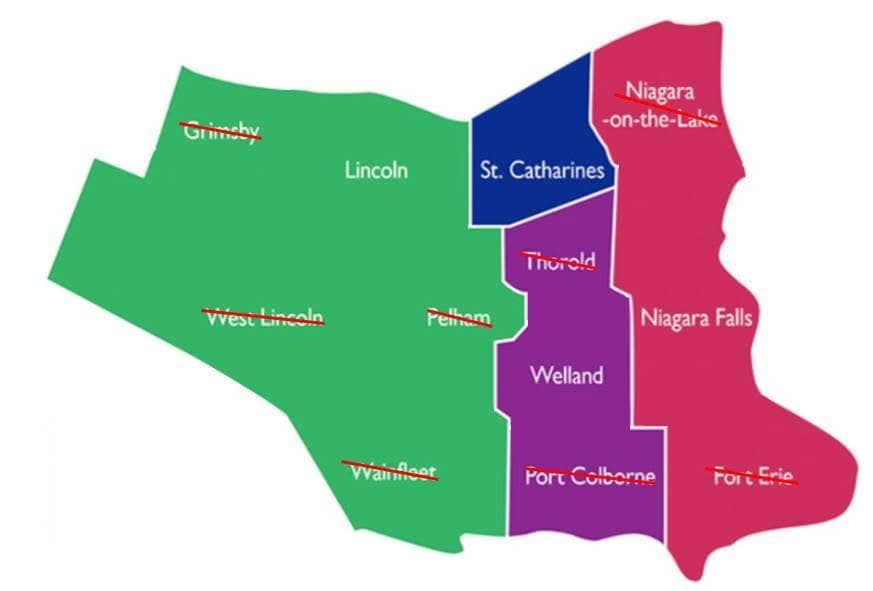
If amalgamation is right for Niagara, then it must be the people of Niagara who make that decision with eyes wide open, based on honest evaluation, measurable objectives and a clear and logical plan for achieving those goals.
When Hamilton’s first round of amalgamation was heading off the rails, the province appointed the Stewart Commission, which concluded that the problem was not so much structural as it was rooted in “animosity” between urban and rural politicians.
In other words, it wasn’t working because it was imposed, not chosen.
That’s why it is essential that any recommendation to amalgamate be put to the citizens of Niagara in the form of a referendum, and that there be broad support among urban, suburban and rural communities, because only the taxpayers can truly determine value vs. cost.
Amalgamation was intended to deliver “better, more efficient government at less cost to the taxpayer.” But, 25 years later, Hamilton residents are still waiting.
Ken Bosveld is a retired journalist living in Flamborough in the City of Hamilton. He was involved in a citizen-led referendum prior to amalgamation, and played a leading role in exposing the discrepancies and flaws in the Harris government’s rationale for imposing amalgamation in Hamilton.