
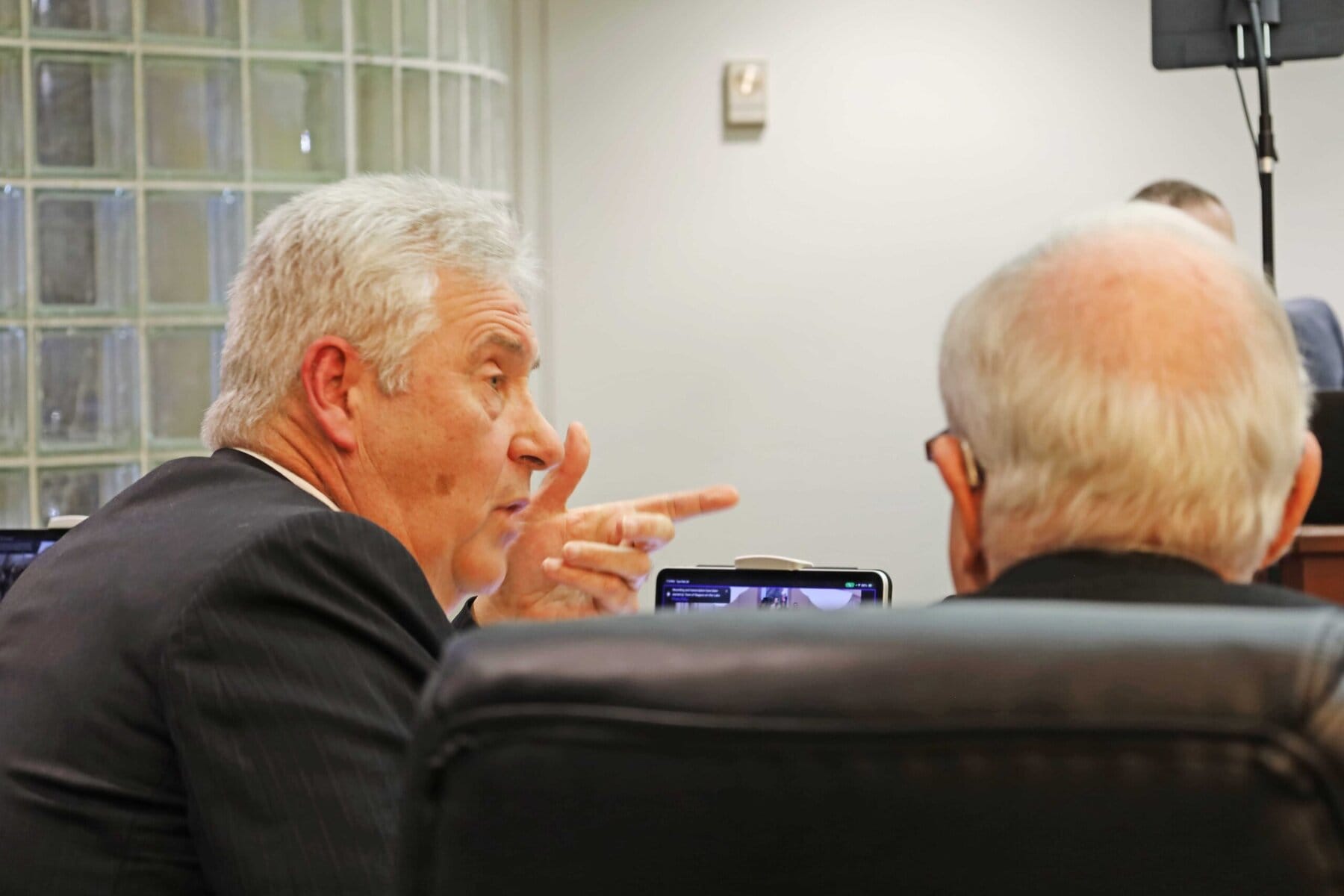


Niagara-on-the-Lake councillors say they will fight any forced municipal amalgamation as the town ramps up its response to a regional governance review that could reshape how the Niagara region is governed.
On Wednesday, the Town of NOTL submitted its feedback on the prospect of amalgamation to the province, taking a stance against forcibly merging NOTL with other cities and towns in Niagara and arguing that the municipality is in good place and can stand on its own.
In it, the town asks Municipal Affairs Minister Rob Flack and Premier Doug Ford to rule out forced amalgamation for the town, saying it presents “a material risk” to local reprsentation, its reserves and tax base, service delivery, agricultural and heritage stewardship.
“We cannot support structural change imposed in the absence of demonstrable benefit,” said the submission’s opening letter, signed by Lord Mayor Gary Zalepa.
The submission details the state of affairs in the municipality on a financial, operational, planning and governance basis, which Zalepa writes “demonstrate clearly and objectively that Niagaara-on-the-Lake is financially stable, operationally strong and capable of continuing as an independent municipality.”
It argues for NOTL’s strength in the areas of infrastructure and asset management, housing and development, economic resilience and tourism management, agriculture and land stewardship, public safety, workforce capacity and more.
The amalgamation issue emerged after newly appointed Niagara Region Chair Bob Gale contacted Ontario’s minister of municipal affairs and housing on Feb. 19 about initiating a governance review for the region — a process that could include municipal amalgamation — and advised local mayors that municipalities would be asked to submit feedback to the province by March 3.
Last week, Niagara’s regional council voted to launch a formal governance and service delivery review examining how the region and its 12 municipalities operate and directed Gale to stop from further action on amalgamation while the review is underway.
Gale has argued the region’s governance system is inefficient, pointing to the region’s 126 municipal elected officials across 12 municipalities and regional council and linking the debate to infrastructure costs, citing roughly $2.7 billion in deferred infrastructure across the region.
The town created a governance working group to co-ordinate its response, with members of the town’s senior leadership team and Couns. Erwin Wiens, Tim Balasiuk, Wendy Cheropita and Sandra O’Connor.
Ruller said the group met regularly and worked with eight other municipalities against forced amalgamation “to establish a coordinated, unified municipal position.”
Councillors made clear the town opposes any forced merger of municipalities.
Wiens pointed to the lack of evidence so far that amalgamation would benefit NOTL or the region.
“We do not support any sort of force of amalgamation. Full stop,” he said. “There is no evidence that supports it and we are going to be fighting tooth and nail.”
Wiens said the town was “ready to listen” when Gale made his presentation to council on Feb. 24, “but we wanted it to be evidence-based, data-driven and resident-supported.”
“We have continued down that vein,” he said.
He warned that NOTL, a historic town known for its tight-knit community, could be particularly vulnerable in a larger merged municipality.
“Quite frankly, Niagara-on-the-Lake has the most to lose out of all of this,” Wiens said.
While opposing forced amalgamation, council signalled it is willing to examine its own governance structure.
Wiens said the town should take the lead before changes are imposed from outside and introduced a motion to that effect, which council approved.
The motion directs staff to return to the March 24 council meeting with a report examining council composition across Niagara, outlining potential considerations for reducing the size of NOTL’s council — effective for the next municipal election.
“Rather than waiting for something that’s provincially directed or mandated, I’d like us to take the driver’s seat,” he said.
Council also supported Wiens’ request that staff begin preparing the town’s 2027 budget using a tax levy target tied to anticipated inflation “in a manner that does not contribute to any increase to the town’s existing infrastructure gap.”
“It’s crucial that the proposed budget does not worsen our infrastructure funding gap,” Wiens said. “Infrastructure is clearly important to the premier.”
He said the goal is to show the province the town is taking cost concerns seriously while considering what the premier and minister have said.
Cheropita thanked town staff and council members for moving quickly to respond to the issue.
“It was only eight days ago when we found out that amalgamation was going to happen,” she said.
Since then, she said, staff and council have been working intensely behind the scenes to co-ordinate a response — something she described as “one of the greatest examples of having strategic action in motion.”
“I’d like the residents to know that they’re really in good hands,” Cheropita said. “All of the things that they care about right now — and their voice — are being addressed.”