



Niagara-on-the-Lake council passed two new bylaws governing special events Tuesday night, after voting to block a delegation request from a lawyer seeking to raise concerns about the changes.
The new special events bylaw and a related amendment set up a formal permit system for special events across NOTL and allow the town to fine organizers through its administrative monetary penalty system.
Both passed, despite opposition from Coun. Gary Burroughs.
Certain events — including gatherings expected to draw more than 200 people, events on public property or events on private property where temporary zoning or site plan exemptions are required — now require a special event permit.
And, for the first time, the town can enforce the special events bylaw when violations come up instead of relying on court-based enforcement.
The bylaw also lays out how permits will be issued, refused, suspended or revoked, and establishes terms and conditions organizers must follow.
Staff said applications for special events would be processed through the clerk’s department and reviewed by multiple town departments, including planning, fire, public works and parks, with each area assessing impacts such as zoning, safety, roads and facilities.
Those reviews would inform whether an application proceeds, with the clerk issuing the permit based on that input.
The permits are intended for occasional events — staff said properties seeking to host frequent or recurring events would be directed to the planning department to pursue appropriate zoning or site-specific approvals.
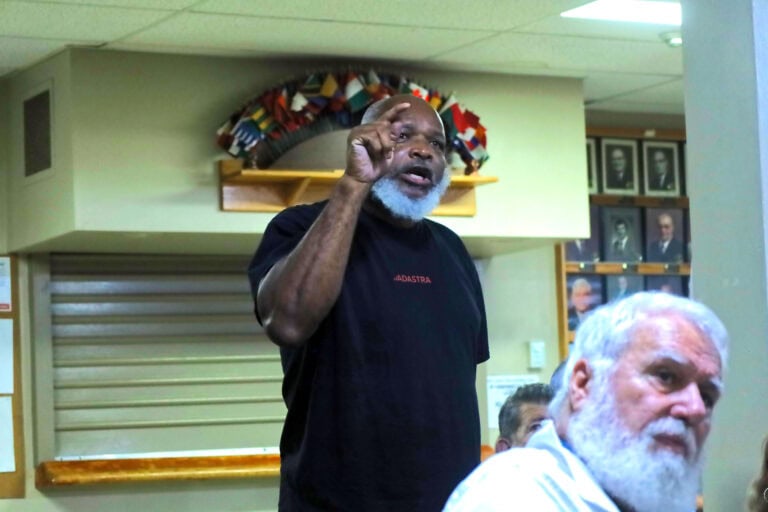
The votes came after council refused to hear from lawyer Tom Richardson, who was representing resident Ed Werner and had asked to address council before the bylaws were passed.
Werner, president of Brox Company Ltd., repeatedly urged clearer, enforceable rules for special events and previously took legal action against Konzelmann Estate Winery and the town over alleged bylaw violations. He said Richardson’s presentation was going to point out problems with the new bylaw.
He said council’s stated aim of clarity and proper enforcement is sound in theory, but the new bylaw’s wording creates ambiguity and leaves interpretation to the clerk’s office.
Richardson is now writing a letter to council and staff, setting out what he would have said if he were allowed to delegate, Werner told The Lake Report Wednesday morning.
Delegation request denied on procedural grounds
Council first voted on whether to permit Richardson to address council.
The town clerk denied Richardson’s delegation request over email on Jan. 26, citing procedural rules related to agenda timing, committee-stage delegations and potential litigation concerns. Richardson disputed that decision and renewed his request on Jan. 27.
Council then voted at the Jan. 28 meeting not to allow his presentation.
Burroughs, as well as Couns. Erwin Wiens, Adriana Vizzari and Sandra O’Connor voted to allow Richardson to speak, while Couns. Wendy Cheropita, Maria Mavridis, Andrew Niven, Tim Balasiuk and Lord Mayor Gary Zalepa voted no. As a two-thirds majority is required, the motion to allow the delegation failed.
During discussion, Wiens said he wants all residents to have the ability to address conuncil, even when requests come in late, but also raised concerns about last-minute agenda changes.
How the new rules work
Under the bylaw, an event is considered a “special event” if it is expected to draw more than 200 people, takes place on public property or is held on private property that requires zoning or planning exemptions.
The definition also lists exclusions, including events entirely on private property that are explicitly allowed by site-specific zoning, small informal gatherings in town parks, garage or yard sales, protests or demonstrations and events held entirely on provincial or federal land.
The bylaws establish a permit system and amend the town’s administrative monetary penalty system for non-parking offences to include special events, allowing the town to issue fines for violations.
Werner said the bylaw was rushed, without adequate review, and warned that the wording of it could significantly alter how special events are handled across the town.
“This virtually wipes out any protection that zoning provides for residents and puts them at the mercy of whatever the clerk’s office determines is an appropriate event,” Werner said. “The passing of this bylaw will forever change the face of Niagara-on-the-Lake.”
He said he supports the goal of clarifying special events, but believes the bylaw falls short.
“I think that council has the right intention to clarify the special events that are going on in Niagara, but this bylaw does not reflect what council wants.”
Mixed views emerge during council debate
Some councillors say the bylaws fill a gap in the town’s rules. Others raised concerns about process, clarity and enforcement.
Burroughs questioned whether the bylaw would limit how many large events could take place on the same day and whether the 200-person threshold automatically triggered a permit.
Staff said there is no set cap on the number of special events per day and multiple events could occur on the same day if they are spread out, but large events in the same area at the same time would typically be discouraged.
Staff also clarified that the 200-person threshold is not the only factor that determines whether a permit is required. Events held on public property, or on private property without appropriate zoning or approvals, may still require a special event permit, regardless of size.
After staff’s explanation, Burroughs said he was “more confused than ever.”
O’Connor questioned what new enforcement authority the bylaws would give the town, with staff saying it replaces an unenforceable policy with a bylaw that allows permits to be denied, conditions enforced and violations penalized through administrative fines.
Other councillors argued the bylaw was overdue: Mavridis said said the policy now “covers pretty much every concern” she’s had “for the last three years” and responds to resident concerns as well.
Cheropita said she appreciates how the new framework, developed over months of staff work, focuses on community impact rather than event size alone: “This is a more robust policy than what we had in the past.”