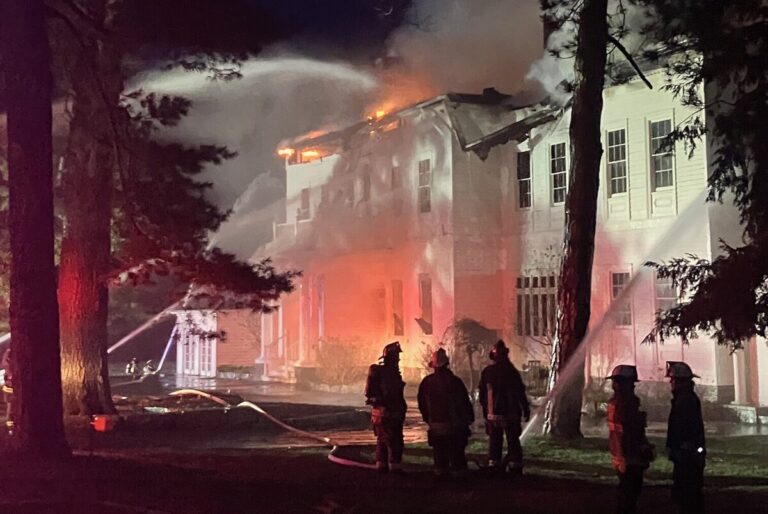

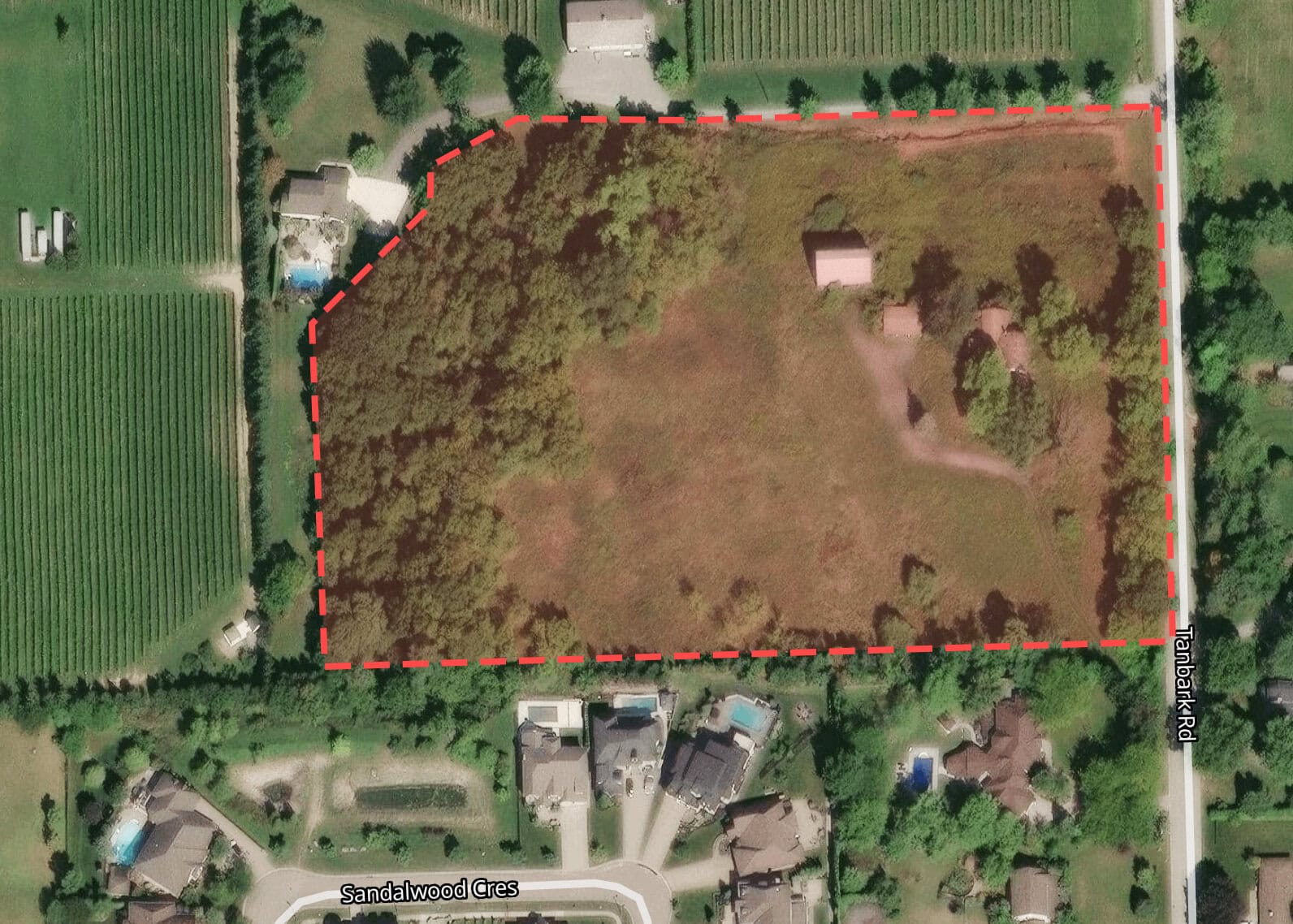


The Town of Niagara-on-the-Lake has bought more than nine acres of land in St. Davids for $1.8 million as it looks for long-term solutions to stormwater flooding.
This comes after it determined that St. Davids’ Sandalwood Pond, a stormwater pond, no longer has the capacity to handle current conditions, especially during severe weather events.
Council approved the purchase of the property north of the stormwater management facility at a Jan. 13 meeting. Staff identified the land when it came on the market just as it was brainstorming how to address stormwater challenges in the Vineyard Creek Estates subdivision.
The nine acres of land were purchased for below the asking price of $1,950,000. The total cost, $1,880,000, includes fees and disbursements.
“This parcel was identified as a potential solution,” said Nick Ruller, chief administrative officer.
He called the timing “a unique opportunity” for both infrastructure planning and future community use.
“As part of our discussions with council, the property happened to be on the market right at the same time,” he said.
Depending on the outcome of further studies, the land could also have future community uses.
To determine the best path forward, the town will begin an environmental assessment examining the technical, environmental and community impacts of potential stormwater management solutions.
The town will also do a “visioning exercise” to help decide what, if any, community uses might make sense for the land, said Jordan Frost, the town’s director of public works and infrastructure.
“We’ll have people from our community services, from planning, the whole organization, to see what it is that we can see in this space,” he said.
The town is aiming to have construction of the preferred solution completed by next year, Frost said.
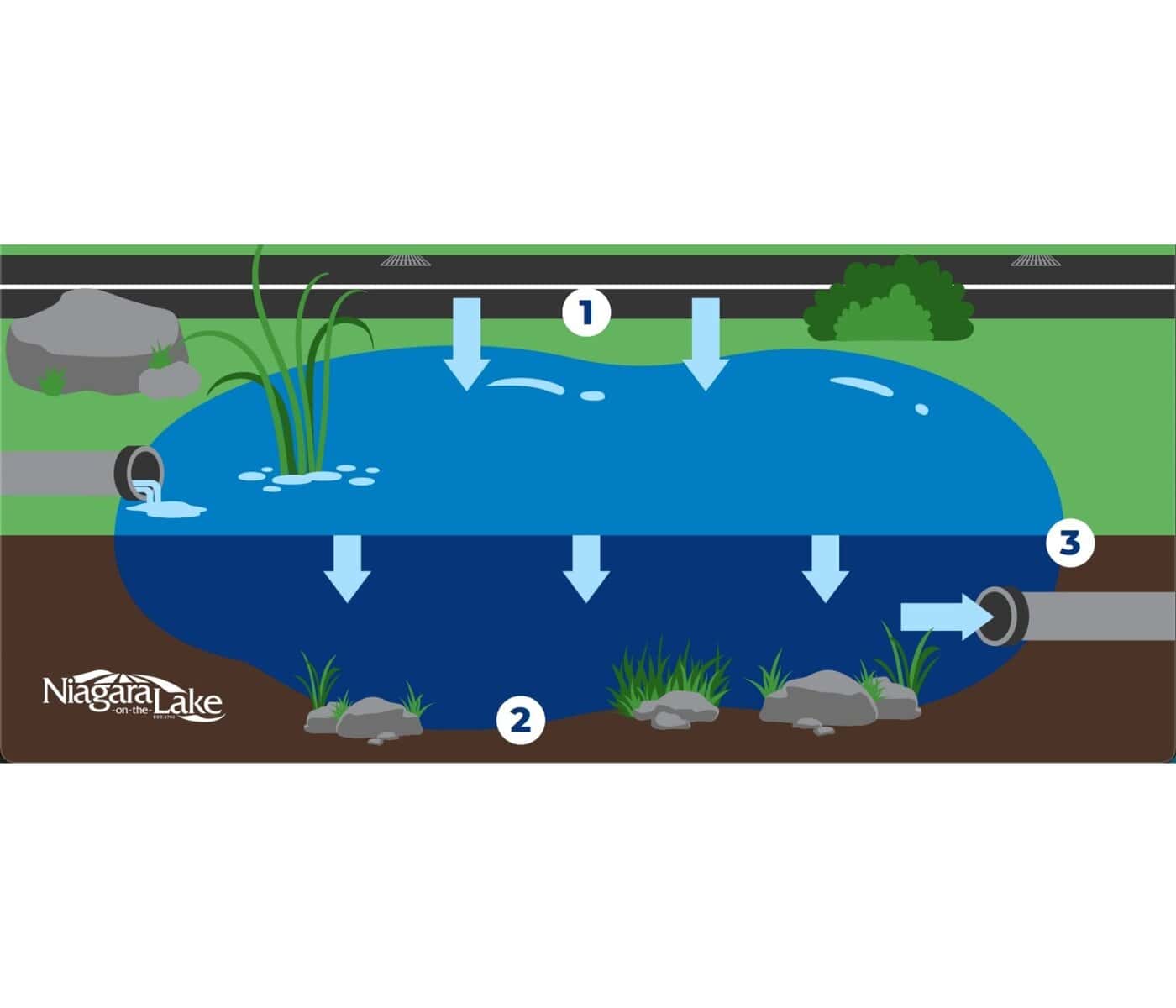
“One option is to put a new stormwater management facility, A.K.A. a pond, on the new property,” he said. “We developed a few other alternatives.”
Stormwater management facilities are designed to collect runoff from roads and properties, control how quickly it flows out and release it downstream. Frost said the cost will depend on the option selected, but the town is not considering anything out of the ordinary for this type of infrastructure.
He said that if a new facility were to be implemented, it would not only address current capacity issues, but would be designed as a long-term solution that accounts for the town’s growth and conditions in the future.
Expanding the existing facility was “not a viable option,” he said, because the town owned only the land immediately around it.
“We’re at a point, now, where the capacity of that facility is just not enough,” he said.
“The flooding is widespread — drainage is a challenge everywhere,” Frost added, referring to municipalities near and far.
“We can’t control the weather,” he said. “The most we can do is try to work with the weather.”
Frost said the environmental assessment will explore several options — and, “in the coming months,” residents will have a chance to review and provide input through a public information session, before a preferred solution is selected.
“There will be notices going out,” he said.
“Once we have that, we’ll move forward with design,” added Frost.
The Sandalwood stormwater management facility was built in 2005 to serve nearby development and according to town officials, was properly designed and met all engineering standards at the time.
“The original engineers did the correct job on the design,” said Darren Mackenzie, the town’s manager of public works. “You’re looking 20 years later, where you have land-use change, you have more hardening of surfaces.”
Frost said the stormwater system was also originally designed when fewer surfaces were paved. Over time, added driveways, patios, pools and other hardscaping have reduced how much rain can soak into the ground.
The town is also seeing more frequent and intense storms, increasing runoff into the system and contributing to localized flooding, he said.
“With different weather patterns,” Frost said, “we experience different impacts to our infrastructure.”
“There’s been a change in the way we design our infrastructure because of this,” he said.
The town experienced two major storms within six weeks in 2024, including one that Frost said approached the scale of a one-in-500-year event, though he said he did not have the exact figures. It has already dredged the existing facility to restore its full storage volume, but he said that alone is no longer enough.
“The frequency that (storms) are happening — we’re seeing an increase in,” said Frost.
Town officials stressed the land purchase also preserves future flexibility. If a new stormwater management facility is not the preferred option, the property could still be used for community amenities or open space.
“If the (environmental assessment) says there’s a better option,” Mackenzie said, “we can decide community benefit, or whatever the best thing to do with that piece of property.”
Ruller said the purchase benefits both the town and St. Davids.
“It’s a great investment for the town as a whole and it’s a great opportunity specifically for the village of St. Davids,” Ruller said. “We’re excited to see what the potential can be for that property.”
Frost said residents should feel reassured the town is moving quickly by infrastructure standards. He also emphasized the facility is municipal infrastructure and not intended for recreational use.
“We are acting relatively quickly in infrastructure terms — and the final solution we are looking at isn’t just a stop gap to address something today,” he said.
“Not as just a member of the town, but as a member of the community and a member of St. David’s, I do see this as a significant investment in protecting the people’s homes and looking after our livelihoods.”