
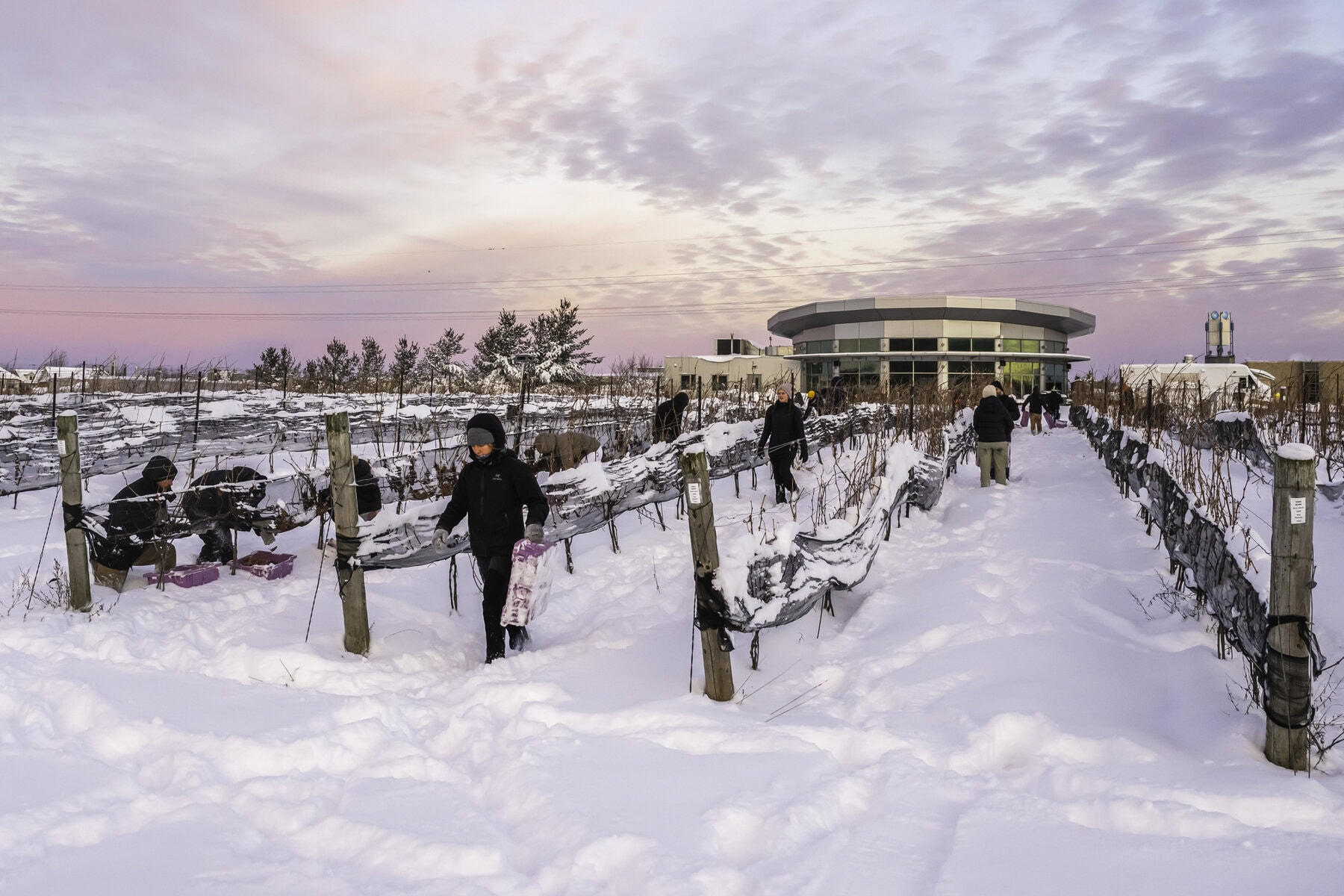
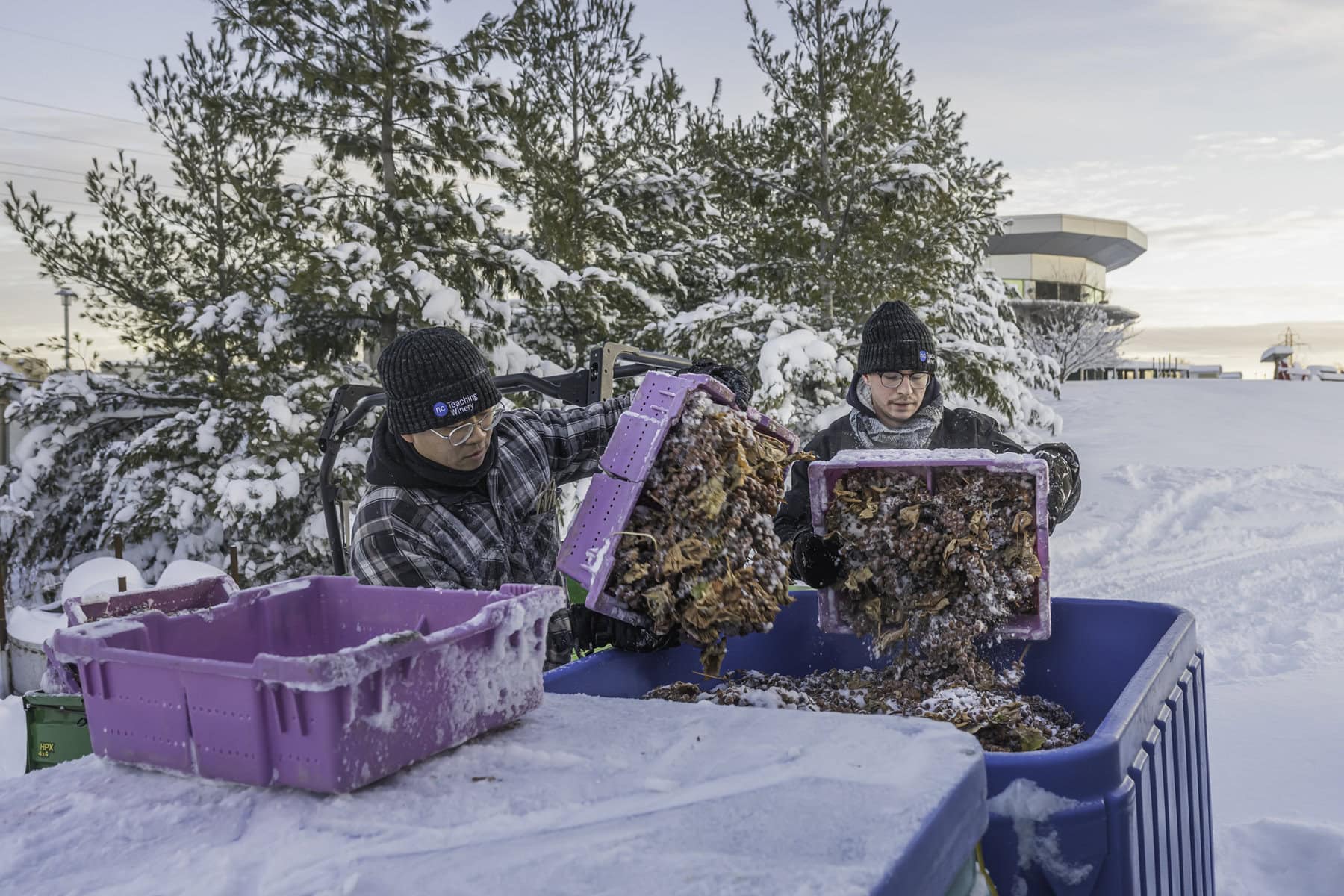
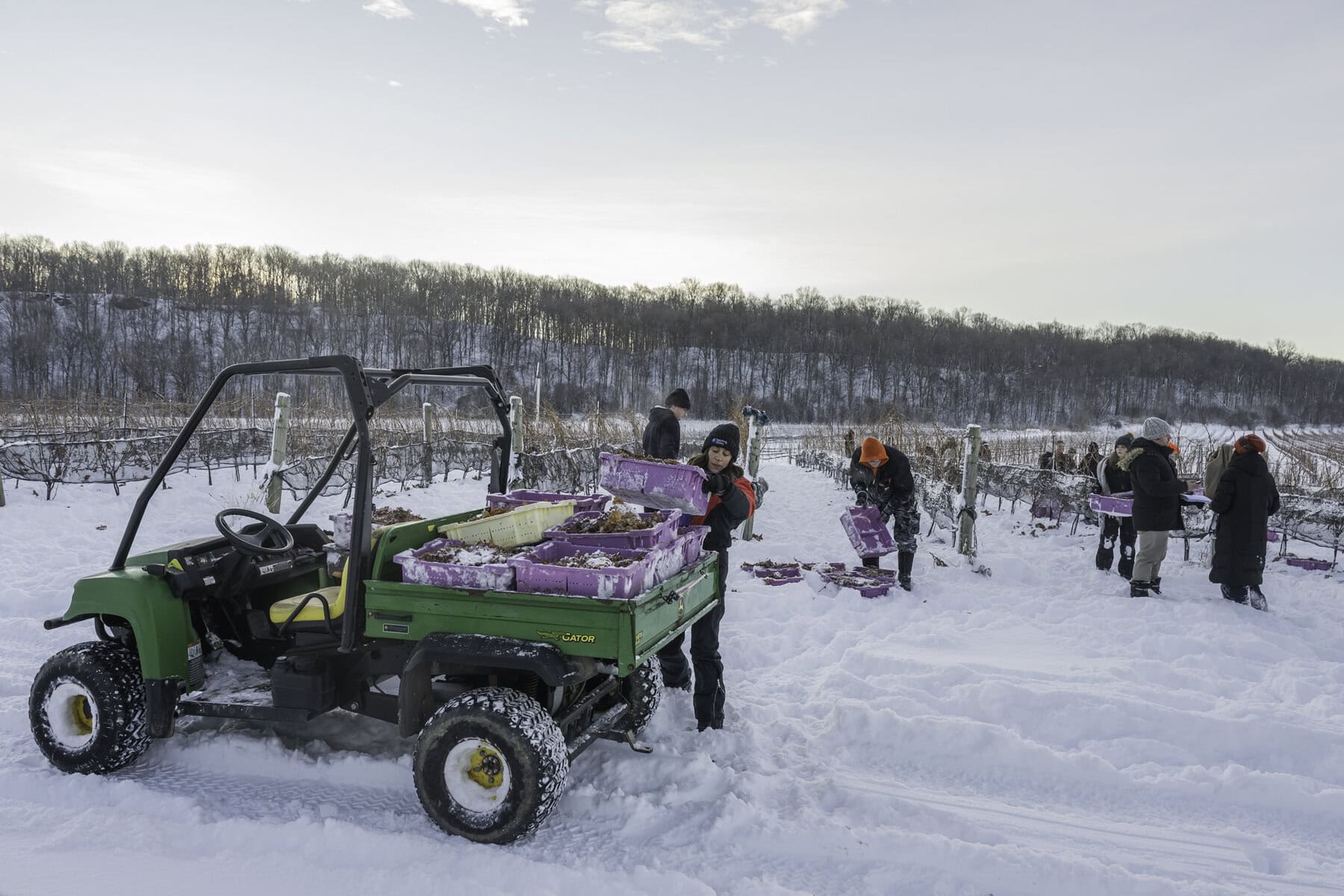


It’s 7:30 a.m. on a Friday. Niagara-on-the-Lake was just hit with a huge snowstorm the day before, but on this day, the weather is calm, sitting at around -11 C with a light wind.
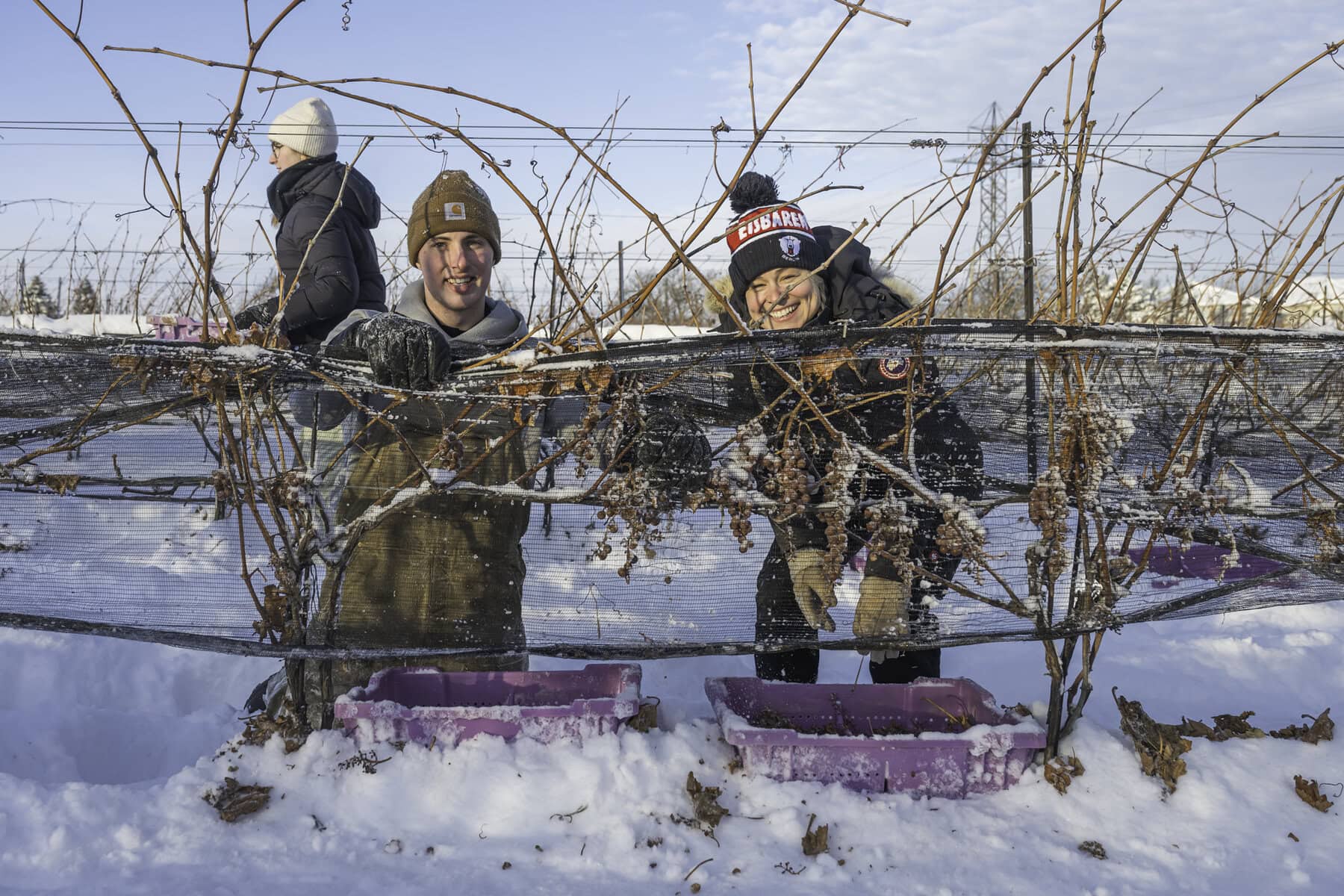
The sun is rising over Niagara College’s teaching winery, where dozens of students are huddled among the vineyards, readying for their first harvest of the year.
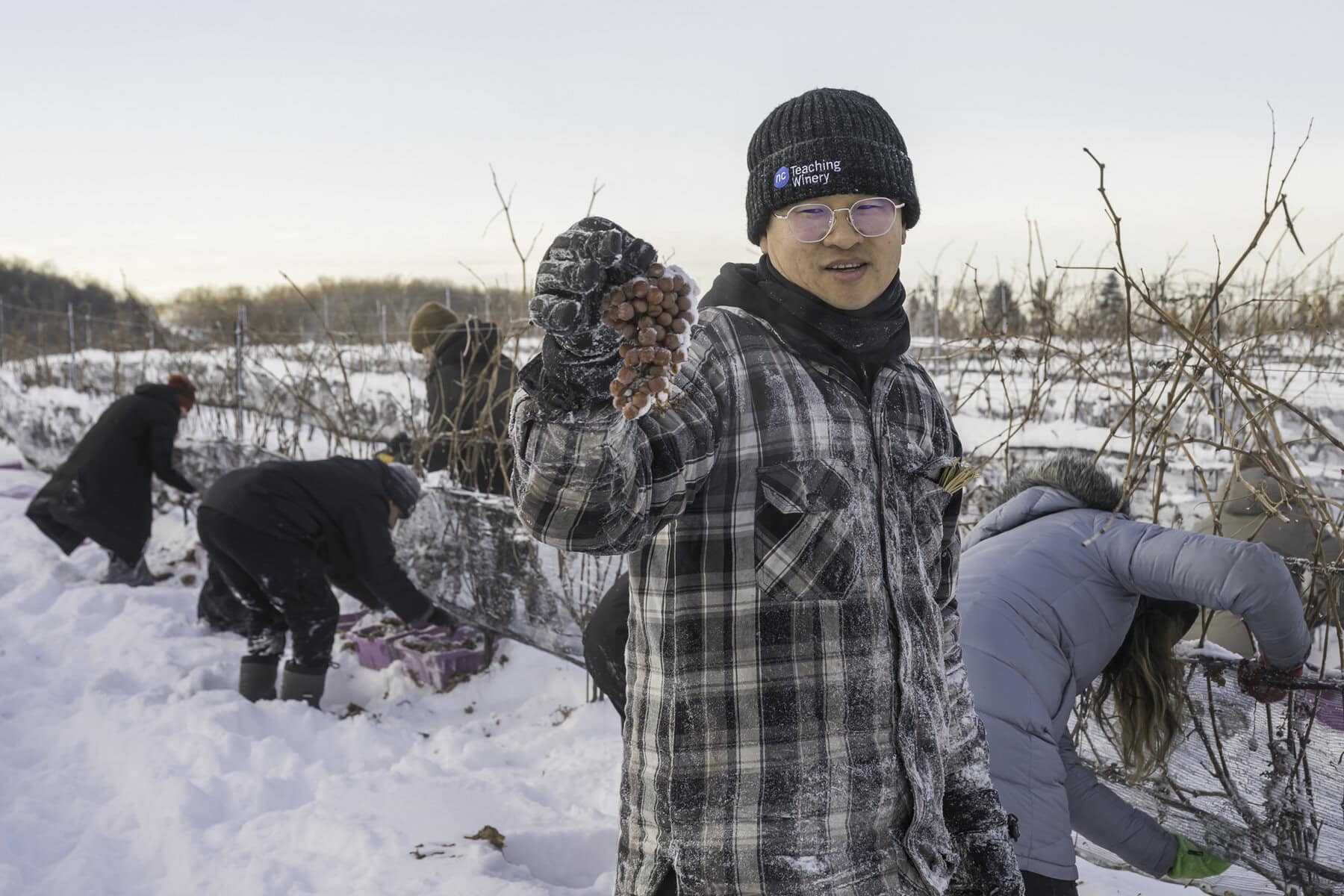
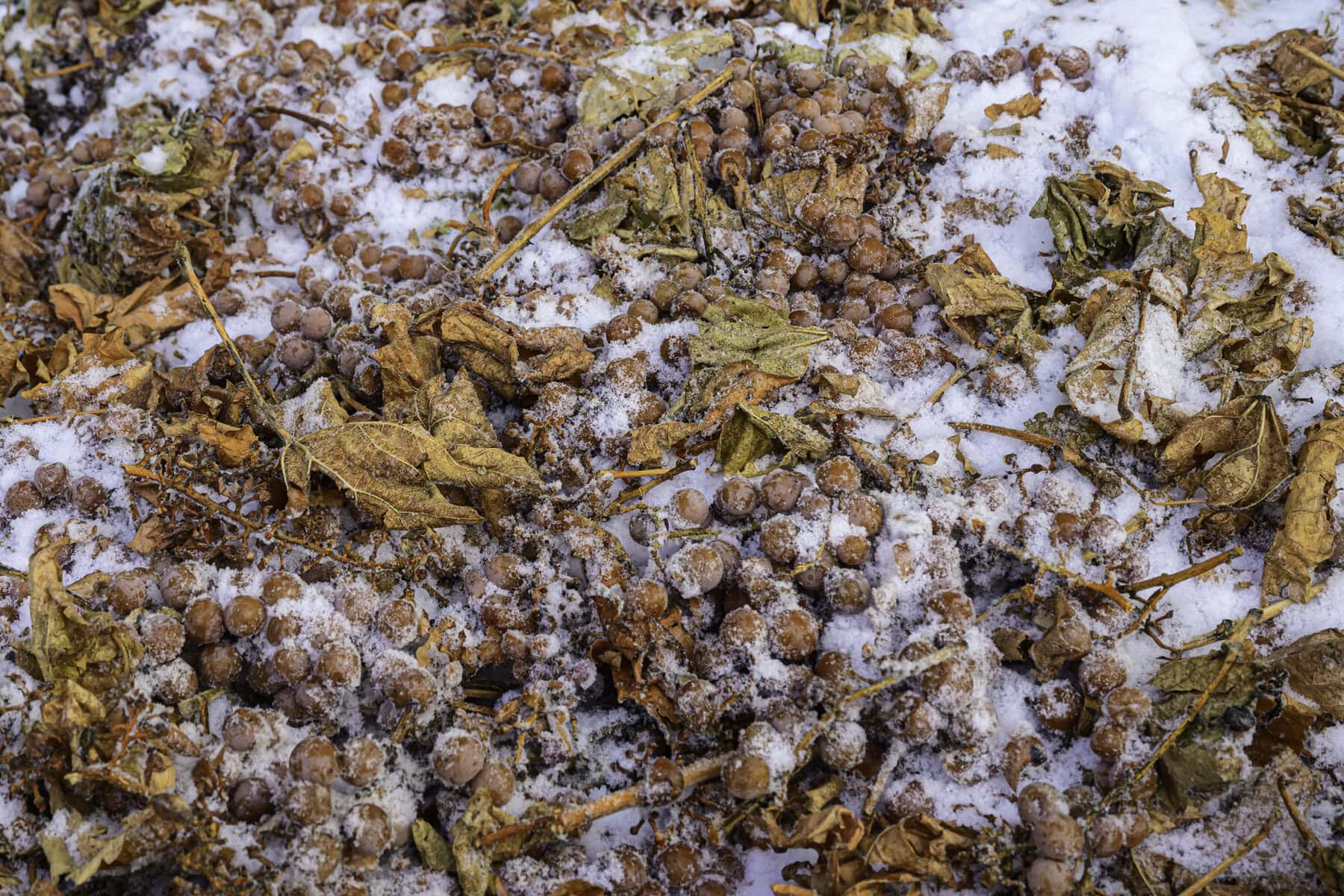
They’ll be picking frozen Vidal grapes that, through an elaborate process of pressing, fermentation and aging, will be made into icewine, dubbed “liquid gold” by many in the world of viticulture.
Being out in the cold early in the morning might be difficult for some, but for Donavan Gilroy, who left a life of playing saxophone at Wilfrid Laurier University behind to join the college’s wine and viticultural technician program, this kind of thing is what he signed up for.
Gilroy, a first-year student, says when he joined the program, he wanted to get his “hands dirty” with practical work. He knew grape-picking in the cold was coming and says he was looking forward to it.
“It’s one of the most Canadian things there is,” he says.
Every winter, the same process unfolds at wineries across Niagara-on-the-Lake. This year, some wineries harvested in December, while others are still picking grapes.
This is the 25th year Niagara College has done the icewine harvest. In total, 40 students took part in Jan. 16’s harvest.
Most of the students are in their first or second year of the winery and viticultural technician programs, with a few from the hospitality program.
“In most cases, it’s their first time picking icewine,” says Gavin Robertson, wine professor at Niagara College. Robertson guided his students through the process on Friday.
Jamie Slingerland, director of viticulture at Pillitteri Estate Winery, says icewine harvesting in a professional vineyard is “not for the faint of heart.”
“Most icewine harvest occur in the night as it is always colder during the darkness of night,” he says. “My fellow growers and myself work long hours picking the grapes often 20 hours straight at a time. We harvest on a large scale and usually need multiple nights to pick. Sometimes it is cold enough in the day.”
Singerland says Pillitteri has both Brock University and Niagara College students working at the vineyard. He says there was a shortage of these students and hopes that more attend.
“We have had nothing but success with these students and wineries compete for their talents,” he says.
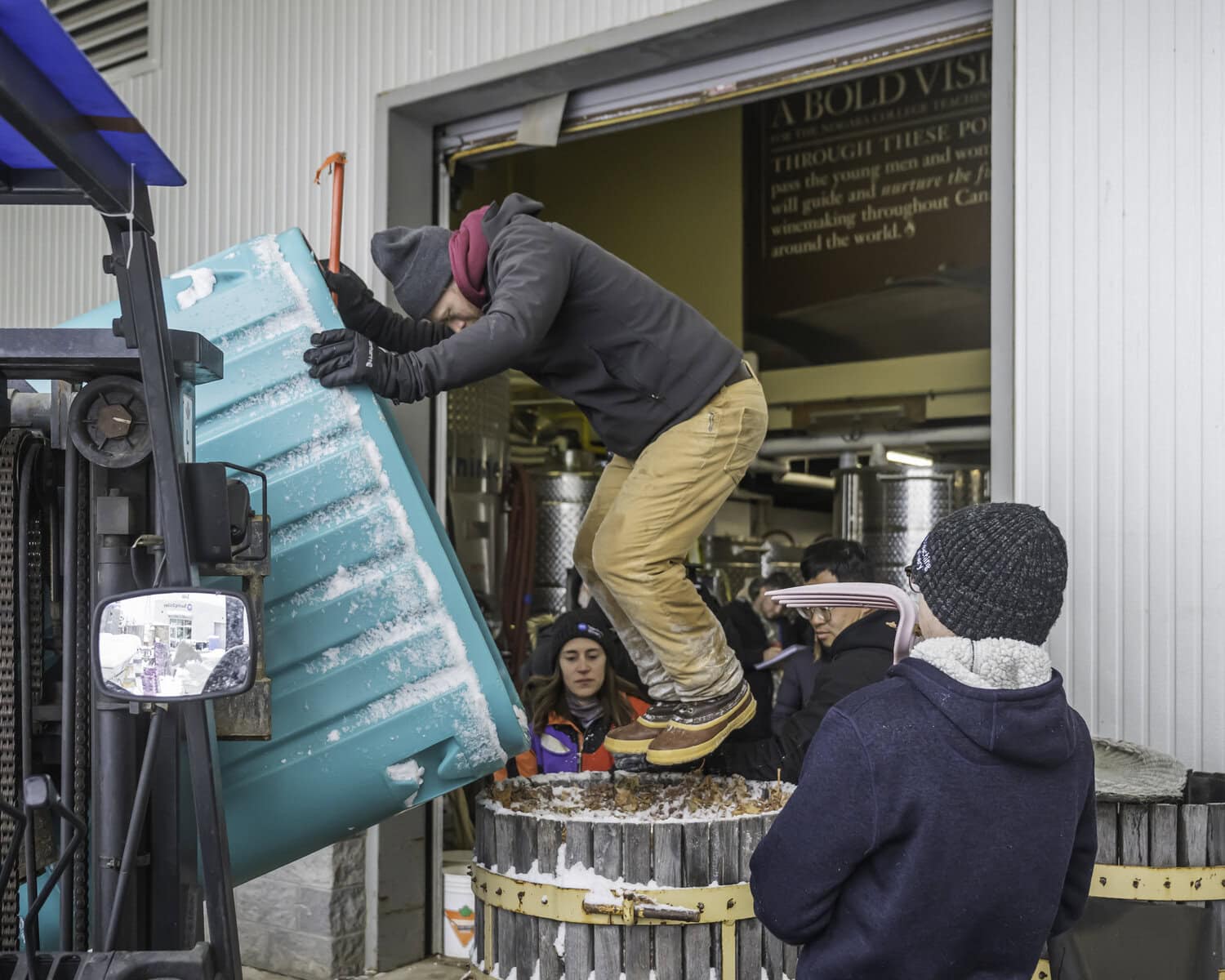
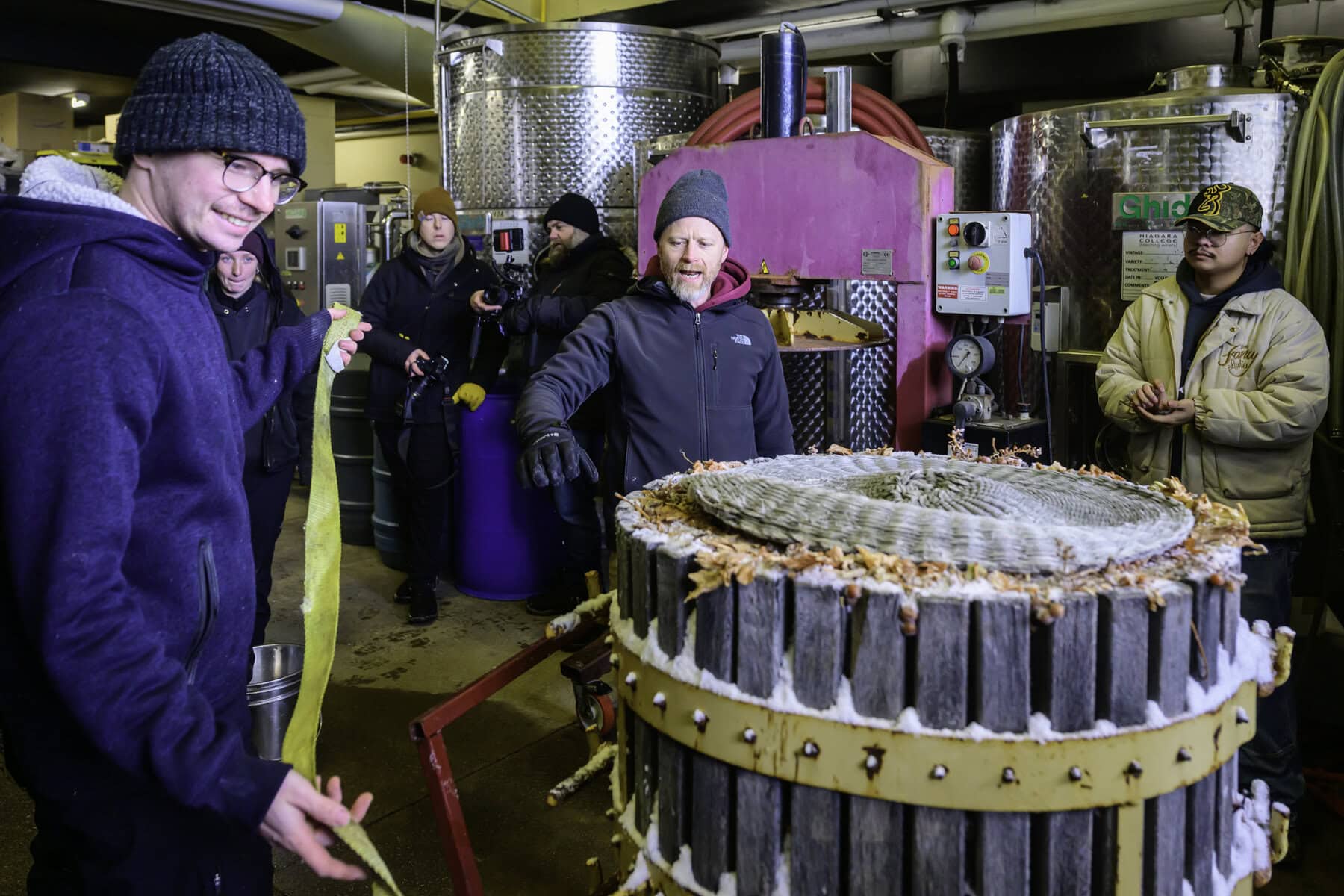
After picking the grapes, students load them into large cartons and lift them by forklift. The grapes are then dumped into barrels and fed into a press that extracts the juice.
The juice is later fermented and bottled to produce icewine, known for its especially sweet taste. To be labelled icewine, the juice must contain a minimum of 35 per cent sugar to 65 per cent liquid.
Icewine also stands apart because of the conditions required to make it. Vintners Quality Assurance, the body that regulates icewine, requires grapes to be harvested at temperatures of –8 C or lower. As a result, students and staff must take advantage of narrow weather windows.
The freezing temperatures also limit how much juice the grapes produce. Allison Findlay, the college’s head winemaker, says icewine grapes yield only about 20 per cent juice, which is “thick and viscous,” compared with about 70 per cent from typical wine grapes.
“Any spill with icewine is expensive,” says Robertson as he instructs students during the pressing.
By harvest time, the grapes have been hanging on the vines for months as part of the 2025 growing season, Findlay says.
Slingerland says that at his winery, “Historically, 90 to 100 per cent of the icewine harvest has occurred in the first two to three weeks of January. For the 2025 vintage, grapes grown in that calendar year, we had cold weather in early December that transformed the grapes to become icewine grapes.”
Some wineries, including Arterra Wines Canada and Jackson-Triggs Winery, have already completed their icewine harvests for the year.
Niagara College serves its finished icewine at campus establishments such as the Benchmark restaurant and sells it to outside restaurants and stores.
The icewine is also featured at the NOTL Icewine Festival, which began last Friday. Amanda Baldinelli, hospitality and events manager for Niagara College, says the college is showcasing its Icewine Strong Ale, a beer infused with icewine.
“For the first time ever, the festival wanted to feature a product that wasn’t icewine,” she says. “They were interested in creating beer but that was blended with icewine.”
“It’s a first for us, we’ve never made this product before.”
Baldinelli says the beer combines “two finished products” — beer and icewine grape juice. The initial test run includes 1,200 cans, with future production depending on demand.
That spirit of experimentation helped attract Gilroy to the program. He says he admires the Niagara wine industry for its relative youth and openness to new ideas, and he hopes the skills he is learning will one day bring happiness to others.
“It’s one of the most romantic things in the world,” he says.