


Hundreds of Old Town properties could soon face new heritage rules — and residents are raising concerns about renovation costs, overreach and whether too many homes are being swept in.
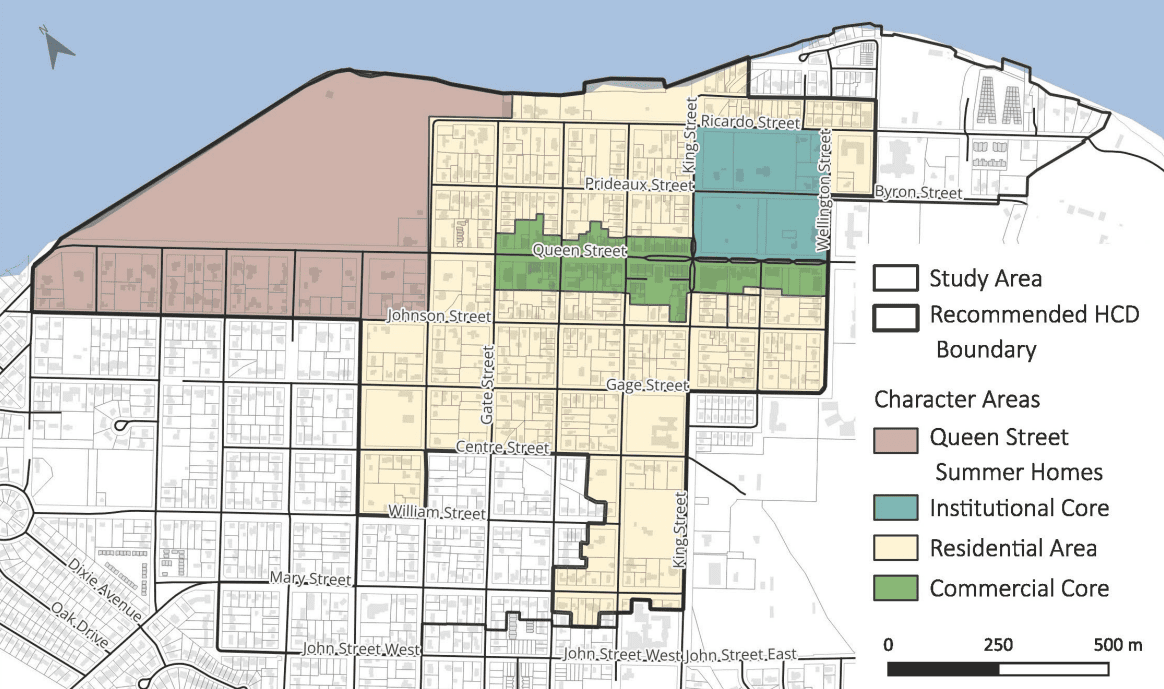
Niagara-on-the-Lake council unanimously received an information report Tuesday on a draft plan that would significantly expand the Queen–Picton heritage conservation district beyond Old Town’s historic commercial core, where the district plan has been focused since it was created in 1986.
If adopted, the phase two heritage conservation district plan would extend heritage rules to surrounding residential and institutional areas not currently regulated, bringing more than 500 properties — including both “contributing” and “non-contributing” buildings — under the district.
And if ultimately approved by council, the draft plan would introduce new heritage policies and permit requirements for certain alterations, additions, demolitions and new development within the district.
The draft says all properties within the proposed boundaries were reviewed to determine whether they contribute to the district’s heritage character. Contributing properties are generally buildings constructed during the district’s identified periods of significance, from 1814 to 1914, that retain historic architectural features or contextual value. Properties that do not meet those criteria are classified as non-contributing.
The draft notes, however, that changes to any property, including new construction, can still affect the district’s overall heritage character. As a result, policies and requirements would apply to all properties within the proposed boundaries, not just historical properties.
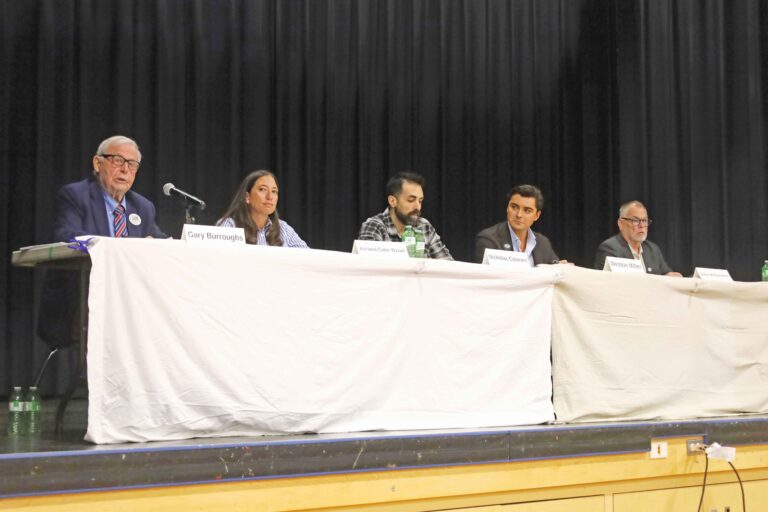
Council was not asked to approve the draft Tuesday, only to receive the report and hear public input through a public meeting. No final decision has been made.
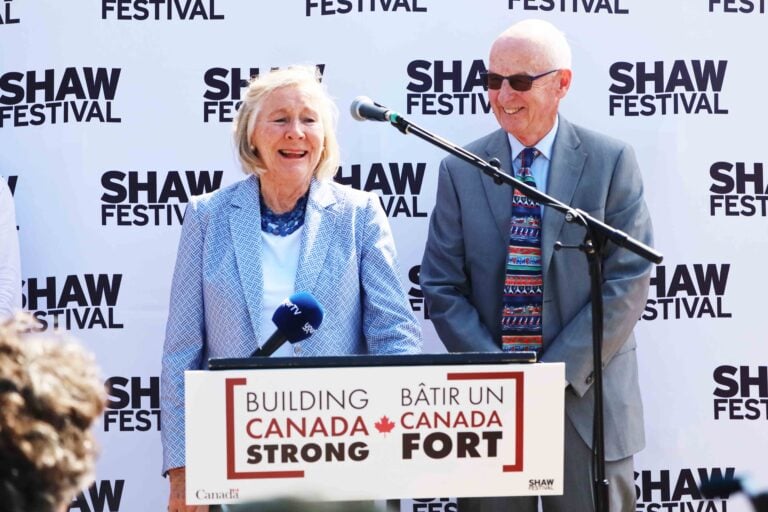
Senior heritage planner Sumra Zia presented the report and responded to questions from councillors and the public. Christophe Rivet, principal with Cultural Spaces, the heritage consulting firm hired by the town, also participated.
Staff said public input will be reviewed as part of the current planning stage, with a revised plan and recommendations returning to council for a decision at a later date.
Several residents raised concerns about how the expanded district could affect homeowners whose properties are not historic.
Mark Wheaton, a Nassau Street resident, questioned why entire blocks are included when many homes were built decades after the period of heritage significance.
“I asked myself, what’s this got to do with heritage?” he said, calling the expanded boundary “overreach” and warning that homeowners could become “collateral damage” under the expanded district.
Retired Ontario architect Malcolm Lowry, who lives within the study area, said the draft raises practical and financial concerns.
“Why should a recently built property, say last year, require a heritage permit for alteration?” he asked. “That does not make any sense to me.”
Lowry also warned the draft lacks clarity around permit requirements and could increase costs for homeowners.
“The guidelines have not a lot of regard for the cost of implementation,” he said, pointing to the price difference between traditional materials and modern alternatives.
“If you’ve replaced a cedar roof recently, you’ll know that the cost of replacing a cedar roof is about four, or more, times [more expensive] than an asphalt roof,” he said.
Infrastructure concerns were also raised.
Colin Kelly, a Queen Street summer homeowner, said parts of the proposed district still lack sanitary and storm sewers and asked whether long-term servicing plans are being considered alongside the heritage expansion.
After council chair Coun. Erwin Wiens said Kelly would need to follow up with staff, Kelly said, “as someone that has lived there for 26 years, I followed up a lot and been told it was going to happen — and has never happened.”
“So that’s where we are at the moment,” he added.
Maria Vaneva, a resident who lives near the Royal George Theatre, questioned why the theatre is not listed as a contributing property in the draft. Staff said it would follow up.
Not all speakers opposed the expansion.
Gracia Janes, president of the Niagara-on-the-Lake Conservancy, said the organization has supported expanding the heritage district since the late 1980s, but questioned why some historically significant areas were included while others were not.
Paul Mace, vice-chair of the Niagara-on-the-Lake Museum, said the museum is already working with town staff on expansion plans and asked how the proposed district could affect projects already underway.
“For the first time ever, we’re at the five yard line ready to hit the end zone,” Mace said.
Barbara Worthy, the NOTL museum’s community engagement co-ordinator, who lives on Delater Street within the proposed district, said she still does not know whether her home could be singled out for individual heritage designation and has not received any communication since last year.
“Are we now removed from this whole issue of being forced designation, individual designation?” she asked.
Staff said the question would need to be followed up after the meeting.