
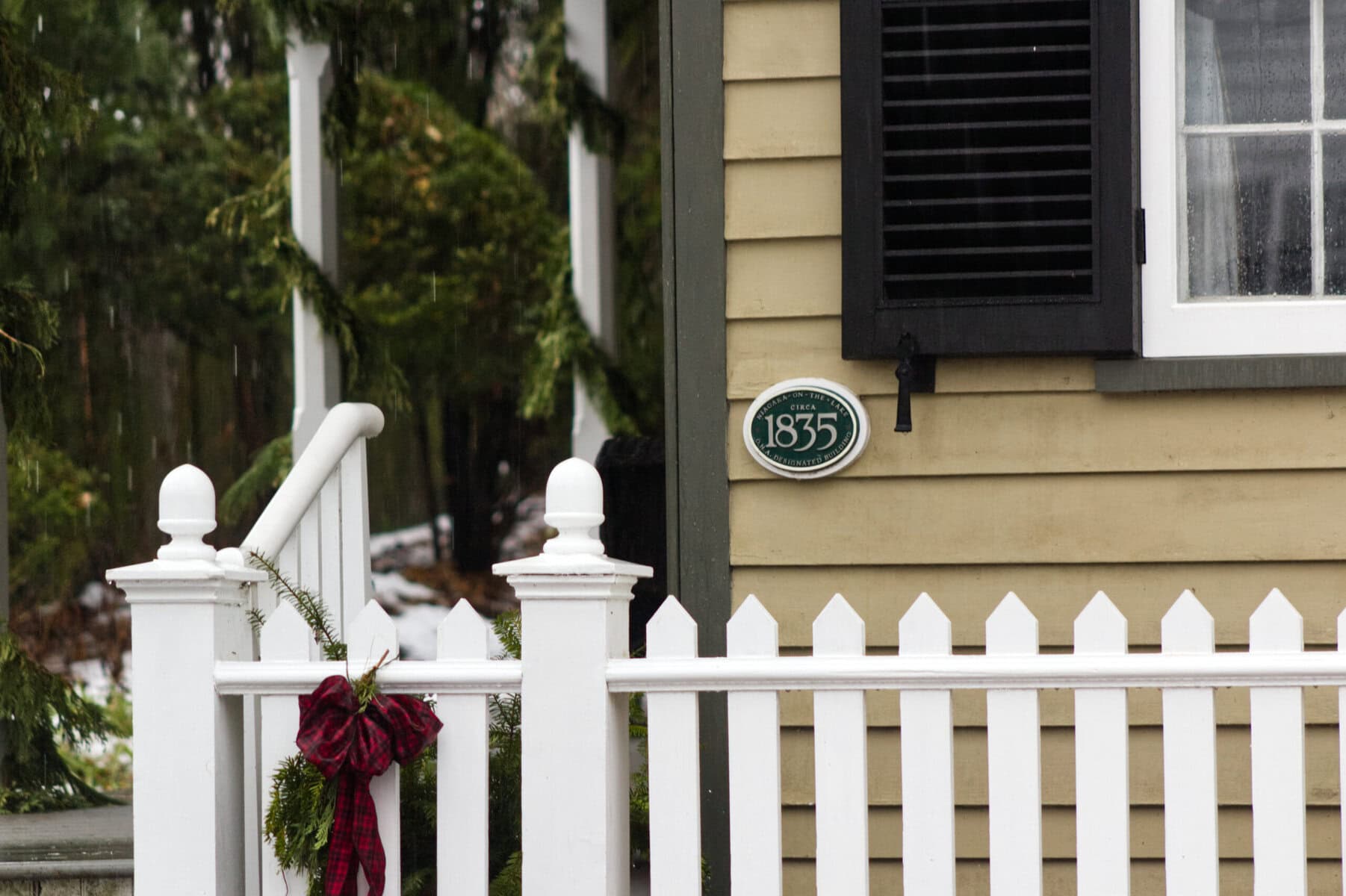


In a town known for its history, it is not surprising that some residents want their homes designated as heritage properties, to commemorate their significance and protect them for future generations.
That desire led to shock for a handful of Old Town homeowners after they learned the insurance costs tied to designation could be a major problem.
Two of those owners, Barbara Worthy and Jim Reynolds, went before Niagara-on-the-Lake town council in the fall to share that insurance companies would not give them adequate coverage if their properties received heritage designation.
The problem has widespread implications, with 198 properties in NOTL being on the municipal heritage registrar, according to a town report to the municipal heritage committee authored last year.
The issue was at the centre of a report that came before the municipal heritage committee at its first meeting of the year on Jan. 14.
The big takeaway in the report is that heritage designation itself does not affect insurance coverage; however, factors related to it, including the building being built before 1940, could impact whether a property gets coverage.
The town quoted the following statement from the Ontario government in its report to the municipal heritage committee: “Insurance premiums should not go up because of a heritage designation. Some companies do not insure buildings over a certain age, but designation itself does not place additional requirements on the insurer and should not affect premiums.”
The town also issued template letters for residents to send to insurance companies asking them to confirm that a heritage designation does not affect the price of their insurance. It said it will continue to consult with residents and the Insurance Bureau of Canada to make sure concerns are assuaged.
So, what is behind the issue? Industry experts say several factors, namely high reconstruction costs, make insurance coverage more difficult and expensive for people in places like Old Town.
“A heritage home’s replacement cost (what it would cost to rebuild) includes repairs that may involve specialty contractors and building materials,” said Brett Weltman, manager of media relations with the Insurance Bureau of Canada, in an email.
“All of this, and several other factors, are factored into the price for insurance for a heritage home. With heritage homes, it is the age of the building, electric, plumbing (and the list goes on) that is of interest to insurers; not whether or not it has a heritage designation.”
Weltman also pointed to an Insurance Bureau of Canada pamphlet that lists other factors affecting heritage properties, including longer bureaucratic timelines, more specialized professional assessments, stricter bylaws — such as requirements to rebuild on the original site — and longer claims settlement periods.
Even insurers find the specialized nature of heritage properties challenging.
Worthy raised that concern during a November council meeting, saying it was “really scary” how little the insurance companies she contacted understood the heritage insurance market.
The Lake Report contacted 12 Canadian insurance companies to discuss their practices regarding heritage properties. None agreed to an interview, though some cited a lack of expertise as a reason why they did not want to do one.
“I consulted with our home insurance team and they do not feel we have the level of specialization and client base in heritage designated properties that is needed for this conversation,” said Keren Adderley, senior communications consultant at Co-operators Insurance.
Nadia Matos, manager of external communications at the Canadian Automobile Association, offered a similar response.
“I have spoken to a few people in the insurance company and since we don’t really focus on this area, we would refer you to Insurance Bureau of Canada, who maybe able to help.”
Anas Abdullah, an assistant professor in actuarial science at Brock University who previously worked in the insurance industry, echoes that “exceptionally high reconstruction costs” and “specialized materials” play into the high premiums on heritage homes.
Abdullah also said that some heritage homeowners are sometimes told to go to specialized places, based on experiences he had when he was in the industry.
“For those heritage homes, some of the insurers … are told they can only obtain coverage through some specialized prestige or high-net-worth insurance,” he said. “It’s a much higher premium.”
None of this is helped by the fact that an additional factor plays a major role in Niagara-on-the-Lake in rising insurance rates, he said: flood risk.
He called flooding the “elephant in the room” when assessing insurance risk, particularly for homes near the shoreline, where many heritage properties are located.
“You combine this concentration of flood exposure with this exceptionally high reconstruction costs … then obviously the final total increases dramatically,” Abdullah said.
He said homeowners’ frustration is understandable, but not personal.
“I understand their reaction,” he said. “But what I would that what they’re experience here is like, not personal — it’s the financial system, just like rising climate risk in real time.”
“That transition is painful.”
Weltman sent a statement from the Insurance Bureau of Canada to talk about the effect of climate change on the industry, though did say there were other “external factors” that have affected insurance premiums.
“Thirty years ago, Canada’s average annual losses from natural disasters were under $900 million. Twenty years ago, they climbed to $1.4 billion. Today, it’s $3.6 billion — and growing. That’s a fourfold increase in just three decades,” the statement said.
When it comes to heritage homes and general insurance costs, outside of environmental risks, Weltman encouraged owners of heritage homes to shop around for coverage.
“While we can’t speak to this particular municipality’s designation of heritage properties and/or any additional bylaw requirements and restrictions,” he said, “we encourage homeowners to obtain a copy of any applicable heritage bylaws and work with their insurance representative to understand their potential insurance implications.”
All three Delater Street homeowners declined to speak on the record to The Lake Report, though Reynolds provided an update about the status of his premium since November.
“My replacement value and premium jumped at the mention of designation. It has since come back down but not to where were before this all started,” he said.
“I will be interested to see what the town discovers as they study this issue.”