


Steve McGuinness
Special to Niagara Now/The Lake Report
While Ontario municipalities struggle to balance the property rights of landowners with broader community interests, Doug Ford continues to exert his full weight on one side of the property development scales.
On his watch, the Ontario Land Tribunal — a provincial agency where municipal planning decisions head for appeal — has been further stacked for developers.
Strong-mayor powers have expanded, concentrating planning authority in fewer hands. Our own lord mayor has emerged “stronger,” but absent voter consent, leading a lesser democracy.
The Ford changes were avowedly to increase housing supply and improve affordability. Home prices peaked in early 2022, followed by an unforeseen housing market deflation of 30 per cent and counting, reacting to interest rate volatility and reduced immigrant settlement targets.
Undeterred, Ford plowed on. Although wealthy landowners’ paper gains on land holdings evaporated overnight with reversed greenbelt boundary changes, their contributions to the overflowing Tory war chest never ceased.
Local developer Rainer Hummel worships Doug Ford, but loathes our last town council. He sought damages of $3.9 million in a lawsuit he filed about the town’s December 2018 interim control bylaw. His statement of claim alleged losses were incurred when the interim control bylaw delayed the start of construction at his planned 2203 Niagara Stone Rd. townhouse project.
In agreeing to a $1-million settlement, this council heaped blame on its predecessor. Strangely, only one other litigant ever filed an interim control bylaw delay loss claim.
In a post-settlement op-ed, Hummel characterized his award as a penalty on voters, exacting a just price for electing an anti-development council. The implication is that it would be detrimental to repeat that voting behaviour in future elections.
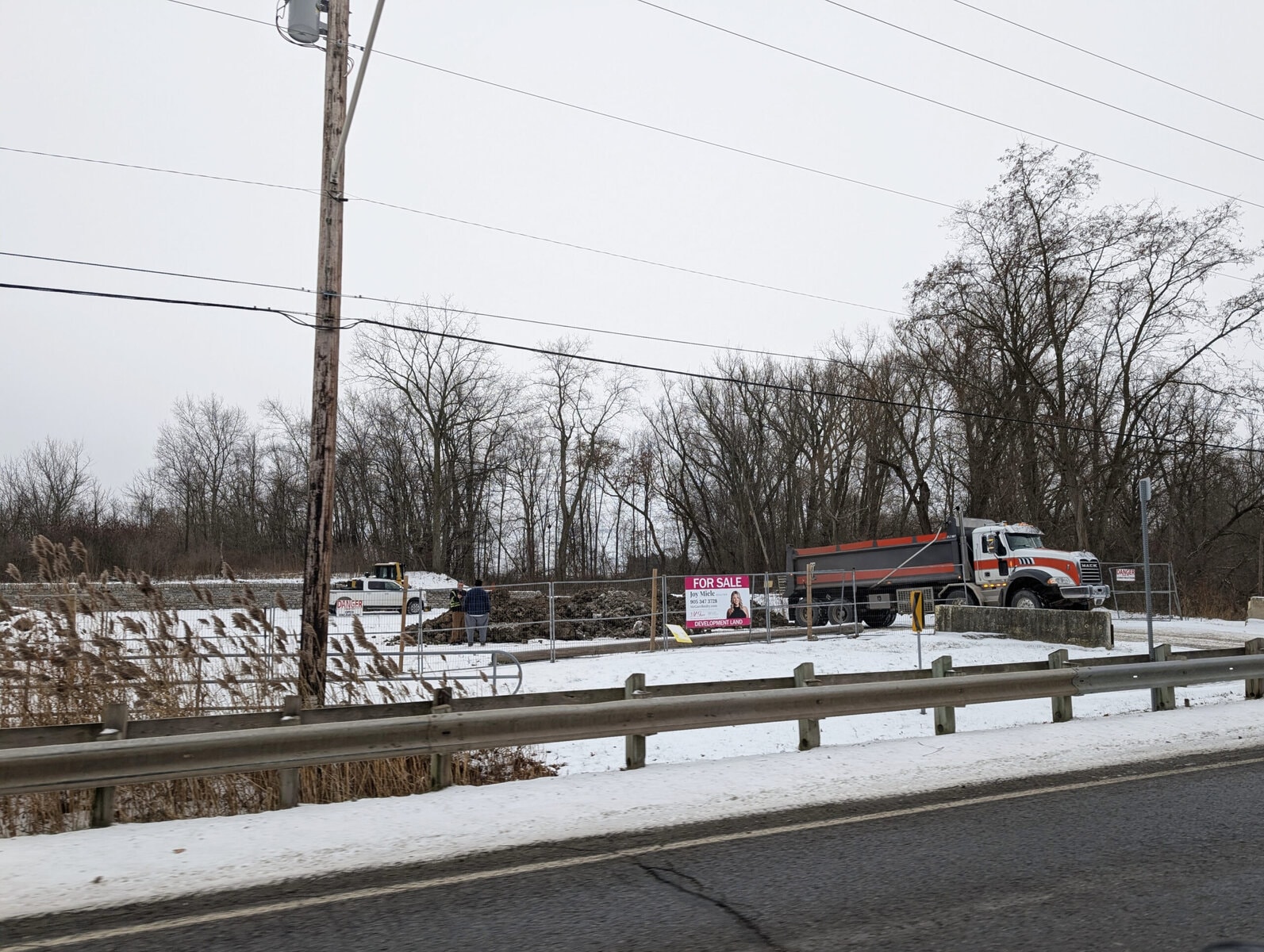
Meanwhile, seven-plus years after the interim control bylaw’s effective date and five years after its expiry, his building site remains empty.
There’s a for-sale sign out front with a new application to jam three more townhouses in, as a lure to councillors confusing density with affordability.
Someday, Hummel may answer a key break-even question: whether his resale proceeds will exceed his $1-million damage award plus his acquisition cost.
Unfortunately, this experience typifies the persistent ongoing abuse of our planning process.
The town must accept all complete planning applications submitted with applicable fees.
But no project completion stale-date needs to be specified on the forms, meaning no firm or binding time commitment to construct any approved plan is enforceable.
Instead, the municipality is writing an option.
Once issued, this option adds value to the site. Developers are licensed to list it for resale, hyping the enhanced zoning approval, in pursuit of a quick flip profit.
Plus, these options hurt housing affordability by inflating land prices. In this frozen real estate market, our pile of unbuilt approved applications will inevitably grow taller, gathering dust. Home seekers will remain unhoused.
Now let’s go back to eavesdrop on a local dinner table in December 2024. Although an agenda and minutes for that unannounced meeting with Premier Doug Ford remain unpublished, key details are known.
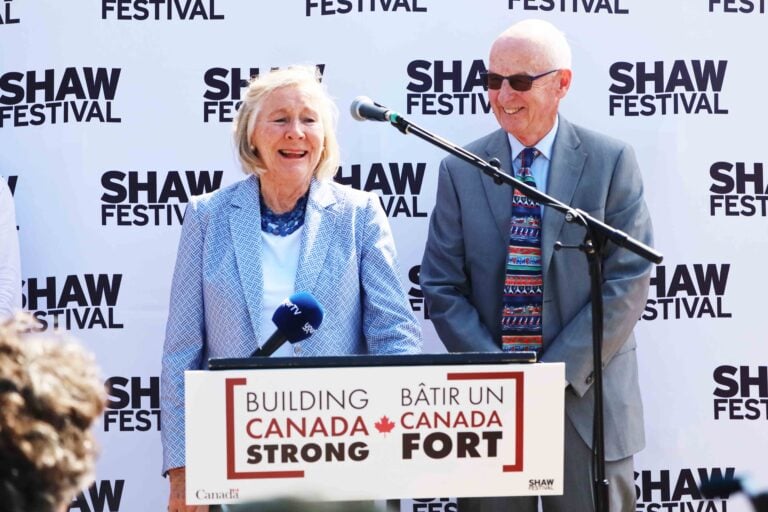
Convened by deputy lord mayor Erwin Wiens, behind the closed gates of his cousin Hummel’s palatial Phillips Estate, discussion topics ranged from agricultural irrigation (Wiens is a grape farmer) to Shaw Festival CEO Tim Jennings’ new theatre plans.
Now, roughly a year and three pivotal council meetings later, the Shaw’s new theatre plan is fully approved.
This followed the theatrics of Lord Mayor Gary Zalepa storming out of the first session, alleging procedural breaches.
While concerns linger over the sheer dominance its bulk will cast over our heritage district, councillors cited tweaks — adding a handful of accessible parking spaces and admitting the general public to restrooms — as decisive vote swinging influences.
Otherwise, the frenzied 2025 development pace leaves NOTLers desperately seeking an emergency escape.
On top of the million given to multi-millionaire Hummel, the forgiveness of a $900,000 regional development charge to the even wealthier Benny Marotta also irks residents who have been shouldering 2025 town property tax rates 7.92 per cent higher than last year.
The newly constructed buildings unveiled this year also fail to impress.
Townies debate whether the Hyatt Clayfield Hotel’s mirrored glass homage to airport terminal designs outshines the mausoleum-esque stucco drabness of the neighbouring Stone Eagle Winery.
Panicked developers sense public opinion shifting. Reacting desperately, Solmar resuscitated its Rand Estate townhouse application, without addressing key ruling elements made by the Ontario Land Tribunal in upholding the town’s prior rejection.
As the time-clock ticks down to next October’s election, a strong voter backlash against developers’ rule beckons.
Steve McGuinness, CPA, is retired from a career in financial management on Bay Street. He holds degrees in political science and business administration. He offers reflections on public policy issues within our community. stevemcguinness94@gmail.com