


Steve McGuinness
Special to Niagara Now/The Lake Report
William Shatner, in his title sequence voiceover at the start of Star Trek solemnly professes that space is “the final frontier.” Much closer to home, within Niagara-on-the-Lake, parking spaces are the way we profiteer.
The world’s first parking meter was invented by two Oklahoma State University professors in 1935 for placement on an Oklahoma City street. The charge was a nickel per hour. By the end of the next decade, 140,000 meters had been deployed, proliferating across municipalities far and wide.
It was inevitable that our town would eventually latch onto this 90-year-old money-making technology.
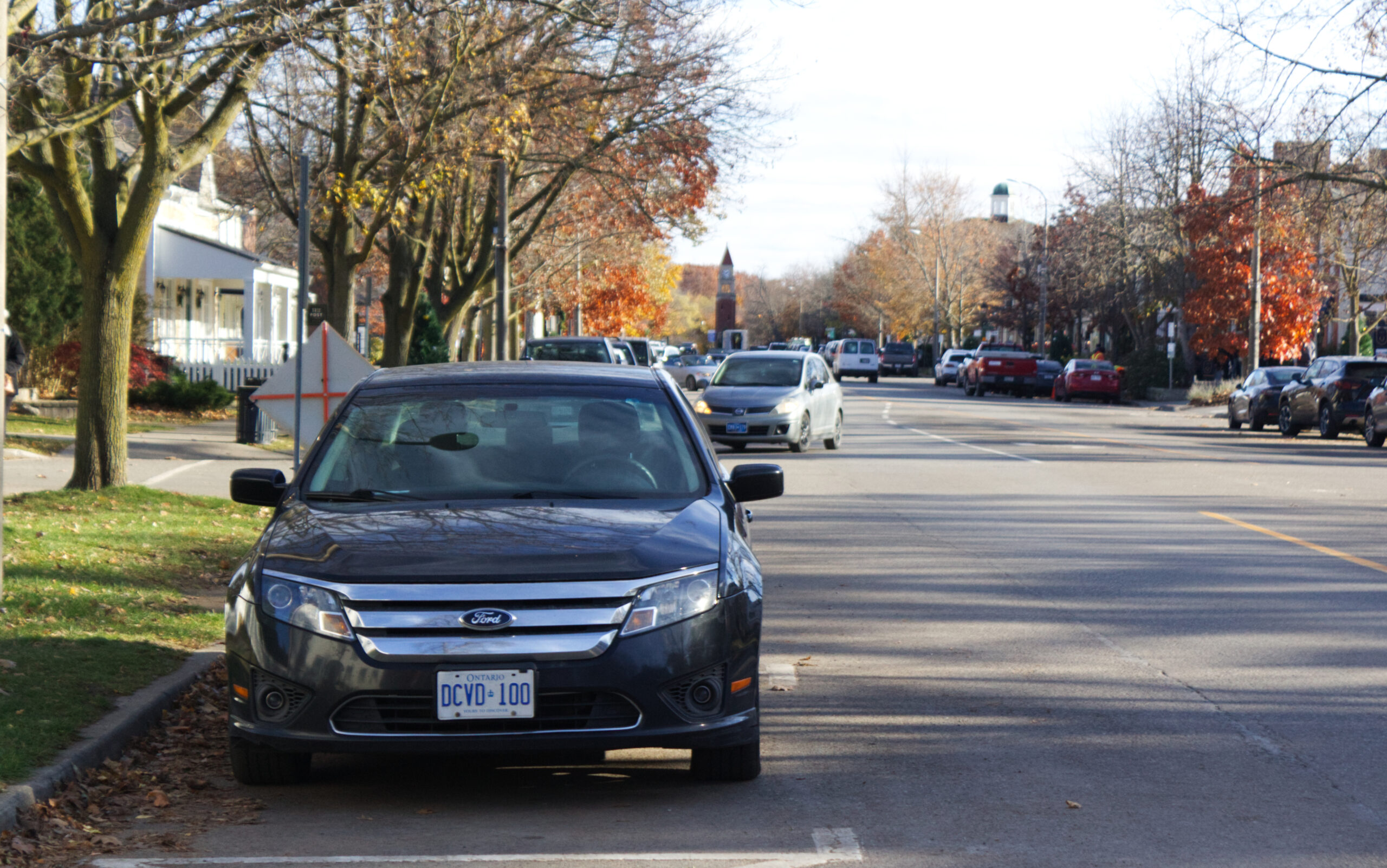
Although December is their month off (as a seasonal goodwill gift to motorists), these machines work hard the rest of the year, generating significant revenues at curbside spots in the heritage district and surrounding municipal lots.
The town’s 2024 financial statements attribute $19.9 million of revenues to user fees and charges.
That is higher than the $18.3 million generated by property taxes paid by property owners. In fact, user fees and charges funded 43.5 per cent of the $45.6 million in municipal expenses.
The town maintains a lengthy listing of all town user fees and charges. But parking revenues make up the most significant bulk by dollar volume. Inflation has lifted the original Oklahoma nickel per hour price significantly. In 2025, NOTL’s old town meters charged over $5 hourly.
By town staff’s estimate, the additional revenue generated by a budget proposal to raise the hourly parking toll by 25 cents was $152,000. Inexplicably, that 2026 budget amendment failed to pass.
But by using that estimate and presuming a $5.50 per hour average rate, the calculated revenues for our meter squadron are $3.3 million dollars annualized.
Additionally, we earn ancillary revenues from time violation parking tags and illegally parked vehicle fines, plus proceeds from permit sales for bus parking and resident passes.
Metered parking is enforced for 3,340 hours a year, meaning the annual maximum revenue is $18,370 per space at full utilization. Of course, actual occupancy rates fluctuate wildly based on seasonal visitor volumes.
How much are these parking stalls worth as an asset? The town will value them at $75,716, effective Jan. 1, 2026. This is the cash-in-lieu penalty amount charged to businesses unable to meet minimum parking requirements.
To realize a 10 per cent yield on this asset value, a parking stall needs to sustain a 40 per cent occupancy rate during the ten daylight operating hours. If occupancy drops to 20 per cent, then the return drops to 5 per cent — still a better rate than a bank guaranteed investment certificate pays.
Town staff are currently studying an offer by the Irish Harp pub to rededicate six required parking spots over to use as patio dining space, with three for short-term rental parking. That proposed deal is valued at over $436,000.
It’s an innovative option unavailable to most Queen Street restaurateurs, whose curb patios will be returning to our parking space inventory after the pandemic temporary permits program ends soon.
The Harp’s sux spot parking in lieu patio proposal is dwarfed by the requirement for the Royal George theatre’s replacement complex, reduced from 105 spaces to one.
This carries forward a credit of 104 spaces for the legal non-conforming use of the existing theatre, consolidated with two Victoria Street lots.
The town issued a statement, “Town corrects community misinformation regarding the Royal George Theatre,” on Dec. 3, explaining this.
At a Dec. 2 committee of the whole planning meeting, Gina Angelakopoulos, owner of the Epicurean restaurant, opposed the Olde Angel Inn’s permanent outdoor patio proposal.
She specifically objected to the legal non-conforming parking exemption credit applying on a consolidated carry-forward basis there.
Meanwhile, Coun. Andrew Niven suggests expanding the old town metered parking zone to increase revenues.
Other influencers — including Frances Stocker, of Seniors for Climate in Niagara — propose keeping more vehicles further away from the core. Her ideas include creating a park-and-ride hub at a major entry point and embracing “hop on/hop off” shuttles.
Would daytrippers embrace this idea? Niagara Parks’ WeGo service presents a successful nearby precedent to emulate.
Could it generate sufficient net operating profits to replace any foregone meter parking revenues?
If not, the town costs currently recovered from meter feeding motorists would shift onto local taxpayers. That would be unfortunate.
Steve McGuinness, CPA, is retired from a career in financial management on Bay Street. He holds degrees in political science and business administration. He offers reflections on public policy issues within our community. stevemcguinness94@gmail.com